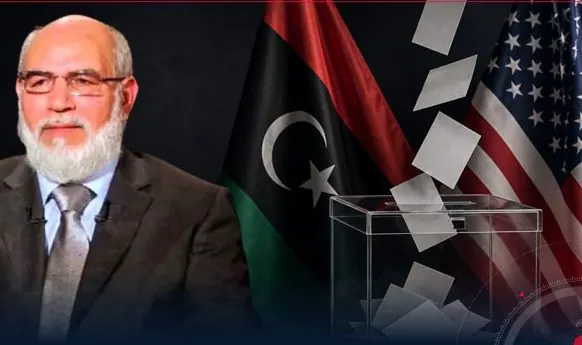
Libya's House of Representatives has taken a significant step towards resolving the country's political crisis by constitutionalizing the 4+4 Initiative. According to Member of Parliament Mohamed Al-Abani, the parliament unanimously agreed to take the necessary legislative and constitutional steps to reactivate and formalize the initiative. This move aims to address the country's ongoing political deadlock and pave the way for elections. The 4+4 Initiative is seen as a crucial step towards unifying state institutions, particularly the military.
The 4+4 Initiative had been postponed earlier, but the parliament resumed the session to review the proposal. Al-Abani stated that the initiative conflicted with certain existing laws, requiring the repeal, amendment, or addition of legal texts to make it constitutionally enforceable. As a result, parliament decided to repeal Law No. 27 on electing the National Assembly, citing clear contradictions with Law No. 10 of 2014. This decision was made to ensure that the 4+4 Initiative aligns with the country's constitutional framework.
In addition to repealing Law No. 27, parliament also resolved to amend Law No. 28 on presidential elections. The changes aim to align the law with the 4+4 framework, ensuring that the country's electoral process is consistent with the new initiative. These adjustments will be enacted through official legislation and published in the official gazette. Al-Abani emphasized that parliament members follow and await official publications like all citizens, highlighting the importance of transparency in the legislative process.
Al-Abani clarified that members' role is to decide during official sessions, while the speaker or either deputy is responsible for issuing and publishing the laws in the gazette. He distinguished between an MP's opinion or decision and the distinct responsibilities of the parliament and its leadership. According to Al-Abani, all recent parliamentary decisions were unanimous, demonstrating the parliament's commitment to finding solutions to the country's crises.
The decision to constitutionalize the 4+4 Initiative has been met with criticism from the High Council of State, which has questioned the parliament's authority to make such decisions. However, Al-Abani argued that the High Council of State has no authority to restrict the House of Representatives, as the parliament is the country's only legislative authority under the constitutional declaration. He emphasized that the Council of State's appeals to political agreements and Article 15 lack legal basis.
Al-Abani also addressed concerns over the legislative quorum, explaining that quorum is required only to open a session, not for its continuation or resumption. He insisted that the necessary quorum was met at the initial opening, ensuring that the parliament's decisions are legitimate. The 4+4 Initiative is seen as a crucial step towards resolving Libya's political crisis, which has been ongoing for years.
The constitutionalization of the 4+4 Initiative and the annulment of the National Assembly Election Law mark a significant shift in Libya's political landscape. Al-Abani concluded by highlighting the parliament's flexibility and responsiveness in addressing political deadlock. He emphasized that the House must find solutions to the current crises, including adopting the 4+4 committee's recommendations as a political step toward unifying state institutions and preparing the country for elections.
Key points
- The Libyan parliament has constitutionalized the 4+4 Initiative, aiming to unify state institutions and pave the way for elections.
- The parliament has annulled the National Assembly Election Law due to legal conflicts with the 4+4 Initiative.
- The decision has been met with criticism from the High Council of State, which questions the parliament's authority.