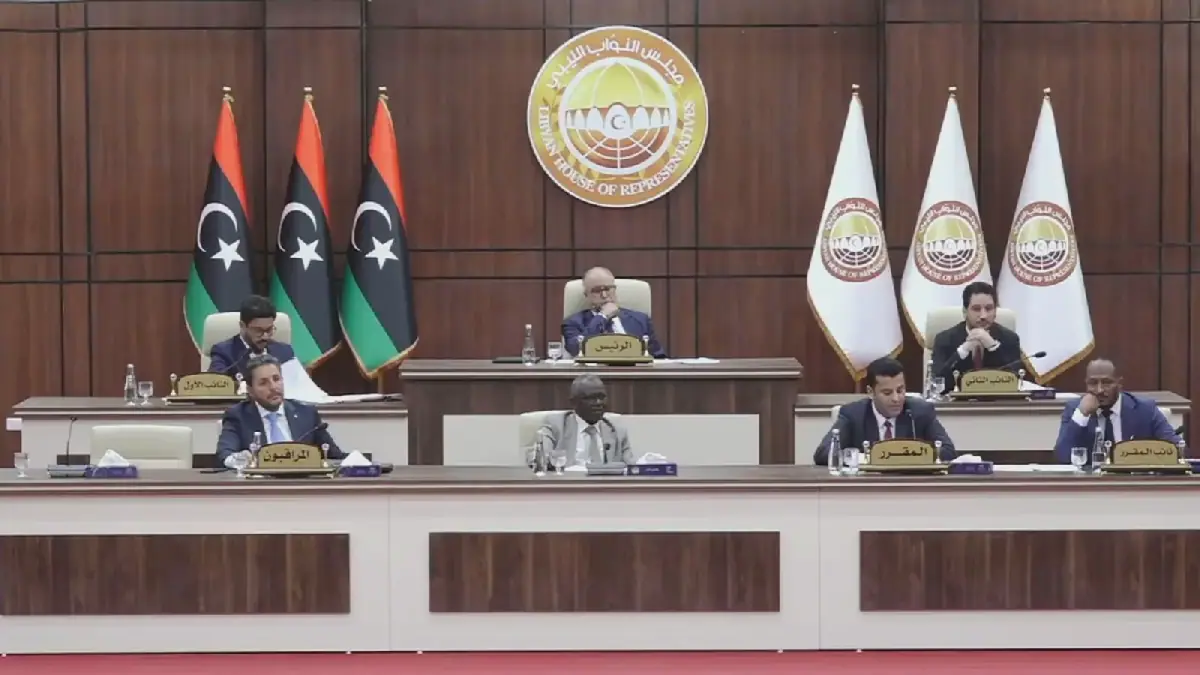
Libya's parliament has accused Prime Minister Abdul Hamid Dbeiba of issuing instructions to prevent the granting of flight permits necessary to transport some members of the council to the cities of Zintan and Zawara. The parliament considers this an obstruction of its parliamentary duties and an intervention in the competences of the concerned authorities. This development comes as the parliament seeks to hold its sessions in various regions of the country.
According to the parliament, these instructions were issued before the convening of its official session scheduled for Monday, November 16, in the city of Zintan. The parliament aims to hold sessions in different parts of the country, east, west, and south, to enhance communication with citizens. The prevention of the arrival of its members to these cities affects the independence of the legislative authority.
The parliament warned against involving state agencies in political disputes. It stressed that obstructing the arrival of its members to these cities prevents them from performing their representative duties and listening to citizens' demands and their representatives. The parliament demands that Prime Minister Dbeiba immediately withdraw these instructions and clarify their basis.
The parliament also called on the competent authorities to complete the procedures for issuing flight permits according to the applicable controls. The council affirmed its right to take legal measures to hold accountable anyone proven to be involved in obstructing the performance of its duties. This development highlights the ongoing tensions between the Libyan parliament and the executive authority.
The Libyan parliament's session in Zintan is part of its efforts to decentralize its activities and engage with citizens in various regions. The city of Zintan is located in western Libya and has been a significant site for political and military developments in the country. The parliament's move to hold sessions in different regions aims to promote dialogue and representation.
Prime Minister Abdul Hamid Dbeiba's government has been working to consolidate power and address various challenges in Libya, including security, economic, and political issues. However, the accusations from the parliament suggest that there are still significant divisions and power struggles within the country's political landscape.
The situation may have implications for Libya's political stability and the ongoing efforts to address the country's challenges. The international community has been closely following developments in Libya and urging restraint and dialogue among the country's leaders.
Key points
- Libya's parliament accuses PM Abdul Hamid Dbeiba of blocking session in western cities.
Reporting sources
- البرلمان يتهم الدبيبة بعرقلة جلسته في الزنتان ويطالبه بسحب تعليمات منع الطيران · Libya Al Ahrar TV