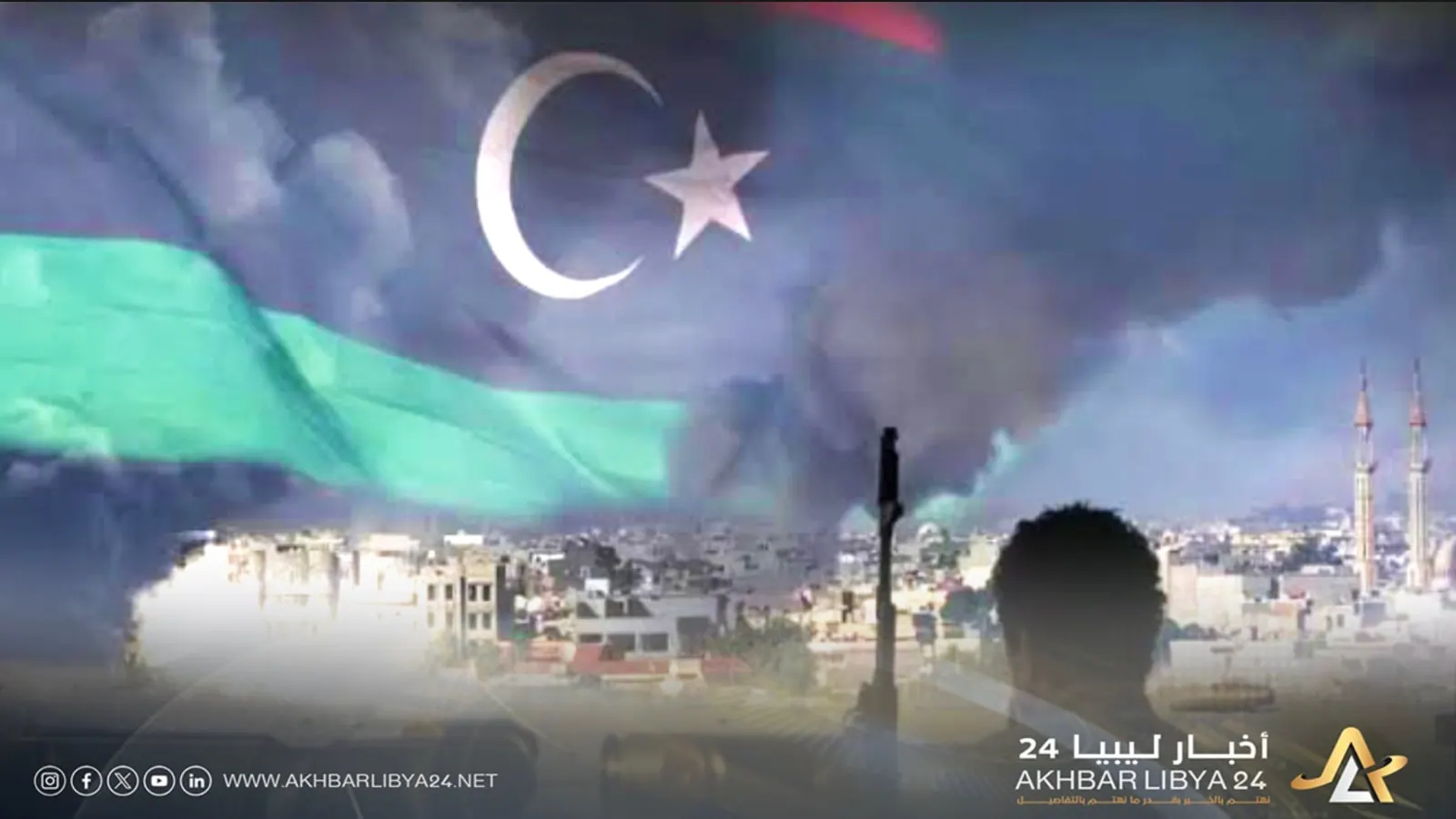
The ongoing crisis in Libya has become a protracted and multifaceted issue, with a deepening political and institutional stalemate. Dr. Jibril Al-Obaidi, a writer, academic researcher, and professor at the University of Benghazi, has warned that continued division will exacerbate the crisis, and that a temporary solution is no longer viable. He emphasizes that the crisis, which has lasted for years, requires a Libyan-led solution to end the transitional phase and hold national elections.
According to Al-Obaidi, the Libyan crisis is no longer a domestic issue but has become an international problem, with external interventions prolonging the crisis and transferring international conflicts to Libyan soil. He cites 2011 as a pivotal year, when the overthrow of state institutions led to chaos and the rise of armed groups. The Libyan army was able to regain control of large areas of the country and confront armed groups and organizations that benefited from the division.
The continued division in Libya is also linked to multiple centers of influence and conflicting international interests. Al-Obaidi criticizes what he sees as an excessive reliance on external initiatives, stressing that any sustainable solution should come from within Libya and preserve national sovereignty. The United Nations, on the other hand, maintains that its current approach is based on the principle of a "Libyan-led and owned" political process, with international support.
The UN has reported that Libyan political and legislative institutions have continued to operate beyond their mandated periods, in the absence of national elections scheduled for December 2021. The Security Council has welcomed an agreement on the electoral commission and electoral framework, considering it a step towards free, fair, transparent, and inclusive national elections.
Al-Obaidi also highlights the impact of continued division on the daily lives of Libyans, from rising prices and declining purchasing power to the deterioration of the Dinar and increased living costs. The UN notes that the political division and weak institutional coordination have direct repercussions on the economic situation and public services.
The issue of party politics in Libya is also raised, with Al-Obaidi arguing that the proliferation of parties does not necessarily imply a vibrant democratic life. He stresses that the democratic process requires clear rules for representation, participation, and financing. The UN, in its approach, has adopted a broader approach to participation, involving representatives from various political, social, academic, and cultural backgrounds.
Al-Obaidi concludes by rejecting a return to armed confrontation between major forces to break the political stalemate, instead calling for a temporary power-sharing arrangement to lead the country towards general elections and end the open political transition. The international community, through the UN, is pushing for a Libyan-led process, with a focus on elections and institutional unity within a specific timeframe.
Key points
- The ongoing crisis in Libya is a complex issue with deepening political and institutional stagnation.
- External interventions have prolonged the crisis, and a Libyan-led solution is necessary to end the transitional phase and hold national elections.
- The international community, through the UN, is supporting a Libyan-led process, with a focus on elections and institutional unity.