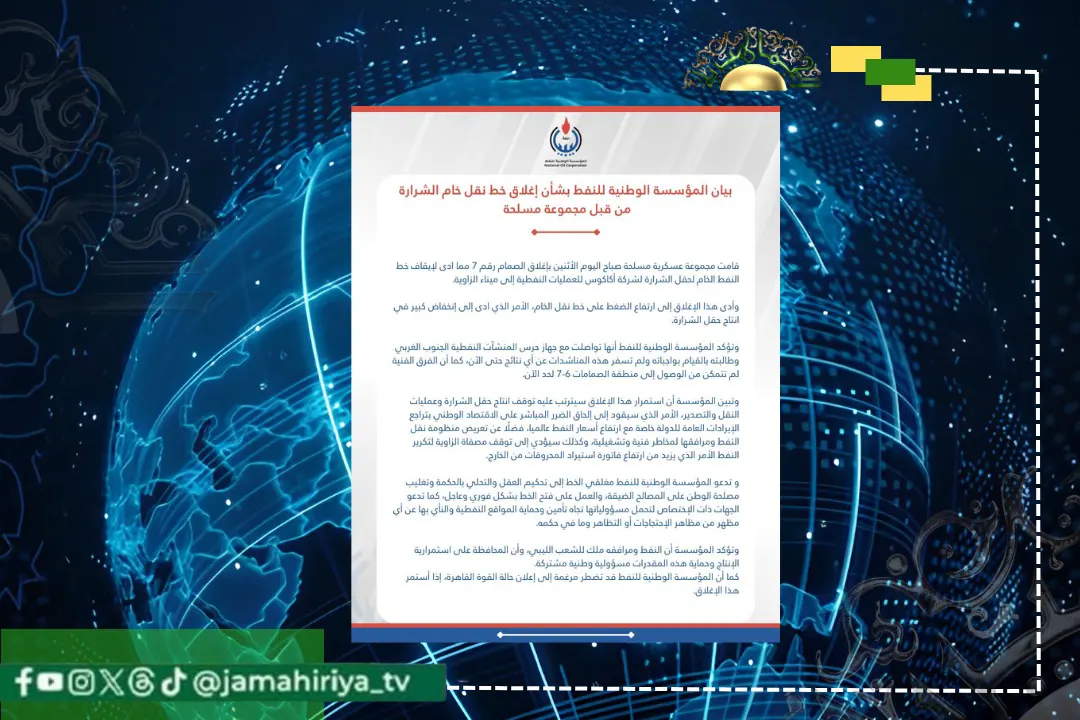
On September 21, 2026, Libya's National Oil Corporation announced that an armed group had closed valve number 7, causing the shutdown of the pipeline transporting crude oil from the Sharara field, operated by Akakus Oil Operations, to the Zawiya port. This closure has resulted in increased pressure within the pipeline and a significant decrease in production at the Sharara field. The Corporation has expressed concern over the situation and its potential impact on Libya's economy.
The National Oil Corporation has been in communication with the Southern Western Region's Petroleum Facilities Guard, urging them to take responsibility for the situation. However, their efforts have yet to yield results. Technical teams have been unable to access the area around valves 6 and 7 to assess the situation and address the issue. The Corporation has warned that continued closure of the pipeline could lead to a complete shutdown of the Sharara field and disruptions to oil transfer and export operations.
A shutdown of the Sharara field and oil export operations would significantly impact Libya's national economy, particularly during a period of rising global oil prices. The Corporation has highlighted the potential risks to the oil transportation system and its facilities due to prolonged closure and increased pressure within the pipeline. Furthermore, continued disruptions could lead to a shutdown of the Zawiya oil refinery, increasing the country's reliance on imported fuel.
The National Oil Corporation has appealed to those responsible for the pipeline closure to consider the national interest and reopen the pipeline immediately. They have also called on relevant authorities to assume responsibility for securing and protecting oil facilities, keeping them separate from protests and other activities that may impact operations. The Corporation emphasized that oil and its facilities belong to the Libyan people and that protecting these resources is a shared national responsibility.
The situation has raised concerns about the potential consequences for Libya's economy and energy sector. The National Oil Corporation has warned that it may be forced to declare a force majeure event if the pipeline closure persists. This move would have significant implications for the country's oil production and export capabilities. The Corporation is working to resolve the situation and restore normal operations at the Sharara field.
The shutdown of the Sharara field has significant implications for Libya's economy, which heavily relies on oil production and export. The country's oil sector has faced numerous challenges in recent years, including disruptions due to conflict and protests. The National Oil Corporation is working to mitigate the impact of the pipeline closure and ensure the continued production and export of oil.
The Libyan government and relevant authorities have yet to comment on the situation. The National Oil Corporation's warnings highlight the need for a swift resolution to the issue to prevent further economic and energy sector disruptions. The country's oil production and export capabilities are crucial to its economic stability, and any prolonged disruptions could have severe consequences.
Key points
- The National Oil Corporation warns that continued closure of the pipeline could lead to a shutdown of the Sharara field and disruptions to oil transfer and export operations.
- A shutdown of the Sharara field and oil export operations would significantly impact Libya's national economy.
- The Corporation may be forced to declare a force majeure event if the pipeline closure persists.