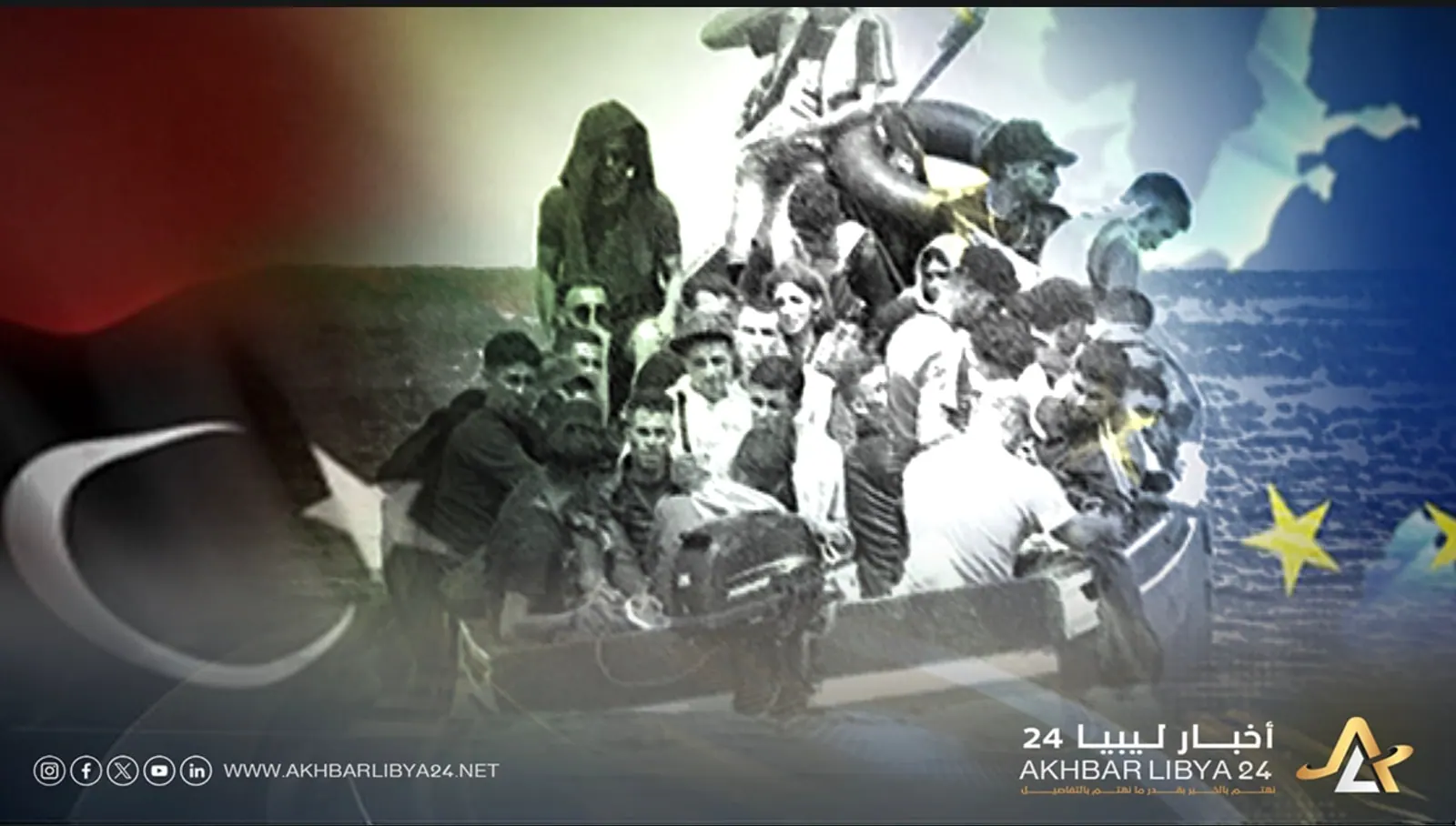
The issue of migration in Libya has evolved from a mere security concern to a complex problem affecting the job market, population structure, economy, and social security. The country's weak institutions and multiple power centers have resulted in citizens bearing the brunt of continued instability. Libya is no longer just a transit point for migrants; it has become a place of residence and work, particularly with various economic sectors relying on foreign labor.
The lack of a clear national policy on migration and governance has exacerbated the situation. According to political analyst Hossam Al-Fanish, Libya has gradually shifted from being a transit point for migrants to a space for residence and work, especially with economic sectors in need of foreign labor and weak government oversight of the job market and borders. This situation has significant implications for Libyan citizens, who are seeking a clear and effective governance framework.
The presence of large numbers of migrants outside the legal and institutional frameworks raises questions about the nature of their presence and whether it is temporary or will become a permanent demographic and economic reality. The issue is further complicated by the need for the job market to be organized and regulated, with citizens competing with migrants for employment opportunities. A clear and effective policy on migration and governance is necessary to address these challenges.
Al-Fanish emphasizes the need to distinguish between regulating the presence of foreign labor and transforming Libya into a permanent space for absorbing migration flows that Europe is unable to accommodate. He stresses that Libya's interests, as well as those of its citizens, must be taken into account when addressing the issue of migration. A national policy on migration that prioritizes the needs and rights of Libyan citizens is essential.
The situation is further complicated by the influx of displaced persons from Sudan, which adds a new layer of complexity to the issue. The Libyan authorities must address the challenges of migration, displacement, and governance within a unified framework, rather than allowing these issues to escalate in the absence of clear policies. The impact of these challenges is felt directly by Libyan citizens, who are seeking stability, security, and effective governance.
In the political sphere, Al-Fanish has expressed skepticism about the announcement by Mustafa Al-Majzoub to freeze the work of the House of Representatives and the State Council, suggesting that it may be a "political trial balloon" rather than a concrete step towards resolving the country's challenges. The success of any new political initiative will depend on its ability to intersect with international and regional actors and to address the country's deep-seated governance challenges.
The issue of migration and governance in Libya is deeply intertwined, with the country's weak institutions and multiple power centers exacerbating the challenges. A clear and effective policy on migration and governance is necessary to address these challenges and to prioritize the needs and rights of Libyan citizens. The situation requires a comprehensive and coordinated approach that takes into account the complex interplay between migration, governance, and economic development.
Key points
- The issue of migration in Libya has evolved into a complex problem affecting the job market, population structure, economy, and social security.
- A clear and effective policy on migration and governance is necessary to address the challenges facing Libya.
- The success of any new political initiative will depend on its ability to intersect with international and regional actors and to address the country's deep-seated governance challenges.