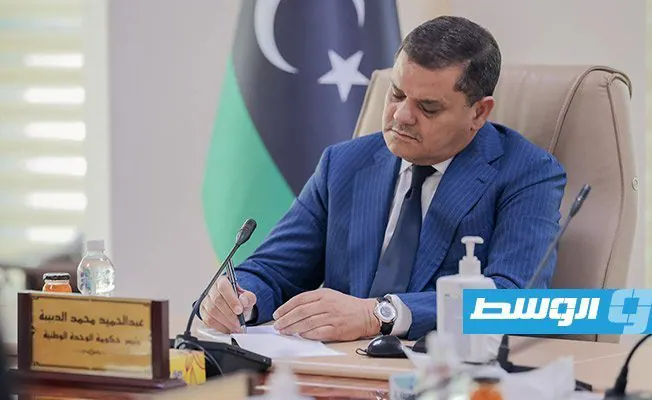
On September 22, 2026, Libya's interim government, led by Abdul Hamid Dbeibah, issued a decision to equalize the salaries of oil facility guards with those of army personnel. This move comes amid ongoing protests and closures of oil facilities by guards demanding better pay and working conditions. The decision, published in the official gazette, aims to address the grievances of the guards and ensure the stability of oil production in the country.
The decision, numbered 454 of 2026, was signed by Dbeibah on September 22, 2026, and came into effect immediately. It stipulates that the salaries of oil facility guards will be equivalent to those of army personnel, a move expected to alleviate tensions and encourage the guards to return to work. The oil facility guards have been protesting for improved salaries and working conditions, with some groups closing oil facilities and threatening to reduce production.
The National Oil Corporation (NOC) announced on September 21, 2026, that a group of oil facility guards had closed the Zawiya oil complex, leading to a significant loss of production. The closure resulted in a loss of 130,000 barrels per day, according to the NOC. The corporation urged the authorities to take responsibility for protecting oil facilities and ensuring the safety of employees.
This is not the first time oil facilities in Libya have been closed due to protests. Earlier in September 2026, a group of guards closed a valve in the pipeline connecting the Sharara oil field to the Zawiya port, causing a significant drop in production. The guards also threatened to reduce production in several other fields if their demands were not met.
The demands of the oil facility guards include transferring their financial and administrative affiliation from the Ministry of Defense to the NOC, increasing salaries, and improving living conditions. These demands have been under negotiation for some time, with the guards threatening to take further action if they are not met.
The decision to equalize salaries is seen as a step towards resolving the crisis and ensuring the stability of oil production in Libya. However, it remains to be seen whether the move will be enough to address the grievances of the guards and prevent further closures of oil facilities.
The Libyan government has been facing significant challenges in recent months, including protests, closures of oil facilities, and security concerns. The decision to equalize salaries is part of a broader effort to address these challenges and restore stability to the country.
Key points
- The Libyan interim government has decided to equalize the salaries of oil facility guards with those of army personnel in an effort to address their grievances and ensure the stability of oil production.