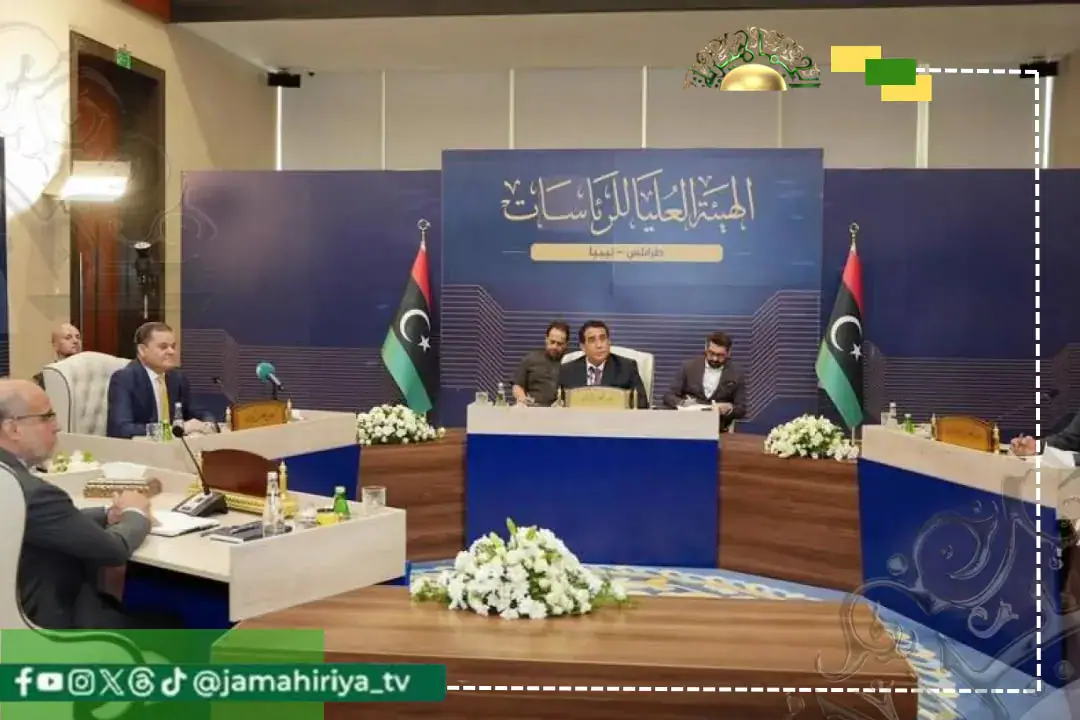
A recent decision by Libya's Presidential Council to replace the head of the General Intelligence Agency has escalated into a full-blown crisis, highlighting the ongoing struggle for power and legitimacy among the country's institutions. The council's decision to relieve Hussein Al-Ayeb of his duties and appoint Abdel Majeed Mliqta in his place has sparked a heated debate over the legitimacy of the move.
The shakeup has exposed a rift within the Presidential Council itself, with member Musa Al-Koni expressing reservations about the procedure followed in replacing the intelligence chief. This development has raised questions about the level of consensus among council members on key decisions. The divisions within the council reflect the fragile nature of the country's power-sharing arrangements and the challenges of making collective decisions on sensitive issues.
The crisis goes beyond a simple leadership change, involving as it does an institution closely tied to national security, information protection, and the country's higher interests. The dispute over who has the authority to appoint and dismiss the intelligence chief has brought to the fore questions about the legal mechanisms for resolving conflicts between state institutions.
The ongoing divisions and multiple power centers in Libya have deepened institutional fragmentation, leaving key agencies vulnerable to political maneuvering rather than operating under a unified national framework. This situation has significant implications for the country's overall stability and security. The divisions threaten to undermine the cohesion of Libya's security apparatus.
The intelligence agency crisis coincides with recent diplomatic efforts by Libyan Presidential Council head Mohamed Al-Menfi, who met with French President Emmanuel Macron in Paris on November 10. This juxtaposition highlights the disconnect between Libya's international engagement and its internal power struggles.
The current crisis demonstrates that Libya's divisions are no longer confined to the rivalry between the eastern and western regions but have now permeated the institutions of the same government. This development poses a significant threat to the unity and coherence of the country's decision-making processes.
The most significant risk is that the political conflict may spill over into security and intelligence agencies, potentially compromising their independence and ability to safeguard national security. The fundamental issue remains the absence of a unified institutional framework that can resolve disputes and ensure respect for jurisdictions and decisions.
Key points
- The Libyan intelligence agency leadership change has sparked a crisis, revealing deep divisions within the country's institutions.
- The crisis highlights the ongoing struggle for power and legitimacy among Libya's institutions.
- The situation poses significant risks to Libya's stability, security, and decision-making processes.
Reporting sources
- تقرير| أزمة رئاسة المخابرات تكشف عمق الانقسام داخل مؤسسات الدولة الليبية · Aljamahiriya TV