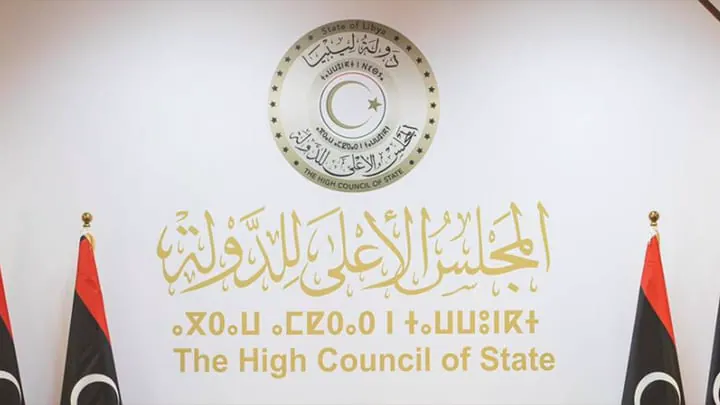
Libya's High Council of State has expressed its rejection of the electoral laws issued by the House of Representatives, describing them as "unconstitutional." The laws, numbered 4 of 2026, relate to amendments to the presidential election law and other legislative decisions connected to the electoral process. According to the High Council of State, the passage of these laws does not align with the required constitutional and legal basis for elections.
The High Council of State emphasized that reaching the elections should not be separated from the integrity of the constitutional and legal foundation. The council clarified that its rejection of the electoral law amendments does not stem from a desire to delay the electoral process but from the necessity of making substantial changes through a clear and agreed-upon institutional path. This process should involve both the House of Representatives and the High Council of State.
The council highlighted that the thirteenth constitutional amendment established a participatory process between the two councils through a (6+6) committee. It noted that the agreement reached in the "4+4" meeting on August 30, concerning the electoral framework and the restructuring of the High National Elections Commission, remains a "political understanding." This understanding requires completion of its institutional and legal path with the approval of both councils.
The High Council of State announced its commitment to not converting political understandings into final legislative rules before completing the necessary institutional frameworks. It called on the House of Representatives to continue the institutional consultation on the electoral framework to find a widely accepted framework. This framework should protect the elections and their outcomes from disputes over their legitimacy.
The council also invited the United Nations Support Mission in Libya to play a facilitating role that ensures respect for Libyan institutions and their constitutional paths. It warned that the mission's role should not lead to replacing one institutional path with another. The High Council of State reiterated its readiness to engage in responsible dialogue leading to stable rules and a unified executive authority that ends the transitional phase.
The House of Representatives had issued a package of laws and decisions on the political and electoral process, following the agreement of the "4+4" meeting. One of the laws amends the presidential election law, stipulating that presidential and parliamentary elections should be held simultaneously within 24 months from the date of forming a unified executive authority. The law provides for a two-round system, with the possibility of eliminating the second round if a candidate obtains an absolute majority in the first round.
The new law allows individuals with dual nationality to run for president, provided they renounce their foreign nationality before taking the constitutional oath if they win. It also permits military personnel to participate as candidates and voters, provided they resign from military service before taking the oath if they win. If the winner fails to comply with these conditions, the next candidate in line assumes the position.
Key points
- The High Council of State rejects the House of Representatives' electoral laws, citing their unconstitutionality.
- The council insists on completing the institutional and legal path for electoral frameworks through a participatory process.
- The laws issued by the House of Representatives aim to hold simultaneous presidential and parliamentary elections within 24 months.