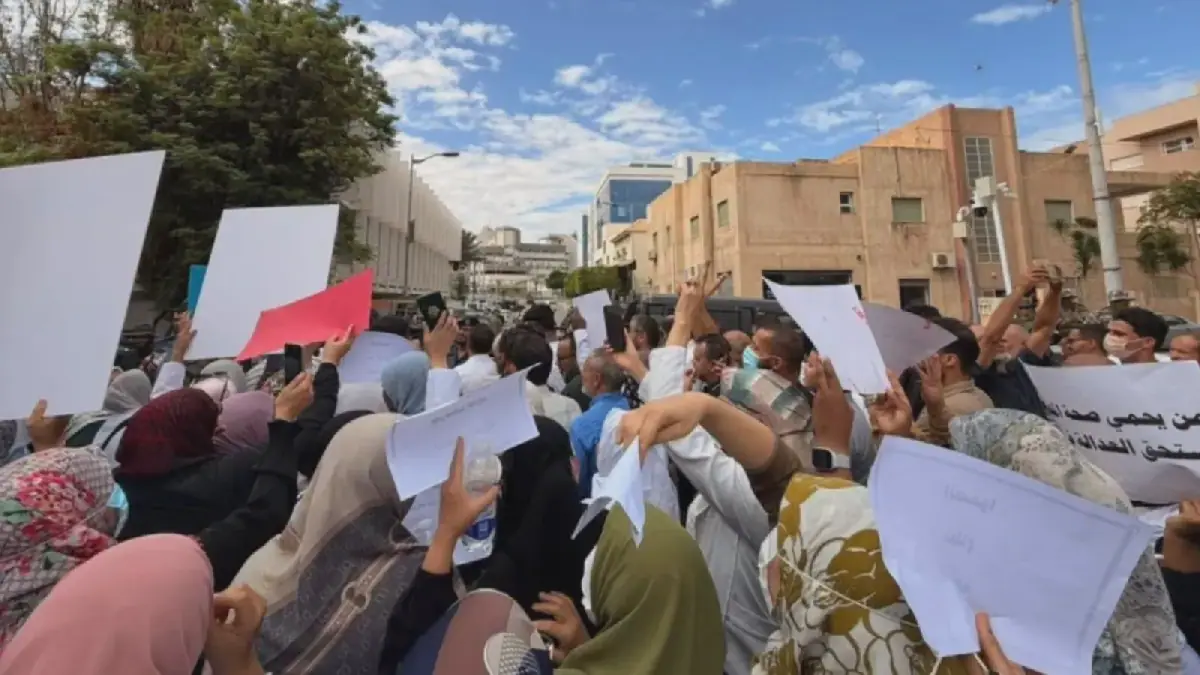
The crisis in Libya's healthcare sector has evolved into a broad confrontation over working conditions, rights, and the role of professional unions. Protests began in late August 2026, with healthcare workers demanding better salaries and financial settlements. The protests have since expanded to include issues such as providing medications, medical equipment, and ensuring adequate protection for medical personnel.
Reports indicate that protests have spread to various cities, including Tripoli, Zliten, Zawiya, and Ajilat. In Benghazi, medical center employees staged a protest in solidarity with colleagues in other areas. In Tripoli, the University of Tripoli Hospital was a key location for protests, with demands focusing on professional and financial conditions, as well as operational and administrative issues within the hospital.
The protests have led to clashes within the medical union, with some groups demanding changes in leadership and new elections. On October 18, the Union of Healthcare Sector Protesters called on doctors to stage a sit-in in front of the General Medical Union in Tripoli to demand changes in leadership and new elections. The protesters accused the current leadership of remaining in their positions since 2012, arguing that this prolonged tenure has not led to sufficient improvements or adequate defense of doctors' rights.
The Libyan government has attempted to contain the crisis through meetings and promises to address outstanding issues. On September 20, Health Minister Mohamed Al-Goj met with representatives of medical unions and workers to discuss their demands. The ministry reported that a specialized committee was working on completing proposals for approval by relevant authorities.
On September 27, Al-Goj held another meeting with union representatives, movement representatives, and hospital directors to discuss financial, administrative, and professional issues. During the meeting, the minister announced that 27,451 functional settlements had been made in nearly 300 entities, and files for approximately 5,000 workers had been sorted during 2026.
Despite these efforts, the protests have continued, with demonstrators calling for a binding timeline for implementing their demands. The ongoing crisis raises questions about the government's ability to balance workers' rights with ensuring continued healthcare services for citizens.
The situation highlights the complexities of addressing the needs of healthcare workers while maintaining essential services. Key issues include improving salaries, providing adequate equipment, and ensuring worker safety. The protests underscore the need for a comprehensive approach to resolving the crisis and restoring stability to Libya's healthcare sector.
Key points
- The protests in Libya's healthcare sector have expanded to include demands for better working conditions, equipment, and protection for medical personnel.
- The crisis has led to disputes within the medical union, with some groups demanding changes in leadership and new elections.
- The Libyan government has attempted to address the crisis through meetings and promises to implement reforms, but the protests continue.
Reporting sources
- أزمة القطاع الصحي.. احتجاجات ومطالب وخلافات نقابية وتصعيد ميداني · Libya Al Ahrar TV