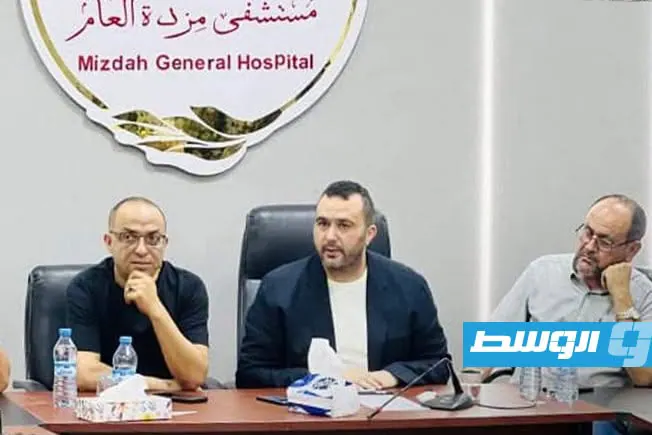
Libya's Health Minister Mohamed Al-Goj conducted a field visit to the towns of Mzada and Nesma on Friday, September 25, 2026, to assess the damage caused by recent floods and heavy rainfall. He inspected Mzada General Hospital and Nesma Hospital, meeting with local officials and healthcare workers. The minister aimed to evaluate the hospitals' conditions and their ability to provide medical services to affected citizens.
During his visit to Mzada General Hospital, Al-Goj reviewed the hospital's needs and confirmed its readiness to continue providing healthcare services. He also inspected the damage at Nesma Hospital, stressing the need for urgent repairs and maintenance to restore its operations. The minister was accompanied by several officials, including mayors of local municipalities and the head of the General Electricity Company.
The visit comes as the region faces significant challenges due to the floods, which have caused widespread damage to public and private properties. The municipal council of Nesma has declared the area a disaster zone. Mzada General Hospital has reported a shortage of medical supplies, appealing for urgent support to treat flood victims.
Al-Goj has instructed relevant authorities to start repair work to restore Nesma Hospital to service. The hospital's damage and the shortage of medical supplies at Mzada General Hospital highlight the need for immediate assistance. The Libyan government and humanitarian organizations are working to address the crisis and provide support to affected areas.
The floods have also prompted evacuations in areas near watercourses, with local authorities warning residents of potential dangers. The Libyan Red Crescent and other humanitarian organizations are involved in relief efforts, providing assistance to those affected by the floods.
The situation in Libya remains challenging, with many areas affected by the floods and subsequent damage. The government's response, led by Minister Al-Goj, aims to mitigate the impact of the disaster and restore essential services, including healthcare. International support and aid are also being mobilized to help Libya recover from the crisis.
As the recovery efforts continue, the Libyan government and humanitarian organizations are working together to provide assistance to those affected and restore normalcy to the affected regions. The health ministry's efforts to restore hospital services are crucial in addressing the medical needs of flood victims and preventing further health crises.
Key points
- Libya's Health Minister Mohamed Al-Goj inspects hospitals damaged by floods
- Mzada General Hospital and Nesma Hospital assess damage and plan repairs
- Floods cause widespread damage and displacement in Libya