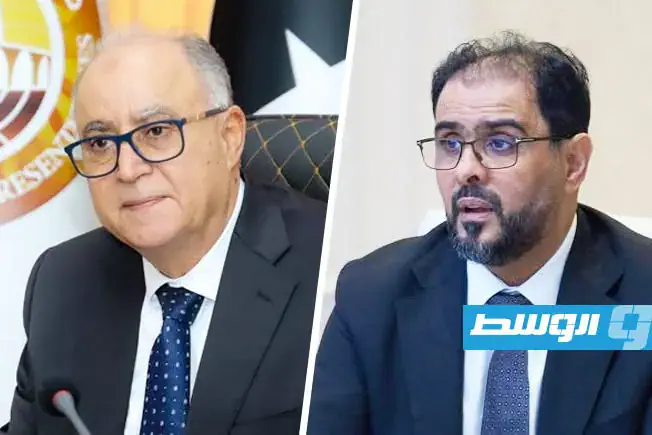
Libyan Prime Minister Osama Hamad has urged the House of Representatives to include the differences and financial benefits due to teachers in the unified budget for the 2027 financial year. This call was made in a letter addressed to the House of Representatives' Speaker, Saleh Abdel Nabi. Hamad emphasized the importance of disbursing these rights in four installments according to financial allocations and the principle of gradual spending.
Hamad's appeal comes after a meeting with education sector officials and the presence of the head of the Development and Reconstruction Fund of Libya, Belqasim Hafter. The discussion focused on addressing the repercussions of the teachers' sit-in and their financial demands. Hamad praised the role of teachers despite the country's difficult circumstances and urged official bodies to take a serious and swift stance to compensate them and enable them to obtain their financial rights.
The issue of teacher benefits has been contentious, with Hamad previously calling on teachers to end their sit-in and return to schools. He assured them that the government is working on a mechanism to follow up on the file of financial dues in coordination with their representatives. According to Hamad, the differences in salaries due under Law No. 4 of 2018 will be included in the unified budget and paid in four installments during the year.
However, there is a discrepancy regarding the mechanisms for resolving teachers' dues and ending their sit-in. The Prime Minister of the interim Government of National Unity, Abdul Hamid Dbeiba, announced an agreement with the teachers' movement and representatives of some sub-unions to end the sit-in and return to schools. The agreement included disbursing the first installment of each teacher's dues within November salaries.
The Ministry of Finance in the Government of National Unity has started disbursing 2000 dinars to each teacher as an account deposit of the due differences under Law No. 4 of 2018. However, the General Syndicate of Libyan Teachers rejected the outcomes of any agreements on ending the sit-in that were not issued by or approved by their official institutions.
The Libyan government has been working to address the financial demands of teachers, with Hamad stressing the importance of finding a solution to the crisis. The government's efforts aim to ensure that teachers receive their rights and that students return to their schools. The crisis has affected the education sector, with the start of the academic year being delayed.
The issue of teacher benefits and the sit-in has highlighted the challenges facing the education sector in Libya. The government's ability to address the financial demands of teachers will be crucial in resolving the crisis and ensuring the continuity of the academic year. The situation remains a priority for the Libyan government, with efforts ongoing to find a solution.
Key points
- Hamad urges parliament to include teacher benefits in the unified budget.
- Disagreement over mechanisms for resolving teachers' dues and ending their sit-in.
- Government efforts to address financial demands of teachers and ensure continuity of academic year.