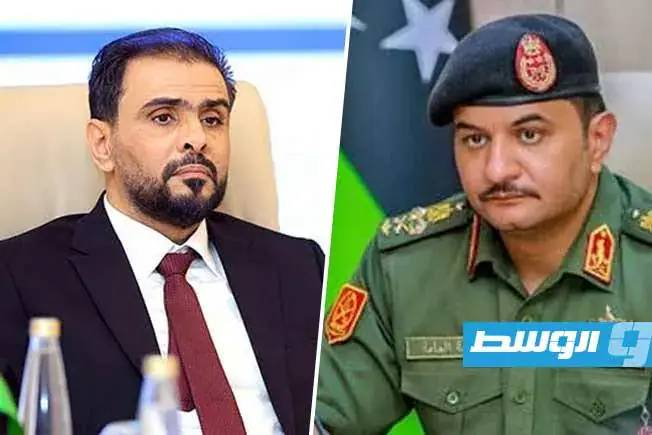
Libya's designated Prime Minister, Osama Hamad, and Deputy Commander of the General Command, Sadam Hifter, have welcomed the UN Security Council's decision to extend the mandate of the UN Mission in Libya by one year. In separate statements, they called for a unified executive and an end to the country's institutional division. Hamad emphasized the importance of forming a unified executive authority to restore state institutions and end the division.
Hamad highlighted that a unified executive authority is crucial for holding free and fair elections based on national consensus and a sound legal and constitutional basis. He also praised international efforts supporting these efforts and stressed the need for Libya's sovereignty and national will to be respected. Hamad's statement comes as Libya continues to face a complex crisis, with multiple factions vying for power.
Sadam Hifter said the UN Security Council's decision provides an opportunity for a national settlement that ends years of division and political deadlock. He called for a clear roadmap with specific deadlines to hold free and fair presidential and parliamentary elections. Hifter emphasized that a unified executive authority is a national priority that cannot be delayed, as it is essential for ending the transitional phase and stabilizing the country.
Hifter also stressed that Libya's sovereignty, territorial integrity, and national decision-making are non-negotiable. He expressed willingness to continue cooperating with the UN Mission and friendly countries to support a genuine national settlement. Hifter urged all Libyan parties to assume their national responsibilities and engage with this phase in a serious and consensual manner.
The UN Security Council's decision also called for the withdrawal of mercenaries and foreign fighters from Libya without further delay. The Council emphasized the importance of supporting and accepting all Libyan stakeholders for the "4+4" agreement. Libya has been struggling with multiple crises, including the presence of foreign fighters and mercenaries.
The reactions from Hamad and Hifter reflect the complexities of Libya's crisis and the need for a national consensus. Their statements highlight the importance of a unified executive authority and the need to end the country's division. Libya's crisis has been ongoing for over a decade, with multiple factions and foreign powers involved.
The international community has been engaged in efforts to resolve Libya's crisis, with the UN playing a key role. The UN Security Council's decision aims to support these efforts and provide a framework for a national settlement. Libya's parties must now engage in serious dialogue to achieve a unified executive authority and hold free and fair elections.
Key points
- Osama Hamad and Sadam Hifter call for a unified executive authority in Libya
- The UN Security Council extends the mandate of the UN Mission in Libya by one year
- Libya's crisis has been ongoing for over a decade, with multiple factions and foreign powers involved