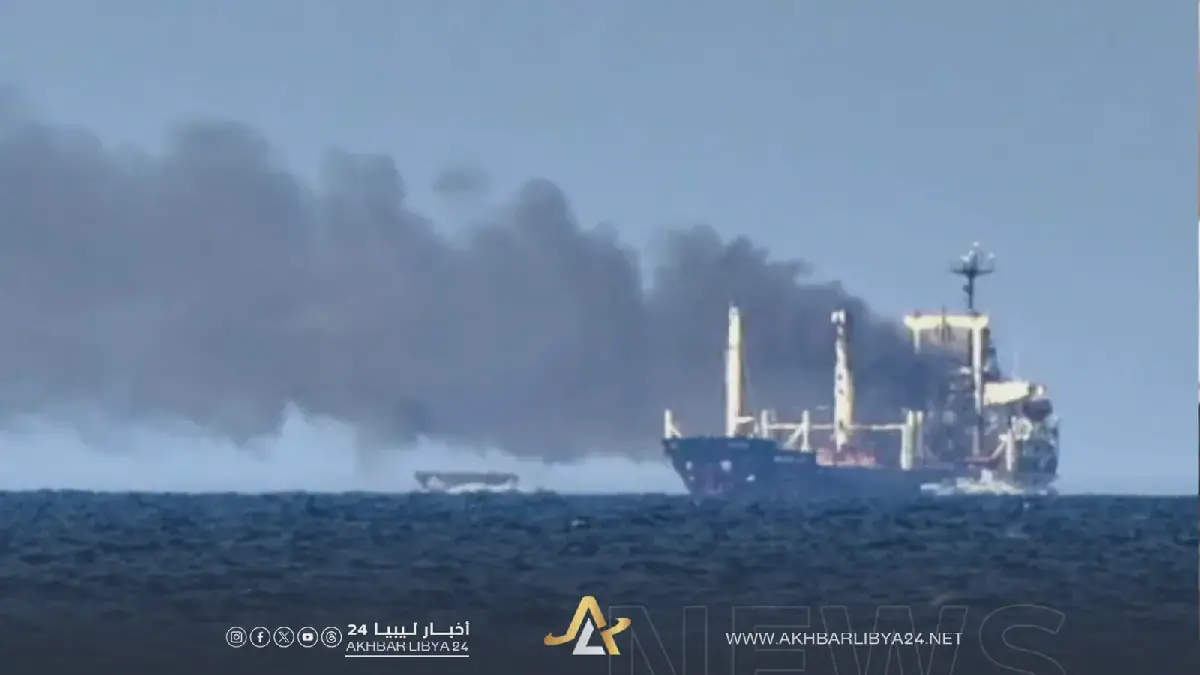
The Libyan government, led by Prime Minister Abd al-Hamid al-Dabaiba, has expressed concern over the potential involvement of civilian ports and facilities in external conflicts. This warning comes in the wake of a recent explosion at a base in the eastern city of Benghazi. The government has emphasized its rejection of transforming Libya into a battleground for international powers to settle their scores.
In a statement, the government thanked God for the safety of the city's residents and acknowledged that it is closely monitoring the initial information surrounding the incident. The government has raised concerns about the potential risks to the safety of citizens, facilities, and national capabilities. The incident has sparked fears about the potential for Libya to be drawn into external conflicts.
The Libyan government has categorically rejected the use of Libyan land, ports, and territorial waters for military or logistical activities related to external conflicts. The government has warned that such practices could expose the country's security and sovereignty to risks and repercussions that do not serve Libya's interests. This stance is aimed at protecting the country's stability and preventing it from becoming a proxy battleground.
The government has also cautioned against hosting or enabling non-legitimate foreign forces to use national facilities. This could potentially lead to the extension of external conflicts into Libya and pose security and political risks to the country. The government has emphasized the need to prevent such scenarios from unfolding.
The Libyan government has stressed that any military arrangements or logistical facilitation concluded outside the official frameworks of the state do not represent Libya and lack its authorization. The government has held parties responsible for such arrangements accountable for the resulting repercussions. This stance underscores the government's commitment to maintaining control over the country's security and foreign relations.
The government has linked addressing these risks to the need to unify the military institution under the state's authority and end the multiplicity of decision-making centers. This would prevent individual parties from concluding external arrangements that could compromise national sovereignty and expose the country to the consequences of international conflicts.
The statement comes amid an explosion at a Benghazi naval base, with various official positions on the incident and its repercussions. The situation highlights escalating warnings about the potential use of Libyan facilities and infrastructure in activities related to international and regional tensions.
Key points
- The Libyan government rejects the use of its land, ports, and territorial waters for military or logistical activities related to external conflicts.
- The government warns that involving civilian ports in external conflicts could expose Libya's security and sovereignty to risks.
- The government calls for unifying the military institution under state authority to prevent unauthorized external arrangements.
Reporting sources
- حكومة الدبيبة تحذر من «إقحام الموانئ» المدنية في الصراعات الخارجية · Akhbar Libya 24