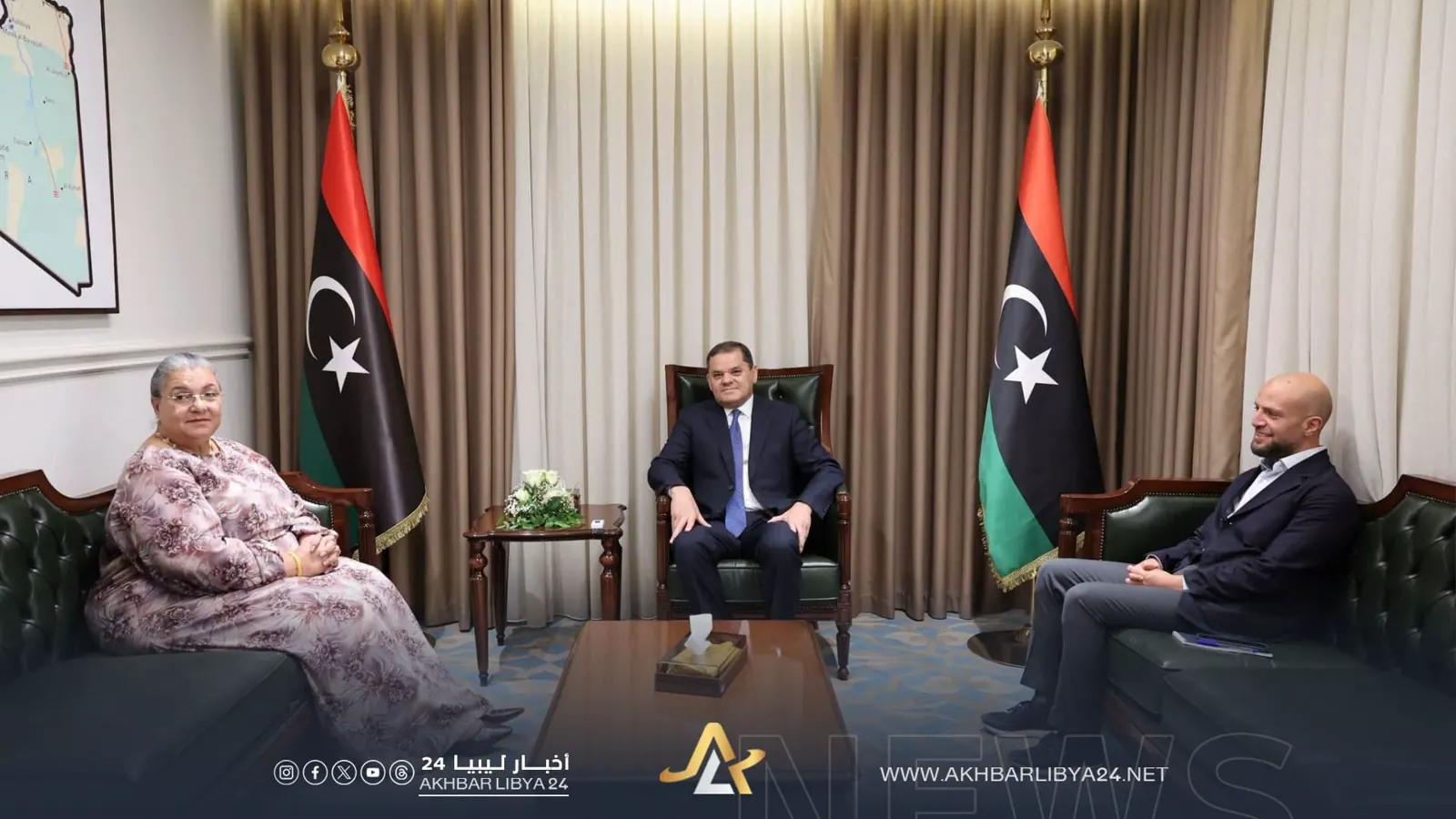
Libyan Prime Minister Abdul Hamid Dbeiba met with UN Special Envoy to Libya Hanna Titieh on Wednesday to discuss the country's political process and efforts to push forward with elections. The meeting, attended by Minister of State for Communication and Political Affairs Walid Al-Lafi, focused on supporting national reconciliation and unifying state institutions to pave the way for elections and stability. Dbeiba emphasized the importance of elections in ending the transitional phase and achieving stability.
The meeting comes as the UN mission in Libya intensifies its contacts with Libyan parties to push forward with a roadmap for elections, following the signing of the "4+4" agreement in late August. The agreement, which aims to address obstacles to elections, was signed by representatives of the House of Representatives, the High Council of State, the Libyan National Army, and the Government of National Unity. The agreement includes steps to reconstitute the National High Commission for Elections and address legal and constitutional frameworks for presidential and legislative elections.
The "4+4" agreement sets a timeline for elections to be held within two years and outlines key steps to be taken, including the reconstitution of the electoral commission and the development of electoral laws. The agreement also addresses issues related to candidacy and voting requirements. The House of Representatives has approved the agreement, but there are still divisions within the High Council of State. The UN mission is working to build support for the agreement and engage with various Libyan parties.
UN envoy Titieh is seeking to build a broader consensus on the agreement and overcome objections. She has met with members of the High Council of State to discuss the agreement's outcomes and positions within the council. The UN mission is also working to support the implementation of the agreement, including the reconstitution of the electoral commission and the development of electoral laws.
Despite progress on the electoral front, a major challenge remains the unification of institutions and the executive authority necessary to implement the electoral process. The country's continued institutional and political divisions make it difficult to move forward with elections. The UN mission is working to support Libyan parties in overcoming these challenges and achieving a stable and democratic transition.
The meeting between Dbeiba and Titieh reflects the UN mission's focus on elections as a key part of its roadmap for Libya. The mission is working to support Libyan parties in achieving a stable and democratic transition through elections. The success of this process will depend on the ability of Libyan parties to overcome their differences and implement the agreed-upon steps.
The stakes are high for Libya's transition, with the country's future stability and prosperity hanging in the balance. The international community is watching closely, and there is a growing sense of urgency to achieve progress on the electoral front. The UN mission's efforts to support Libyan parties in achieving a stable and democratic transition are crucial to the country's future.
Key points
- The "4+4" agreement sets a timeline for elections to be held within two years.
- The agreement includes steps to reconstitute the National High Commission for Elections and address legal and constitutional frameworks for presidential and legislative elections.
- The meeting between Dbeiba and Titieh reflects the UN mission's focus on elections as a key part of its roadmap for Libya.