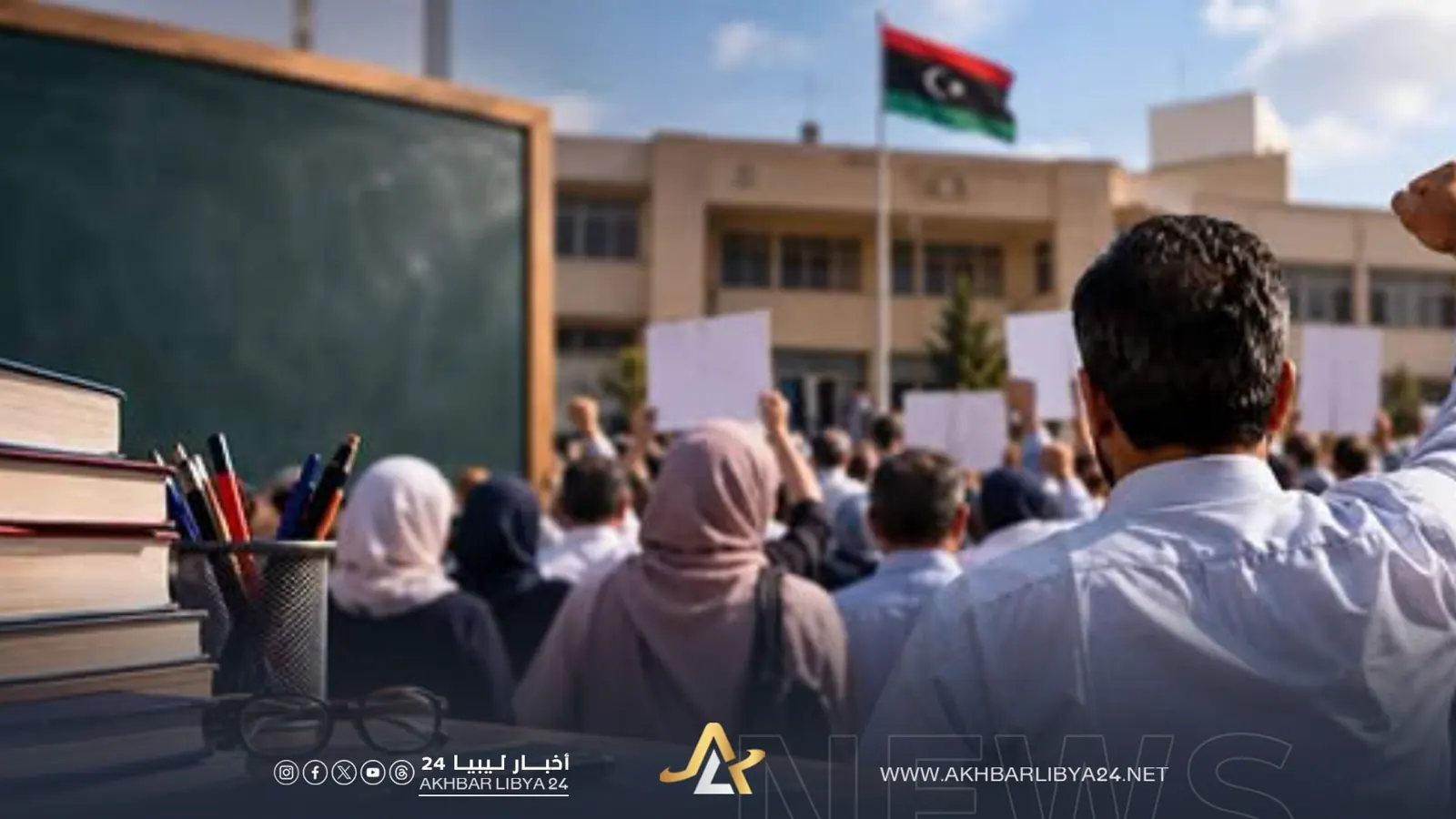
A rift has emerged within Libya's education sector as the Teachers' Movement announced its rejection of the government's decision to resume classes. The move comes after Prime Minister Abdul Hamid Dbeiba announced that schools would reopen on Wednesday, following a meeting with the General Teachers' Syndicate. The Teachers' Movement, however, insists that it will not back down until its demands are met.
The Teachers' Movement has outlined several key demands, including the payment of all outstanding financial differences to teachers, implementation of allowances and job benefits, and the actual implementation of health insurance for teachers. The group stressed that it would not be swayed by the General Teachers' Syndicate's decision to resume classes, calling on teachers to ignore the syndicate's directives.
Prime Minister Dbeiba's announcement that schools would reopen came after a meeting with the General Teachers' Syndicate, where an agreement was reportedly reached on the teachers' demands. Dbeiba emphasized that the decision to resume classes was made with the best interests of students in mind and to ensure the stability of the education sector.
The Teachers' Movement's rejection of the agreement has sparked concerns about the future of Libya's education sector. The group has made it clear that it will not compromise on its demands, leading to fears that the education sector may be plunged into further turmoil. The Libyan government has pledged to prioritize the education sector and ensure that teachers' rights are protected.
The resumption of classes has been a contentious issue in Libya, with teachers demanding better working conditions and improved benefits. The General Teachers' Syndicate has been engaged in negotiations with the government to address these concerns, but the Teachers' Movement has emerged as a new force, pushing for more radical action.
The crisis has significant implications for Libya's students and their families, who are eager for the education sector to stabilize. The sector is one of the largest in Libya, employing thousands of teachers and educating millions of students. Any disruption to the education sector has far-reaching consequences for the country's future.
As the standoff between the Teachers' Movement and the government continues, concerns are growing about the potential for further escalation. The government has announced plans to implement a unified salary scale for all public sector employees, which could help address some of the teachers' demands. However, the Teachers' Movement remains resolute in its demands, and it remains to be seen whether an agreement can be reached.
Key points
- The Teachers' Movement's rejection of the government's agreement with the General Teachers' Syndicate has plunged Libya's education sector into further turmoil.
- The group is demanding better working conditions, improved benefits, and the implementation of health insurance for teachers.
- The crisis has significant implications for Libya's students and their families, who are eager for the education sector to stabilize.