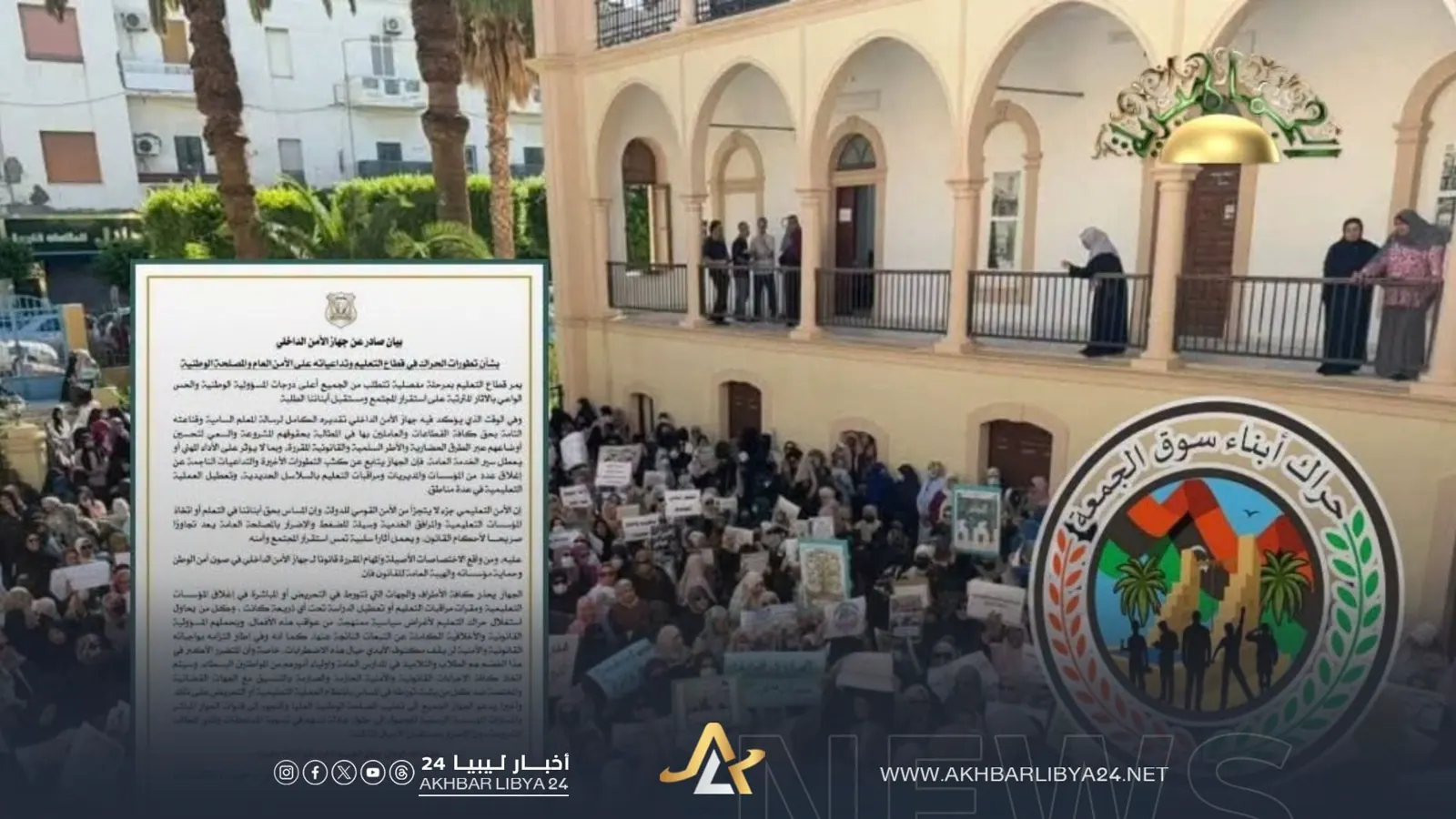
The education sector in Libya is experiencing a significant crisis. On October 10, 2026, the country's internal security apparatus warned of potential legal and security actions against individuals involved in closing educational institutions and disrupting the academic process. This warning comes amid ongoing protests by teachers demanding better working conditions and payment of their dues. The situation has sparked concerns about the impact on students and the overall stability of the education system.
A group known as the "Friday Market Movement" has expressed its support for the teachers' demands. In a statement, the movement emphasized that the dignity of teachers is intrinsically linked to the dignity of the nation. They argued that advocating for legitimate rights is not a crime that warrants threats or restrictions. The movement also warned that security threats would not deter teachers from continuing their protests until their demands are met.
The internal security apparatus, affiliated with the outgoing unity government, stated that it would take necessary measures to ensure the continuity of the educational process. The apparatus emphasized that disrupting education or using educational institutions for political pressure is illegal. They also highlighted that students in public schools and their parents are the most affected by the ongoing crisis.
The security apparatus urged all parties to prioritize the national interest and seek dialogue to resolve the crisis. They stressed that the rights of teachers to claim their dues and improve their working conditions should be respected. However, they also emphasized that these demands should not lead to the disruption of public services or harm the right of students to continue their education.
The crisis has sparked concerns about the potential long-term effects on Libya's education system. The situation has led to a standoff between the teachers' union and the security apparatus. The teachers' union remains committed to its demands, while the security apparatus has warned of potential consequences for those involved in disrupting the educational process.
The Libyan government and relevant authorities face the challenge of finding a solution that addresses the teachers' demands while ensuring the continuity of the educational process. The situation requires a careful balancing act to prevent further escalation and minimize the impact on students.
The education sector in Libya has faced numerous challenges in recent years. The ongoing crisis has highlighted the need for a comprehensive approach to address the sector's problems. The international community and local stakeholders are watching closely as the situation unfolds, hoping for a peaceful resolution that prioritizes the interests of students and teachers alike.
Key points
- The Libyan education sector is in crisis due to clashing demands from teachers and security warnings.
- The teachers' union is demanding better working conditions and payment of dues.
- The security apparatus has warned of potential legal and security actions against those disrupting the educational process.