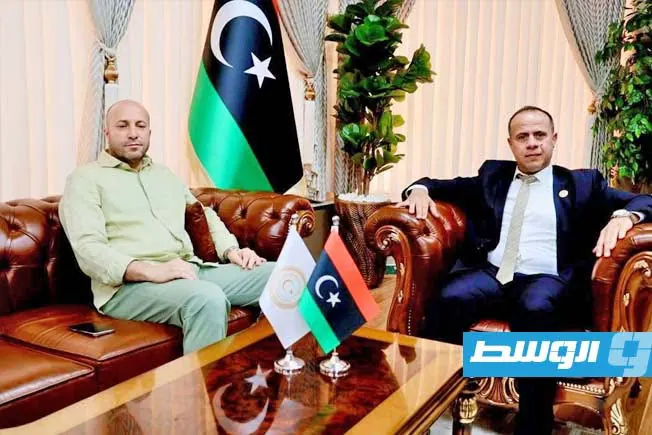
Libya's Education Minister Mohammed Al-Qariew met with Minister of State for Cabinet Affairs Mohammed Ben Ghalboun on Wednesday, September 23, 2026, to discuss the ongoing teachers' strike and the challenges facing the education sector. The meeting comes as the strike enters its second week. The two officials reviewed the current situation and explored ways to address the difficulties facing the sector.
The teachers' strike is centered on demands for improved working conditions, including unified and enhanced salary scales, payment of outstanding financial dues, and provision of health insurance. The striking teachers are seeking a comprehensive resolution to their grievances. The Education Ministry has stated that it is working to develop an executive vision to address the exceptional challenges facing the education sector.
The Ministry of Education said in a statement that the discussion between Al-Qariew and Ben Ghalboun focused on formulating a comprehensive executive vision to deal with the exceptional difficulties facing the education sector. This vision aims to safeguard teachers' rights and create a conducive environment to overcome the current challenges and restore stability to the sector.
On Tuesday, September 22, 2026, the head of the Libyan Teachers' Movement, Ashraf Ahmed, gave the government a deadline until Thursday, September 24, 2026, to implement the teachers' demands. Ahmed warned that if the deadline is not met, a general strike will be launched in all educational institutions across Libya.
The Education Ministry has assured that it is continuously raising recommendations and technical requirements to the Prime Minister's office to address the root causes of the challenges and ensure the smooth operation of the education sector. Minister Al-Qariew emphasized the Ministry's commitment to working with the relevant authorities to find solutions to the current difficulties.
Minister Ben Ghalboun expressed the government's commitment to monitoring the challenges facing the education sector and providing the necessary support to overcome them. The government has assured that it is working to address the teachers' demands and find a resolution to the ongoing strike.
The ongoing strike and protests have disrupted the start of the new academic year in Libya. The situation remains uncertain, with the teachers' movement vowing to continue their protests until their demands are met. The government's response to the teachers' demands and the outcome of the negotiations will likely determine the course of the strike and the future of the education sector in Libya.
Key points
- - The Libyan government is working to address the teachers' demands and find a resolution to the ongoing strike. - The strike has entered its second week, with teachers demanding improved working conditions, including unified and enhanced salary scales, and provision of health insurance. - The government has given a deadline to implement the teachers' demands, with a threat of a general strike if the demands are not met.