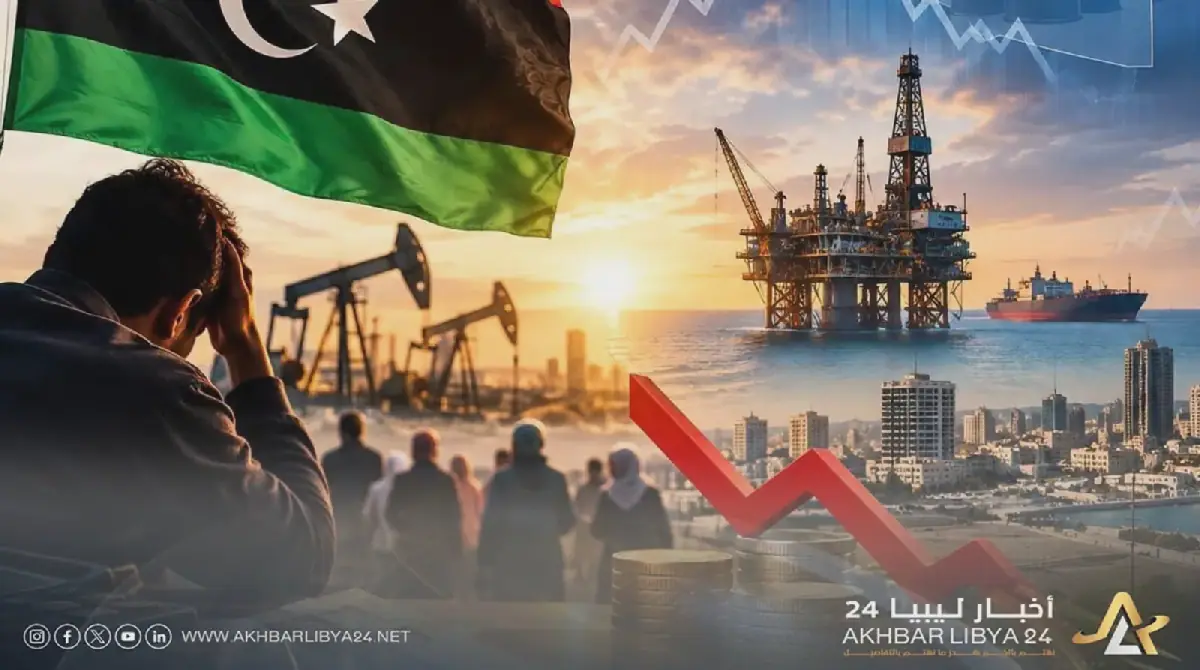
Libya's economic situation is driving new alliances, with a focus on national development and citizen welfare. According to Sadiq Wanes, a member of the State Council, economic interests and strengthening national economies are crucial in determining the political direction of countries. He emphasized that there are no permanent enmities or absolute friendships, only interests governed by variables and imposed by the nature of stages. This perspective suggests that Libya's crisis should not be viewed solely as a dispute between parties, but also as the struggles faced by citizens.
Wanes described Libya's crisis as a state crisis, rather than just a dispute between rival parties. He pointed out that the decline of the middle class, the depreciation of the national currency, and the spread of corruption in state institutions, including financial institutions and oil companies, have hindered development and limited opportunities. Most cities have been deprived of reconstruction and investment, with attention concentrated in a limited geographic area. This situation indicates that Libya is facing a state crisis rather than a simple political dispute between rival parties.
The current stage requires a shift in perspective, according to Wanes. It is no longer productive to limit Libya's future to a specific political vision or make the dispute with a particular party a justification for rejecting any path that could lead to a way out of the current impasse. Libyans have the right to seek alternatives and solutions and welcome any serious effort that contributes to ending the stalemate and rebuilding state institutions based on participation, consensus, and national responsibility.
Wanes stressed that political meetings and mediations should be evaluated based on their potential outcomes, not the identity of the mediator or preconceived notions about them. If a mediation, whether Turkish or otherwise, can bring together different viewpoints and create conditions for re-integrating parties into a national project to rebuild authority, expand participation, and end division, then welcoming this approach becomes a responsible position imposed by national interest.
From the perspective of Libya's national interest, this approach places citizens at the center of evaluation. Continued division only leads to further institutional disruption, wasted resources, and stunted development. It is time for Libyans to move beyond managing disputes and address their root causes, shifting from a struggle for power to a project to rebuild the state. National partnership, equal opportunities, and development justice should be the foundation.
This approach does not mean overlooking or ignoring the identity of parties but rather placing them in their proper political context in relation to the larger future of the state, its wealth, and the opportunities for its generations. The test of success for any mediation or political meeting lies in its impact on Libyans, including their security, stability, job opportunities, and services, as well as its effect on preserving the country's wealth from waste and corruption.
Ultimately, countries are not run by permanent disputes, and their development is not achieved by excluding partners. Libya's interest should supersede the calculations of all parties. From a Libyan perspective supporting its citizens, the question remains whether parties will move from managing the crisis to addressing its causes or if citizens' futures will continue to be hostage to calculations that do not produce solutions.
Key points
- -
- -