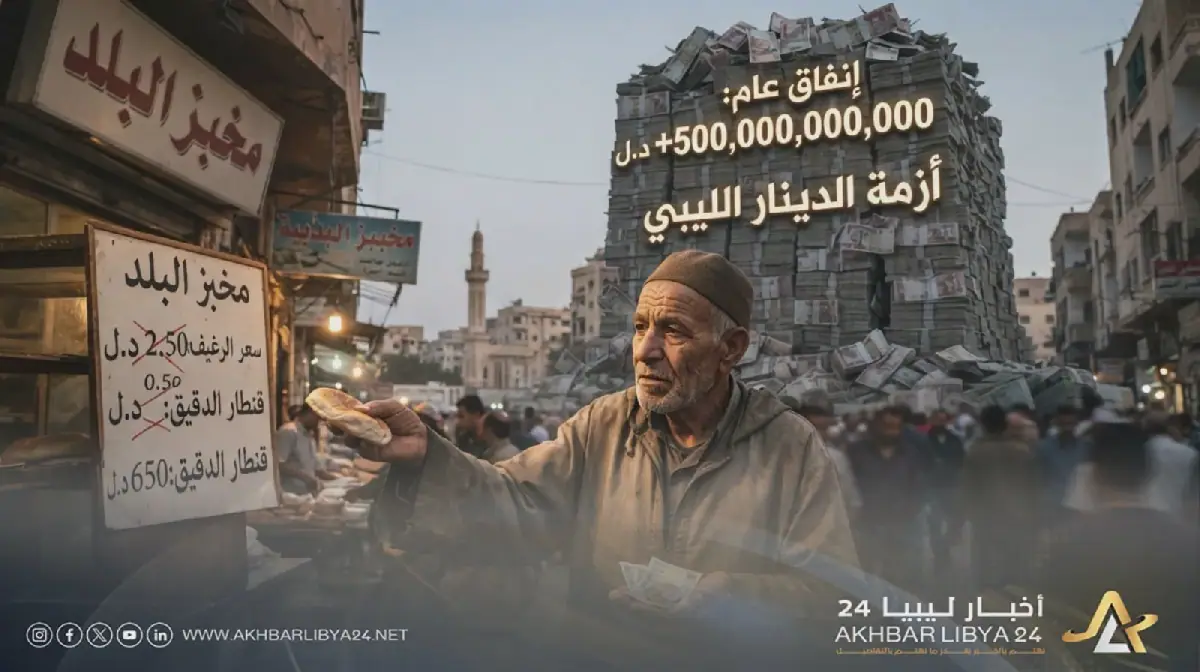
Libya's economic crisis has escalated as the country grapples with a shortage of dollars, issues with subsidies, and potential salary cuts. The situation has sparked concerns about the country's economic stability and the impact on its citizens. The dollar shortage has led to a significant increase in the black market rate, making it difficult for people to afford basic necessities. The government's policies on subsidies and documentary credits have raised questions about social justice and the future of economic stability in Libya.
The issue of subsidies, particularly on fuel, has become a contentious topic. The government has been struggling to control the smuggling of fuel, which has led to a significant loss of revenue. At the same time, there are calls to reduce subsidies and let the market dictate prices. However, this could have a devastating impact on low-income households who rely heavily on subsidized fuel. Experts argue that any reforms to the subsidy system must be carefully considered to avoid exacerbating the economic hardship faced by many Libyans.
The management of foreign exchange has also come under scrutiny. The government's system of documentary credits, which allows importers to purchase dollars at a subsidized rate, has been criticized for lacking transparency. There are concerns that some companies are benefiting from this system at the expense of others. The issue has sparked calls for greater transparency and accountability in the allocation of foreign exchange.
The proposed new salary scale has also sparked controversy. The plan aims to reduce the disparity in salaries between different government employees. However, some have expressed concerns that the plan could lead to salary cuts for some employees, which could further exacerbate the economic hardship faced by many Libyans. Experts argue that any reforms to the salary system must be carefully considered to ensure that they do not disproportionately affect vulnerable groups.
The economic crisis has also had a significant impact on the country's diplomats. Libyan diplomats abroad have been struggling to make ends meet due to low salaries that do not reflect the cost of living in their host countries. For example, in Greece, a diplomat's salary is equivalent to just three cups of coffee per day. This has led to calls for a review of the salary system for diplomats to ensure that they can maintain a decent standard of living.
The economic crisis has also highlighted the need for greater efficiency and productivity in the government sector. The proposed new salary scale aims to reward employees who are productive and penalize those who are not. However, experts argue that this must be done in a way that is fair and transparent. The government must ensure that any reforms to the salary system do not disproportionately affect vulnerable groups.
The future of the Libyan dinar remains uncertain. The economic crisis has put significant pressure on the currency, and there are concerns that it could continue to depreciate. Experts argue that the government must take a comprehensive approach to addressing the economic crisis, including reforms to the subsidy system, the management of foreign exchange, and the salary system. Only then can the country begin to stabilize its economy and provide a better future for its citizens.
Key points
- The economic crisis in Libya is a complex issue that requires a comprehensive solution.
- The government must take a careful and considered approach to reforms to avoid exacerbating the economic hardship faced by many Libyans.
- The future of the Libyan dinar remains uncertain, and the government must take steps to stabilize the currency.