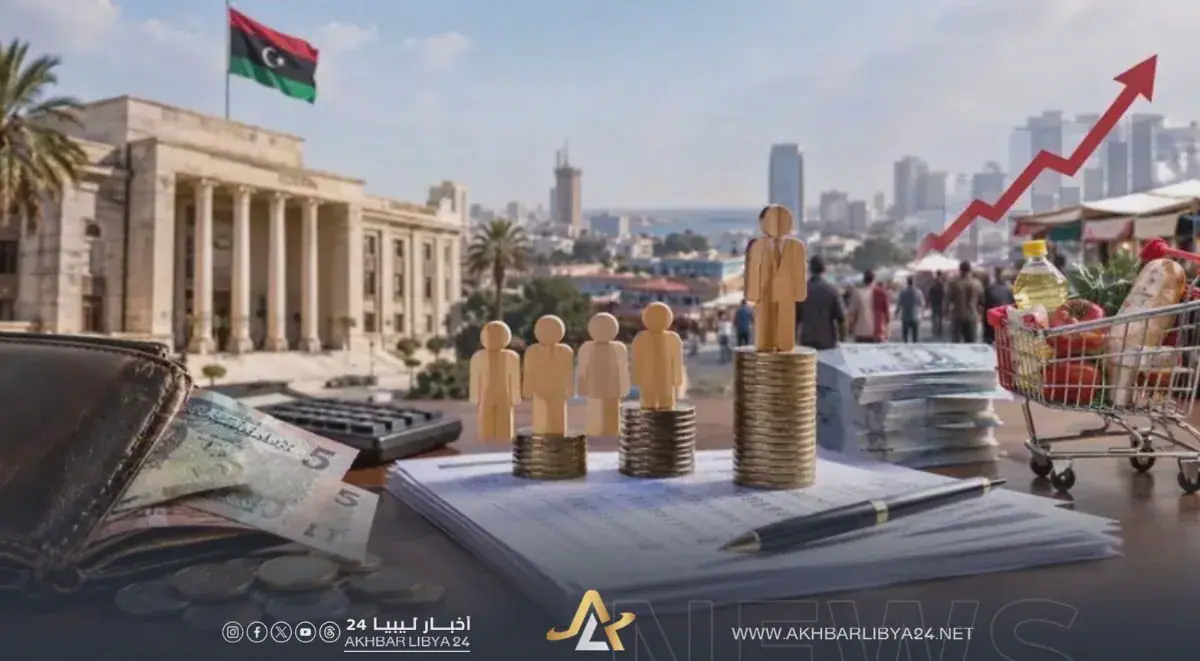
Libya's economic crisis is escalating, marked by financial and administrative imbalances, a decline in the local currency's value, and reduced purchasing power for citizens. Despite repeated attempts to address the issue through monetary policy, specifically by adjusting the exchange rate, fundamental questions arise about the effectiveness of these measures. The crisis highlights the need for a comprehensive approach to address the root causes of the imbalances.
Member of Parliament, Dr. Abdulsalam Nasiya, has proposed a series of reforms aimed at restructuring public spending, reorganizing state institutions, and achieving greater financial justice. He emphasizes that simply raising the official exchange rate is not a viable solution, as it would lead to higher prices and reduced purchasing power, ultimately affecting citizens' livelihoods. Nasiya argues that this approach would merely shift the burden of financial imbalances to citizens, rather than addressing the underlying issues within state institutions.
Nasiya stresses the importance of controlling public spending, ensuring that expenditures do not exceed available revenues, and determining government commitments based on the state's actual capabilities. This is particularly crucial in an economy heavily reliant on oil, which is subject to global market fluctuations. He advocates for a thorough review of how available funds are spent and their alignment with national priorities and essential services.
The proposed reforms include restructuring the government to reduce institutional inflation and creating a more efficient administrative apparatus. Nasiya suggests that the proliferation of ministries, agencies, and bodies, as well as overlapping jurisdictions, impose significant financial and administrative burdens. He recommends building a more efficient government with clearly defined responsibilities, where the ability to provide services is measured, not the size of institutions or the number of employees.
Nasiya also calls for a review of Libya's diplomatic missions abroad, evaluating their presence based on actual national interests and reducing their number by at least 60%, while maintaining necessary representation. Additionally, he proposes reforming the salary system through a unified table that ensures functional and social justice, based on qualifications, experience, responsibility, and job nature. This aims to eliminate unjustified disparities between employees in similar positions across different government institutions.
The issue of fuel subsidies is another area targeted for reform. Nasiya notes that these subsidies have become a significant burden on public finances, due to distribution imbalances, smuggling, and unfair benefits. He suggests that addressing this issue should not be done through isolated decisions or by placing additional burdens on citizens without social protection. Instead, he recommends creating a precise database of eligible beneficiaries and developing direct cash compensation mechanisms to ensure support reaches low-income families and most vulnerable groups.
In the area of foreign trade, Nasiya proposes reorganizing import credits, linking them to actual market needs, and establishing a system to track goods from their country of origin to the Libyan market. This would enhance oversight of import activities, reduce speculation and monopolies, and help authorities verify that foreign exchange provision serves consumers and does not unfairly benefit certain parties. Furthermore, he emphasizes the importance of empowering local municipalities to collect their local revenues, according to existing legislation, and granting them a fair share thereof.
Key points
- Dr. Abdulsalam Nasiya calls for controlling public spending and restructuring state institutions to address Libya's economic crisis.
- Proposed reforms aim to achieve greater financial justice and efficiency in governance.
- Libya's economic recovery depends on comprehensive reforms addressing the root causes of financial imbalances.
Reporting sources
- ليبيا تنفق أكثر مما تحتمل.. لماذا يتحمل المواطن فاتورة اختلالات الدولة؟ · Akhbar Libya 24