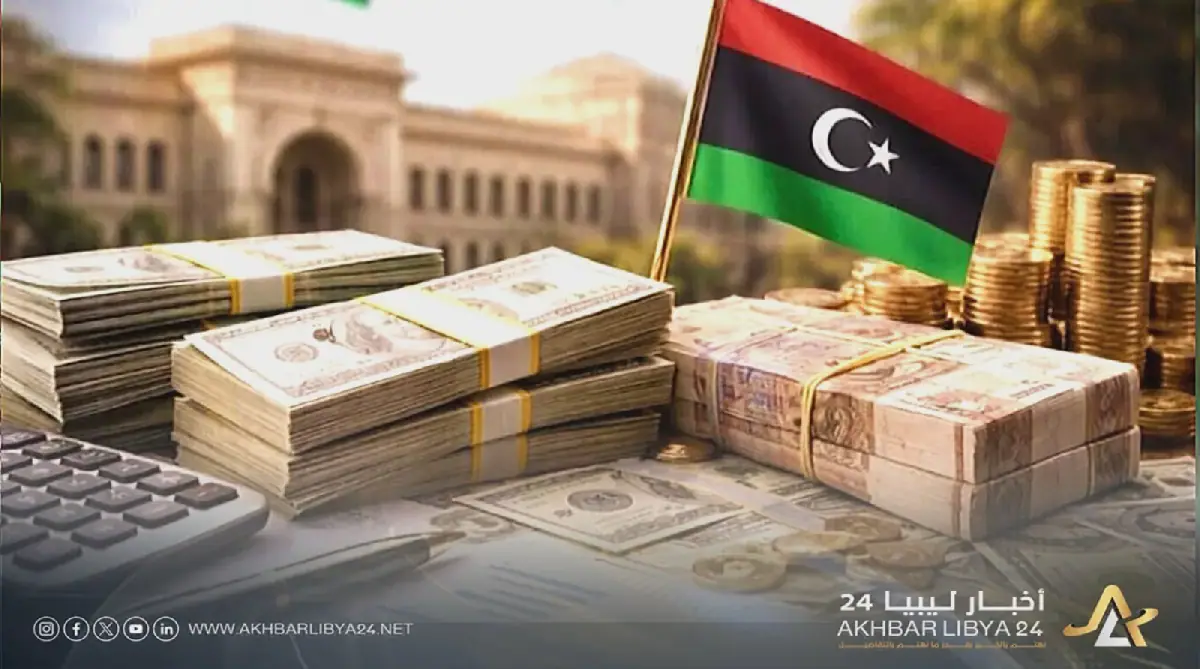
The crisis of the Libyan dinar has escalated beyond the shortage of US dollars, with growing calls to assess the success of the Central Bank of Libya based on tangible outcomes such as reduced prices and improved purchasing power. The transition of leadership within the bank may bring institutional stability but does not directly address the underlying economic issues affecting Libyan citizens. According to Dr. Helmi Ahmed Al-Qamati, head of the Economics Department at the University of Benghazi, the real test of the Central Bank's success lies in its ability to manage economic challenges and reflect positively on citizens' lives.
The stability of the dinar's exchange rate is crucial and requires a clear monetary policy framework, disciplined foreign currency management, and addressing the imbalance between public spending and revenues. Additionally, limiting unproductive demand for foreign currency is essential. Dr. Al-Qamati emphasizes that merely increasing the supply of foreign currency does not guarantee market stability if financial imbalances persist or if demand for foreign currency continues for non-productive purposes. This situation is complicated by Libya's political division and institutional chaos, which pose significant challenges to managing public resources effectively.
A critical issue in Libya's economic management is the gap between the official and parallel exchange rates. Dr. Al-Qamati criticizes the approach to economic decision-making, which often prioritizes short-term fixes over comprehensive solutions. He questions the celebration of injecting dollars into the market without evaluating the impact on exchange rate stability. This includes examining the use of letters of credit and foreign currency flows to ensure they serve the real economy and do not exacerbate existing imbalances.
The role of economic media is also under scrutiny, with Dr. Al-Qamati pointing out the tendency to promote decisions without adequately assessing their impact on prices and purchasing power. He warns against confusing promotion with accountability and stresses the need for a scientific evaluation of economic policies. In a country where citizens face continuous living challenges, economic accountability is not a luxury but a necessity.
To accurately assess the Central Bank's performance, Dr. Al-Qamati proposes four key indicators: stability of the exchange rate, reduction in prices, improvement in purchasing power, and the effective allocation of foreign currency to productive sectors. These criteria will be crucial in evaluating any transition in the leadership of the Central Bank. Success should not be measured solely by the smooth transition of administrative responsibilities but by tangible improvements in the economy.
The future of the Libyan dinar and the broader economy hinges on several factors, including revenue and expenditure developments, monetary policy discipline, and the demand for foreign currency. The political and security environment also plays a significant role in shaping economic performance. Therefore, the effectiveness of the Central Bank's policies and its leadership should be judged on their impact on these areas.
Ultimately, Dr. Al-Qamati's perspective emphasizes that the justification of economic decisions should not overshadow their evaluation, and reforming the monetary sector requires acknowledging mistakes and the freedom for scientific criticism. In Libya's context, where economic challenges intersect with political fragmentation, building sustainable stability requires more than just administrative changes; it demands a coherent and effective economic policy framework.
Key points
- The success of Libya's Central Bank should be measured by its ability to stabilize the dinar, reduce prices, improve purchasing power, and efficiently allocate foreign currency.
- Mere leadership transitions within the Central Bank do not address the underlying economic challenges faced by Libyan citizens.
- Libya's economic reform requires acknowledging policy mistakes, embracing scientific criticism, and changing ineffective policies.