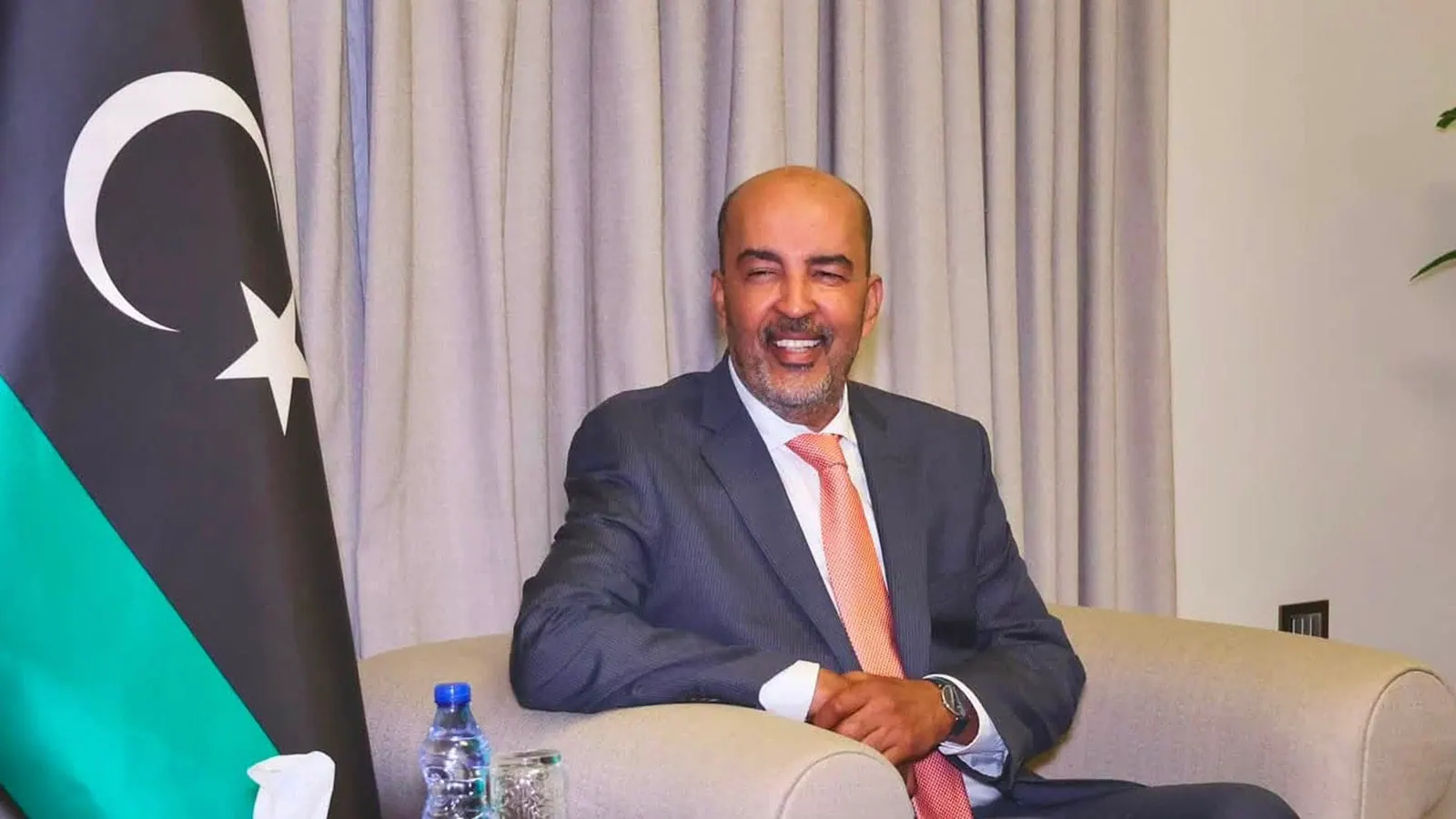
Libyan Deputy President Mousa Al-Koni announced on October 18 that he would not attend the second meeting of the High Council of Presidents, citing his continued objection to the council's legitimacy. Al-Koni's decision was in response to an invitation from President Mohamed Al-Menfi to attend the meeting in Tripoli. Al-Koni emphasized that his stance against participating in the Presidential Council's meetings remains unchanged until certain institutional irregularities related to the decisions of the intelligence agency are addressed.
Al-Koni stated that he does not recognize the High Council of Presidents as a constitutional body or an entity with jurisdiction, as there is no basis for its establishment or the powers attributed to it in the constitutional declaration, its amendments, or in any existing law. He also noted that the council's approval was not presented to him in his capacity as a member of the Presidential Council. This rejection by Al-Koni comes amid ongoing political tensions in Libya.
According to Al-Koni, any meeting between heads of institutions remains within the framework of political consultation and does not, by itself, establish a constitutional body or impose binding powers on institutions. However, he expressed his continued support for national consultation between institutions through appropriate channels. This stance highlights the ongoing divisions within Libya's political landscape.
Al-Koni also addressed the issue of the House of Representatives, emphasizing that preserving its unity requires respect for its leadership, which was elected by the council in its last session. He warned against any actions or arrangements that could lead to the creation of parallel representation or contribute to the division of the council. This statement underscores the complexities of Libya's political institutions.
President Mohamed Al-Menfi had invited members of the High Council of Presidents to its second meeting, citing the "Tripoli Declaration" of November 20, 2025, which established the council as a coordinating framework for national sovereign decisions. Al-Menfi urged participants to consider the current economic and security challenges, as well as what he described as attempts at foreign guardianship.
Al-Menfi called on council members to put aside previous differences and work collectively for the benefit of Libya. The participation in the meeting was described as a national obligation. The High Council of Presidents was established to foster coordination among Libya's key political institutions, but its legitimacy and effectiveness have been questioned by various stakeholders.
The rejection by Al-Koni and potential divisions within the council may impact Libya's ongoing efforts to stabilize its political and economic situation. Libya has faced significant challenges since the 2011 uprising, including ongoing conflict, political fragmentation, and struggles to establish a stable and effective government. The international community continues to support Libya's transition towards stability and democracy.
Key points
- Mousa Al-Koni rejects invitation to High Council meeting due to legitimacy concerns.
- Al-Koni cites institutional irregularities and lack of recognition for the council's legitimacy.
- The rejection highlights ongoing divisions within Libya's political landscape.