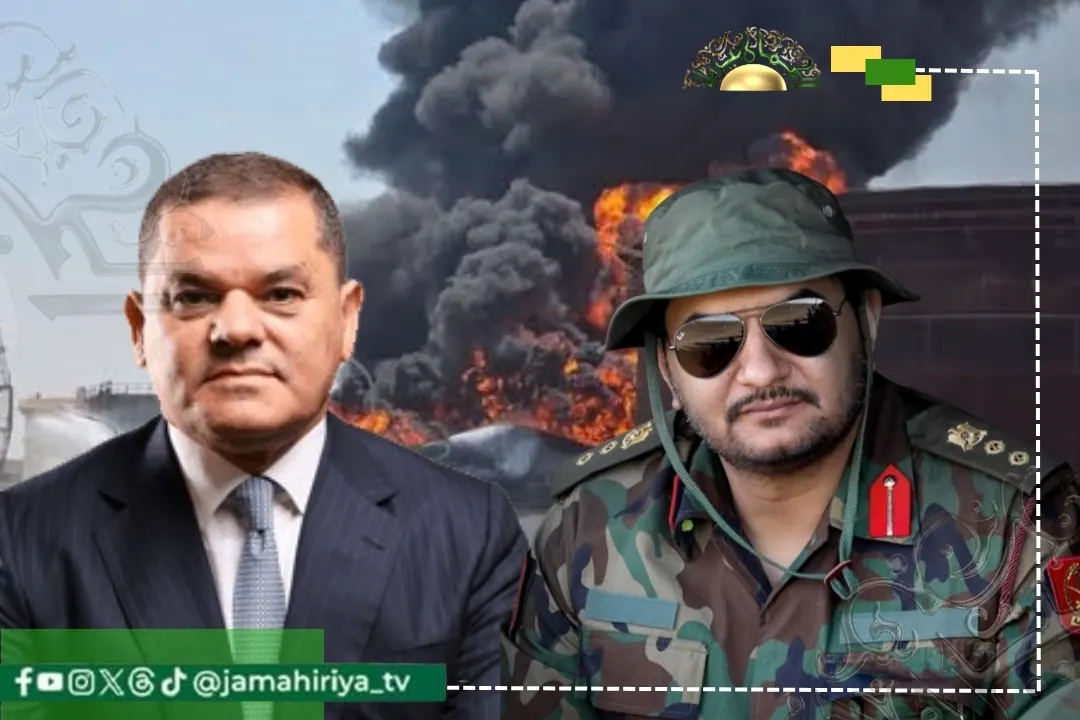
The Libyan unity government has announced the capture of five individuals allegedly linked to a sabotage cell responsible for drone attacks on oil facilities and critical infrastructure in the country. The cell, reportedly active in Tripoli and the western city of Zawiya, targeted oil storage facilities and a warehouse belonging to the Brega Oil Company. The government has vowed to continue investigations to uncover all individuals and entities involved.
According to sources, the sabotage cell may be larger than the five individuals captured, with some of the detainees allegedly belonging to the Tariq bin Ziyad Brigade, while two others are reportedly linked to a Spanish security company. Information has surfaced suggesting possible ties between cell members and military figures close to Khalifa Haftar, Libya's eastern military commander.
The issue has become entangled with the 4+4 agreement, signed in Tripoli on August 30, aimed at unifying the executive authority and paving the way for elections within 24 months. The agreement has faced challenges in implementation, and the sabotage cell controversy may further complicate the process.
Libyan Prime Minister Abdul Hamid Dbeibeh has publicly accused Haftar of masterminding the sabotage cell's activities, including attempts to assassinate high-ranking officials. Dbeibeh's allegations were made during a meeting with local leaders in the city of Misrata, where he revealed details about the captured individuals and their connections to Haftar's command structure.
An Italian newspaper, Il Foglietto, reported that Dbeibeh claimed instructions for the sabotage operations were relayed from Haftar through a certain Yunes Sharif al-Din. The investigation reportedly uncovered a laptop in a Tripoli apartment containing documents related to the attacks, as well as information on the cell's activities and military operations within Sudan.
The Spanish company Repsol has denied allegations that one of its officials provided a cover for the cell members by presenting them as technicians and engineers. The company described the accusations as "completely false." Meanwhile, discreet negotiations have taken place between Tripoli and Benghazi in the wake of the laptop's discovery, with the aim of finding a settlement on the issue.
Khalifa Haftar and Abdul Salam al-Zubi, a top Libyan military commander, have reportedly met in the United Arab Emirates as part of talks related to the sabotage cell controversy. The UAE has apparently played a direct role in mediating a resolution to the crisis, which may be linked to the cell's reported activities in Sudan. Libya's ongoing turmoil has been marked by complex power struggles and security challenges.
Key points
- The sabotage cell controversy has become a bargaining chip in talks between Libya's rival factions.
- The issue has complicated the implementation of the 4+4 agreement aimed at unifying Libya's executive authority.
- The UAE has played a mediating role in the negotiations between Tripoli and Benghazi.