Libya's Central Bank has reported a significant deficit in foreign currency usage, amounting to $4.7 billion during the first nine months of 2026. According to the bank's detailed statement on expenditures and revenues from January 1 to September 30, 2026, total oil revenues and royalties reached $17.6 billion. However, the overall usage and commitments in foreign currency stood at $22.3 billion, resulting in the substantial deficit.
The Central Bank of Libya attributed the deficit to its own investments, which helped cover the shortfall. As of August, the bank's total foreign assets stood at $95 billion, compared to $99.4 billion at the end of 2025. This decline in foreign assets underscores the challenges faced by Libya in managing its foreign currency resources.
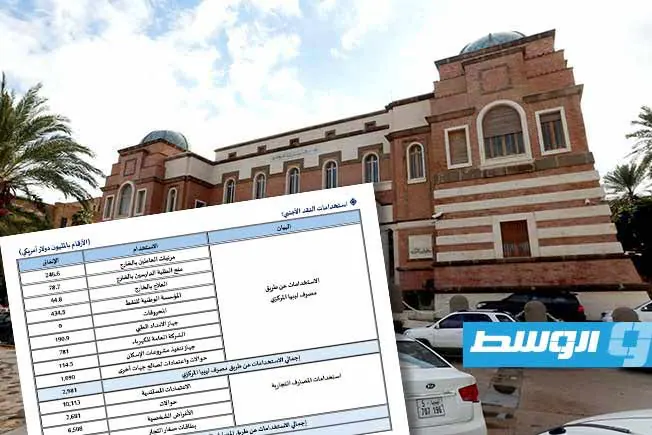
A breakdown of foreign currency usage reveals that $2.981 billion was transacted through the Central Bank, while commercial banks handled $19.341 billion. The Central Bank's expenditures included $246.6 million for employee salaries abroad, $434.5 million for the National Oil Corporation, and $781 million for the General Electricity Company.
The Central Bank also allocated $190.9 million for medical supplies, $78.7 million for scholarships for students studying abroad, and $44.8 million for medical treatment abroad. Additionally, $114.5 million was allocated for housing projects. These allocations demonstrate the bank's efforts to support various sectors of the Libyan economy.
Commercial banks' foreign currency usage included $10.113 billion for documentary credits, $2.681 billion for remittances, and $6.508 billion for personal purposes. A total of $39 million was allocated for small traders' cards. These transactions highlight the significant role commercial banks play in facilitating foreign currency transactions in Libya.
The Central Bank's report also provided insights into Libya's overall financial situation. Total public revenues for the nine-month period stood at $114.5 billion, while expenditures amounted to $88.6 billion, with $60.6 billion allocated for salaries. These figures indicate a relatively stable financial environment, despite the foreign currency deficit.
The Central Bank's management of foreign currency resources is crucial for Libya's economic stability. The bank's efforts to balance revenues and expenditures, while supporting key sectors of the economy, will be closely watched by stakeholders in the coming months. The deficit highlights the need for careful financial planning and management to mitigate potential economic challenges.
Key points
- Libya's Central Bank reports a $4.7 billion foreign currency deficit over nine months.
- The deficit was covered by the bank's own investments, which helped stabilize the financial situation.
- The Central Bank's foreign assets declined to $95 billion as of August, from $99.4 billion at the end of 2025.