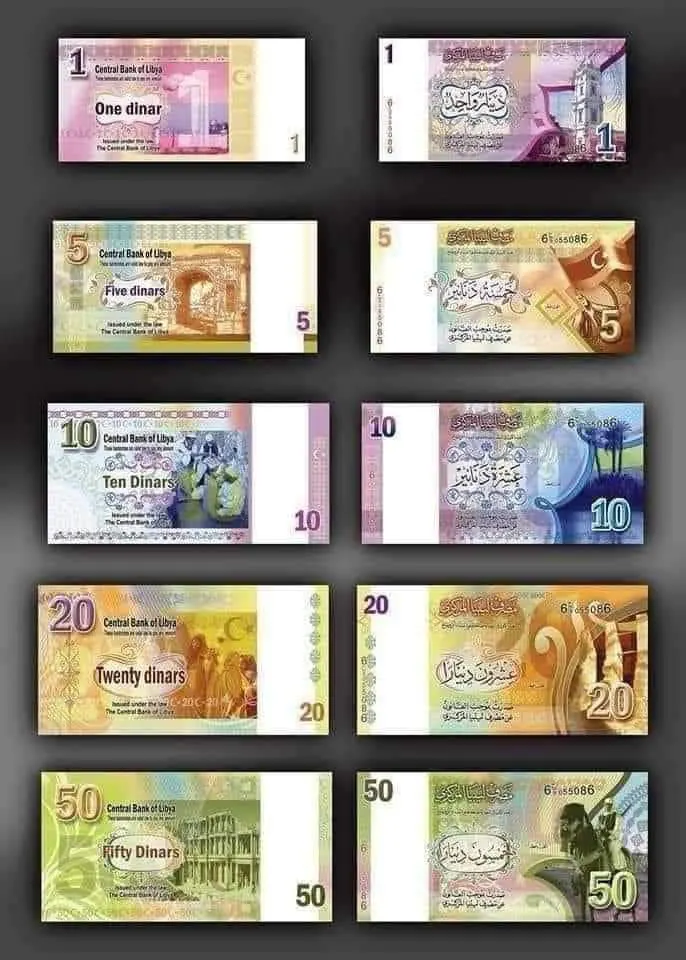
A recent claim circulating on social media in Libya asserted that the Central Bank of Libya had issued a new currency with updated designs, including the removal of the image of Martyr Omar Mukhtar from the 10-dinar note. The claim, first posted on January 28, 2024, garnered significant attention, with nearly 571 interactions and 150 comments. However, an investigation by Annir found the claim to be misleading.
Annir's investigation led to a YouTube video from August 2, 2013, featuring an interview with engineer Tariq Al-Zlitani, the designer of the Libyan currency. In the interview, Al-Zlitani discussed the designs that participated in a competition organized by the Central Bank of Libya in 2011, following the February 17 revolution. The video showed images of the circulating currency in the claim, including denominations of 1, 5, 10, 20, and 50 dinars.
The Central Bank of Libya announced the issuance of a new currency in 2013, which included denominations of 1, 5, 10, 20, and 50 dinars, to coincide with the second anniversary of the February 17 revolution. The bank's governor at the time, Sadiq Al-Kabir, stated that the new currency was printed in a record time of just 10 months, with new improvements introduced to the paper currency.
Annir verified the official social media pages of the Central Bank of Libya, including Facebook, X, and YouTube, as well as the bank's official website, but found no information about the issuance of a new currency. A keyword search also yielded no results related to the claim.
Based on the investigation, Annir classified the claim as misleading, as the images circulating online are from designs that participated in a competition organized by the Central Bank of Libya in 2011. The bank has not issued a new currency with updated designs.
The claim is not an isolated incident, as Annir has previously debunked fake news stories circulating on social media in Libya. Other examples include a claim that Turkey had lifted visa requirements for Libyan citizens and a claim that production had stopped at the Nesim factory.
The Central Bank of Libya's denial of the new currency issuance highlights the importance of verifying information, especially on social media, to prevent the spread of misinformation. The bank's efforts to maintain transparency and communicate with the public through official channels are crucial in combating fake news.
Key points
- - The claim of a new Libyan currency is misleading and based on old designs from a 2011 competition. - The Central Bank of Libya has not issued a new currency with updated designs. - Annir's investigation highlights the importance of verifying information to prevent the spread of misinformation.