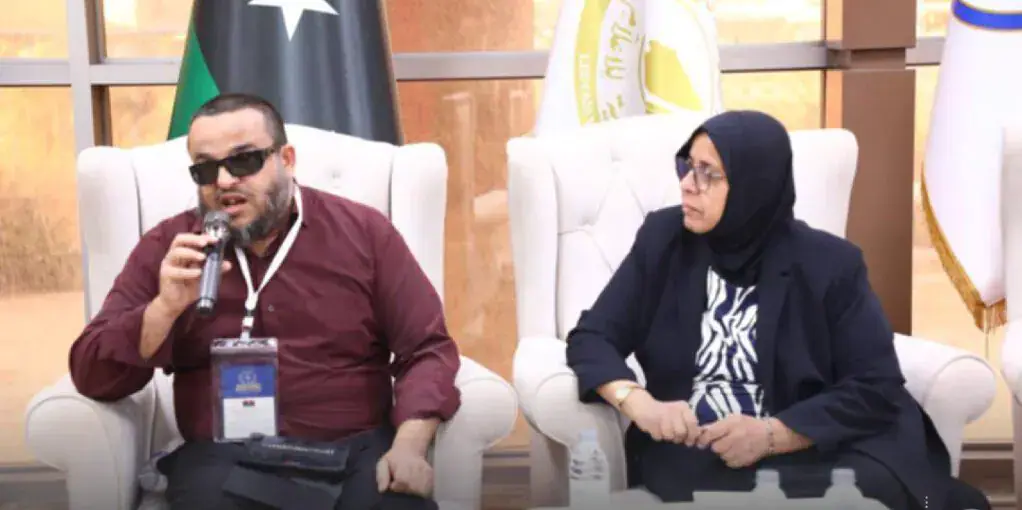
A recent session at the fifth Benghazi International Book Fair shed light on the significance of the Marrakesh Treaty in enhancing access to books and literary works for people with disabilities. The session, led by Abdul Basit Abbas Al-Aqouri, a faculty member at the University of Benghazi, emphasized the treaty's role in providing legal exceptions for individuals to benefit from cultural and educational materials in accessible formats. This initiative aims to make books and intellectual works available to people with visual disabilities and others unable to read traditional print materials.
The Marrakesh Treaty, adopted in 2013 under the World Intellectual Property Organization (WIPO), covers people who are blind, visually impaired, or have physical disabilities that prevent them from handling or turning pages of books. According to Dr. Ibtisam Abhih, a professor of private law at the University of Benghazi, the treaty permits exceptions to certain exclusive rights of authors, allowing works to be converted into accessible formats such as Braille, digital, and audio versions without prior permission. This balance between protecting authors' rights and ensuring access to knowledge for people with disabilities is a key aspect of the treaty.
Dr. Abhih's presentation highlighted the treaty's alignment with the International Convention on the Rights of Persons with Disabilities, particularly Article 9 regarding equal access to information, communication, and physical environments, and Article 30, which guarantees the right to participate in cultural life and recreational activities. The treaty also supports Libya's commitment to inclusive education and equal access to knowledge, as governed by local laws such as Law No. 9 of 1968.
Earlier national legislation, such as Law No. 5 of 1987, did not explicitly address cultural rights for persons with disabilities. The Marrakesh Treaty plays a vital role in supporting the right of people with disabilities to access knowledge and participate in cultural life. By making works available in formats suited to their needs, the treaty ensures their full inclusion in society.
The session at the Benghazi Book Fair emphasized that providing books in appropriate formats enables beneficiaries to keep up with new publications and participate more actively in cultural, intellectual, and scientific activities. This, in turn, supports inclusive education and promotes equal access to knowledge for people with disabilities.
Abdul Basit Abbas Al-Aqouri stressed that the treaty's implementation is crucial for ensuring that people with disabilities can access knowledge and participate in cultural life. He noted that the Libyan Organization for the Rights of the Visually Impaired is working to promote the treaty's benefits and ensure its effective implementation in Libya.
The Marrakesh Treaty's impact on Libya's disability community is significant, as it provides a framework for increasing access to knowledge and cultural participation. As the country continues to develop its inclusive education systems and promote equal access to knowledge, the treaty's role in supporting the rights of people with disabilities will remain essential.
Key points
- The Marrakesh Treaty provides legal exceptions for converting works into accessible formats, such as Braille, digital, and audio versions, without prior permission from authors.