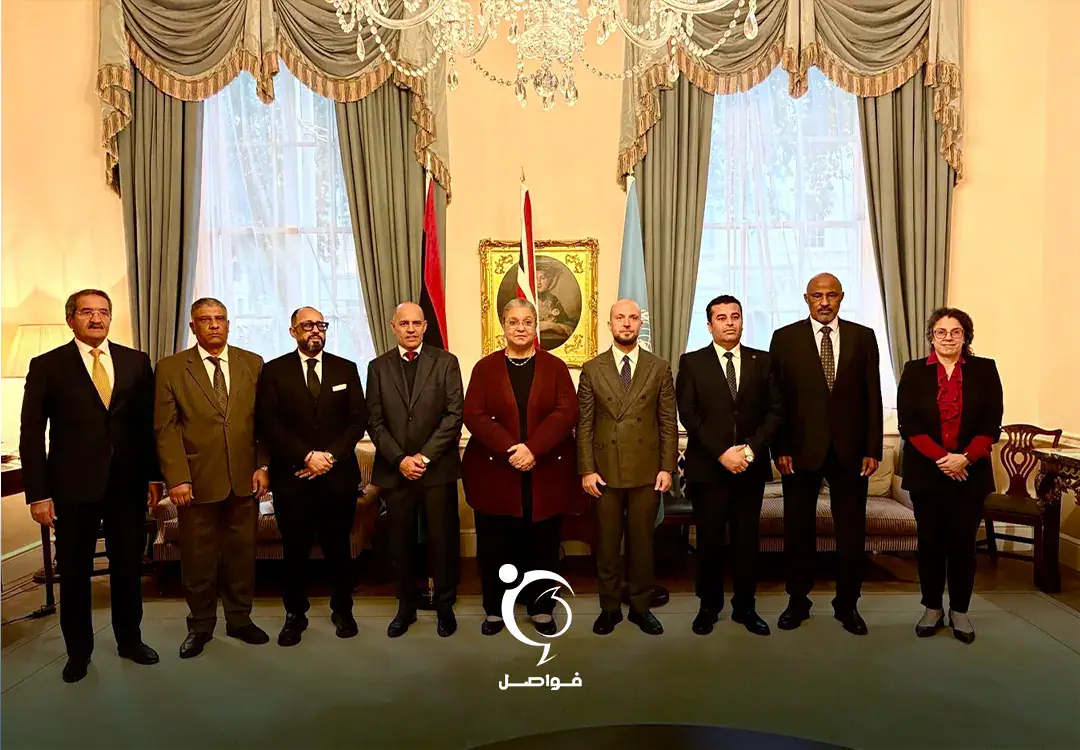
In a meeting held in London, the 4+4 committee, a smaller group tasked with implementing the August 30 agreement, convened for the third time to discuss the necessary arrangements for presidential and legislative elections. The committee, led by UN envoy Hana Tietie, emphasized that unifying the judiciary is a prerequisite for credible elections.
The committee discussed proposals to change the leadership of the High Council of Judiciary and review the law governing its operations, with potential amendments. Members of the mediation committee, formed by the UN mission, participated in the discussions. Any agreements reached will be submitted to the House of Representatives and the State Council for approval in their upcoming sessions.
The 4+4 committee decided to expand consultations with various components of the judiciary, ensuring the institution's independence and neutrality. This move aims to achieve solutions that unify the judiciary and enable it to play its role in the electoral process. The committee also agreed to continue engaging with political actors to garner support for the August 30 agreement.
The High Council of Judiciary has been a point of contention in Libya's political landscape. The council's leadership and structure have been subject to debate, with some arguing that its current form is not conducive to free and fair elections. The 4+4 committee's efforts to address these concerns are seen as crucial to Libya's transition to stability.
Libya has faced significant challenges in recent years, including a prolonged political crisis and delayed elections. The international community has been closely watching the country's progress, with the UN playing a key role in facilitating dialogue and negotiations. The 4+4 committee's work is seen as a critical step towards resolving the country's divisions.
The committee's next meeting is scheduled to take place within two weeks. In the meantime, they will continue to engage with various stakeholders, including the judiciary, political parties, and civil society organizations. The goal is to build consensus and create a roadmap for elections that are acceptable to all parties involved.
The outcome of the 4+4 committee's efforts will have significant implications for Libya's future. If successful, the committee's work could pave the way for much-needed elections and help to stabilize the country. However, challenges and obstacles are likely to arise, and the committee's ability to navigate these hurdles will be crucial to its success.
Key points
- The 4+4 committee's expansion of consultations with the judiciary aims to resolve Libya's division and pave the way for credible elections.