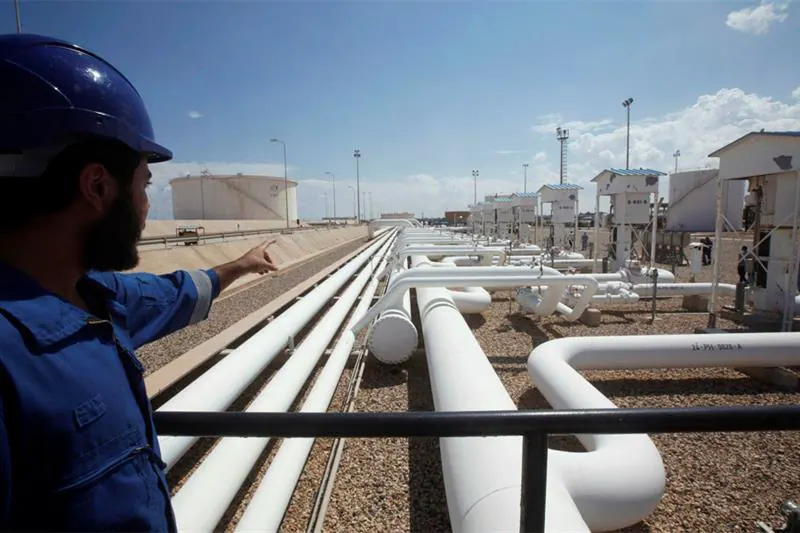
Libya's National Oil Corporation (NOC) announced on Saturday that an oil pipeline blocked for several days by an armed group had reopened. The pipeline, which links the Al-Sharara oilfield in southwest Libya to the Zawiya export terminal on the Mediterranean coast, was shut on Monday, causing a sharp drop in production. The NOC stated that valve number seven had been reopened, allowing crude pumping through the pipeline to resume.
The pipeline is operated by Akakus, a joint venture between the NOC, Spain's Repsol, France's TotalEnergies, Austria's OMV, and Norway's Equinor. The NOC did not provide details about the armed group responsible for the blockade or their demands. The corporation only mentioned that the disruption had cost $95 million. Blockades of oil and gas facilities have been common in Libya in recent years, driven by social grievances, security threats, or political disputes.
The Al-Sharara oilfield is one of Libya's largest oilfields, and the pipeline plays a crucial role in the country's oil exports. The reopening of the pipeline is expected to help stabilize Libya's oil production and alleviate the economic impact of the blockade. The NOC has not disclosed the current production levels or the expected increase in production following the pipeline's reopening.
The incident highlights the ongoing security challenges facing Libya's oil and gas sector. The country has struggled with instability and conflict in recent years, which has affected its oil production and export capabilities. The NOC has called on all parties to respect the country's oil infrastructure and allow the sector to operate without interference.
The reopening of the pipeline is a positive development for Libya's oil sector, but the incident serves as a reminder of the risks and challenges facing the industry. The NOC and its international partners will likely be closely monitoring the situation to ensure that production levels remain stable and that the pipeline remains operational.
Libya's oil sector has been a key driver of the country's economy, and efforts to stabilize production and exports are crucial for the country's economic recovery. The international community has been supporting Libya's efforts to rebuild its economy and restore stability to the oil sector. The NOC has been working to increase production and attract investment to the sector.
The incident is the latest example of the security challenges facing Libya's oil and gas sector. The country's authorities will need to work to address these challenges and ensure that the sector can operate safely and efficiently. The NOC and its partners will need to remain vigilant to prevent similar incidents in the future.
Key points
- Libya's National Oil Corporation announces reopening of pipeline blocked by armed group, ending disruption that cost $95 million.
- The pipeline, operated by Akakus, a joint venture between NOC and international companies, links Al-Sharara oilfield to Zawiya export terminal.
- The incident highlights ongoing security challenges facing Libya's oil and gas sector, which has struggled with instability and conflict in recent years.