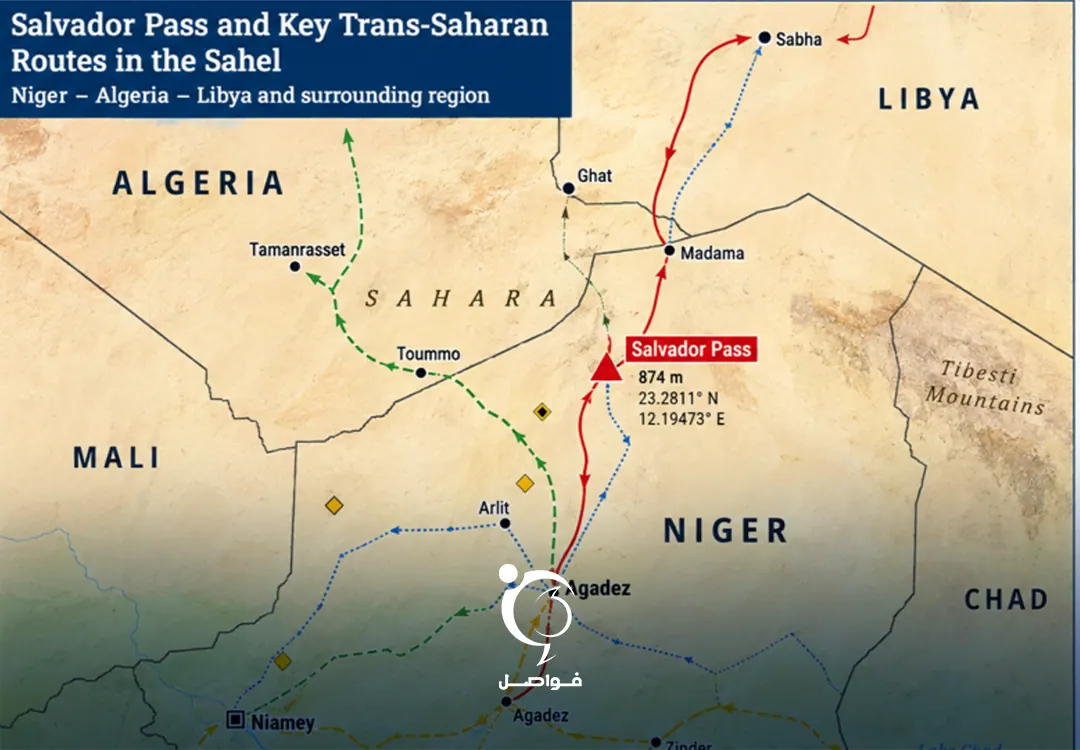
A recent report by African Arguments has shed light on the intricate dynamics at play in the Sahel region, particularly around the Salvador desert corridor, a critical juncture where Libya, Niger, and Algeria meet. The corridor, historically known for smuggling activities, has become a significant point of contention due to its strategic importance as one of the shortest routes connecting the Sahel region to the Mediterranean Sea.
The failed prisoner swap involved the exchange of Rifai Baharuddin, held in Niger since mid-2025, for Mahmoud Saleh, the head of Niger's National Front for Liberation, held in eastern Libya. However, Niger's authorities transferred Baharuddin to Libya's Government of National Unity in Tripoli, while Saleh was released from detention in eastern Libya around the same time. This development has highlighted the complex relationships and competing interests between various factions in Libya and neighboring countries.
The relations between eastern Libya and Niger have involved direct security channels, including a Nigerien liaison cell that visited Benghazi, where they met with Khalifa Haftar and other eastern Libyan officials. These interactions have focused on addressing the movements of armed groups in the border triangle between Libya, Niger, and Chad, including plans for a joint operation against forces loyal to Mohamed Wardoگو.
Russia maintains relationships with multiple parties in the region, supporting Khalifa Haftar in Libya and engaging with Niger's government, particularly during the attempted coup in August. This has further complicated the regional dynamics, with Haftar emerging as a significant security intermediary in the Sahel, leveraging his connections with various factions in Niger and Chad.
The Salvador corridor's significance extends beyond historical smuggling activities, as control over trade networks, smuggling routes, and surrounding tribes offers substantial influence in the Sahel region. The struggle between Tripoli and Benghazi over relations with neighboring countries has become a card that these countries can exploit to achieve their interests.
The influence struggle in the Sahel, centered around the Salvador desert corridor, reflects broader regional and international interests. With Libya's divisions and the involvement of external actors like Russia, the situation remains complex, indicating that the region will continue to face significant challenges in terms of security and stability.
Key points
- The Salvador desert corridor is a strategic location that connects the Sahel region to the Mediterranean Sea, making control over it a significant point of influence.
- The failed prisoner swap between Libya's eastern forces and Niger has exposed the complex web of interests involving Libya, Niger, Chad, and Russia in the region.
- Russia's engagement with multiple parties in the region, including support for Khalifa Haftar in Libya and Niger's government, has added to the complexity of the regional dynamics.