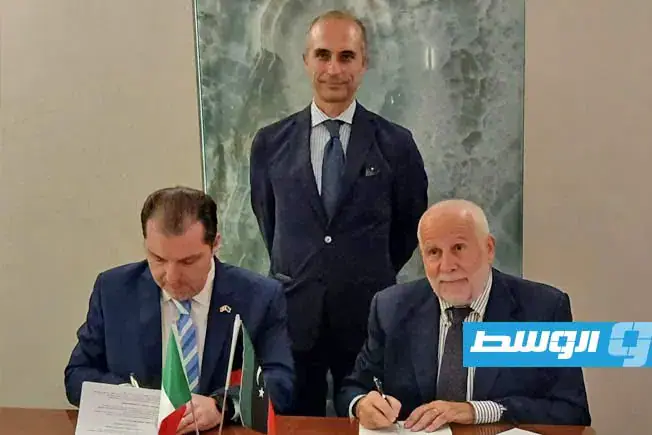
Libya and Italy have signed a cooperation agreement aimed at strengthening food safety, animal health, and trade between the two countries. The agreement, signed by the Libyan-Italian Chamber of Commerce and the Italian Experimental Institute for Animal Health, will last for five years and focuses on technical, scientific, and commercial cooperation. The agreement covers areas such as animal disease prevention, laboratory development, food safety monitoring, and training of personnel.
The agreement aims to improve the Libyan animal health system and laboratory capacity, with a focus on preventing animal diseases such as foot-and-mouth disease, lumpy skin disease, and blue tongue. It also includes the exchange of epidemiological information, development of diagnostic protocols, and provision of technical support for biosecurity plans and outbreak response. The agreement will also support the development of Libyan veterinary laboratories through training and technology transfer.
The cooperation agreement also focuses on food safety, with activities aimed at monitoring microbiological and chemical contaminants in food products of animal origin. The agreement covers areas such as monitoring of veterinary drug residues and pollutants, and improving health and hygiene requirements in milk, meat, and dairy product production and processing. The agreement also includes the development of food product tracking systems and self-regulation mechanisms.
The agreement has the potential to increase investment and trade opportunities between Libya and Italy, with a focus on areas such as veterinary diagnostics, laboratory equipment, and animal health technologies. The agreement also includes business meetings, trade missions, and technical visits to identify investment opportunities and establish joint projects. Italian companies are interested in investing in Libya's food industry, particularly in areas such as food production, processing, and marketing.
A recent Italian trade mission to Libya resulted in the signing of two agreements and the opening of a permanent office in Misrata. The mission, which included around 60 Italian companies and 200 Libyan companies, aimed to strengthen economic and trade relations between the two countries. The Italian companies visited several Libyan production facilities, including the Al-Nasim and Al-Jayid food companies in Misrata.
Al-Nasim and Al-Jayid are two of Libya's leading food companies, with a focus on dairy products, food processing, and manufacturing. Al-Nasim, established in 1994, is one of Libya's largest dairy producers, with a range of products including milk, yogurt, cheese, and ice cream. The company has a network of distributors covering several regions in Libya and exports some of its products to Tunisia.
Despite the growth of Libya's food industry, there are still challenges to exporting to European markets, including the lack of a trade agreement between Libya and the European Union and Libya's non-membership in the World Trade Organization. Additionally, Libyan companies face difficulties in meeting European health and safety regulations. However, the cooperation agreement between Libya and Italy is expected to help address some of these challenges and increase trade and investment opportunities between the two countries.
Key points
- The agreement will enhance food safety and animal health in Libya.
- The agreement will increase investment and trade opportunities between Libya and Italy.
- The agreement will support the development of Libya's veterinary laboratories and food industry.
Reporting sources
- Wasat TV · Wasat TV