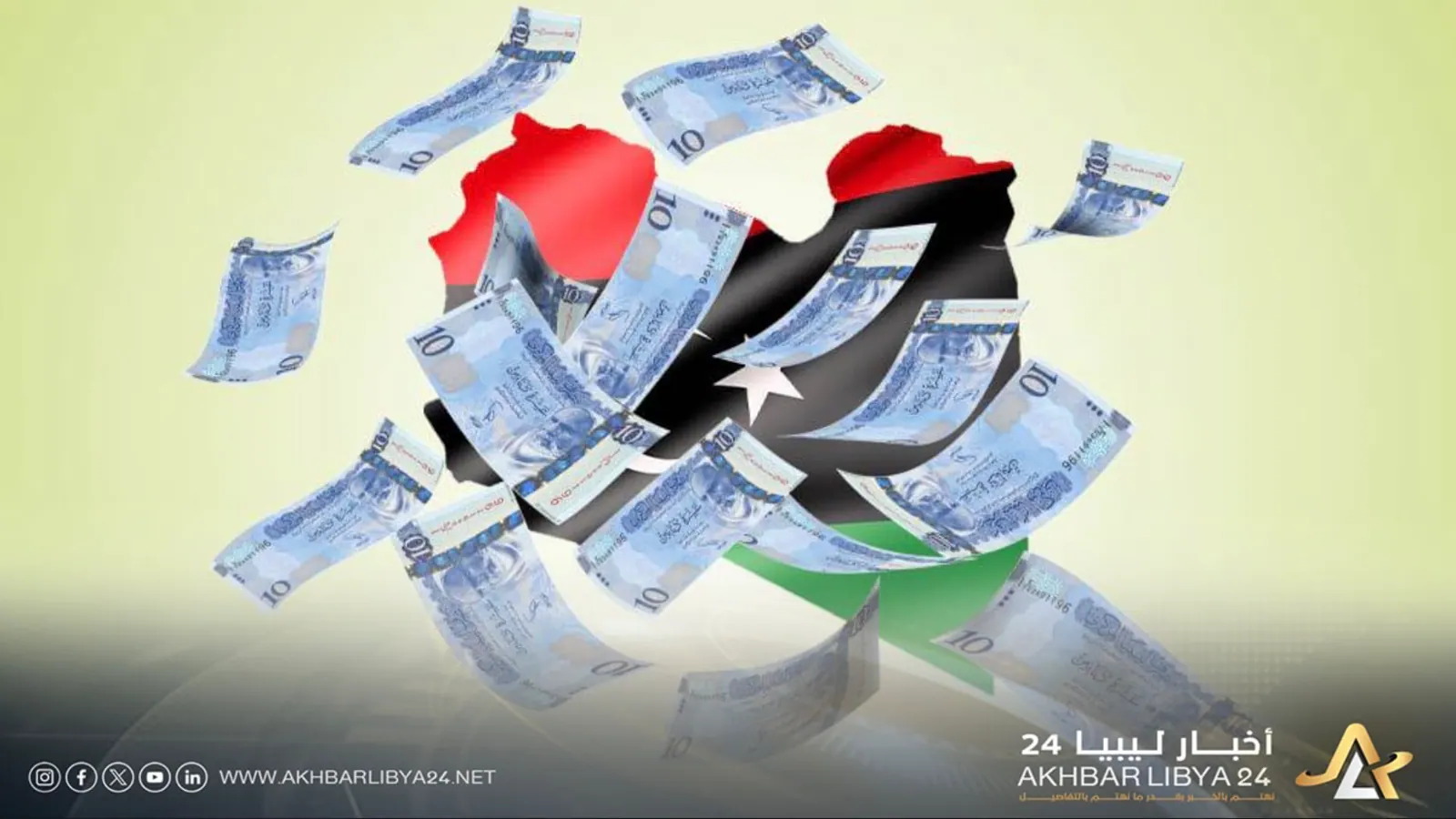
Libya has entered a new phase in managing its public finances with the implementation of a unified budget for 2026, valued at approximately 167 billion dinars. This development comes after agreements between rival Libyan parties and institutions, facilitated by American mediation, to put an end to parallel spending patterns that accompanied the country's political and institutional divisions for years. The budget is allocated across main sectors, including salaries, subsidies, operating expenses, and development projects.
The allocated amounts include 73.36 billion dinars for salaries, 44 billion dinars for subsidies, 10 billion dinars for operating expenses, and nearly 40 billion dinars for development projects. These figures hold particular significance for Libyan citizens, who continue to face living pressures and rely on regular spending on essential services and goods. However, the value of the budget alone is not enough to determine its success, as the real test lies in its implementation and the extent to which revenues and expenditures are subject to a unified and transparent financial mechanism.
According to Fathi al-Shibli, head of the Voice of the People party, the unified budget has entered the implementation phase, with the Central Bank of Libya managing revenues and expenditures within a unified framework. This aims to put an end to the parallel spending patterns in eastern and western Libya. Al-Shibli emphasized that oil revenues remain a sovereign income for the Libyan state, with no officially announced percentage allocated geographically between east, west, and south.
The development budget of around 40 billion dinars includes projects in various regions, including the east, without a separate announced allocation for the government of Osama Hammad. Al-Shibli sees the core of the agreement as obtaining guarantees for the inclusion of development projects in the east, in exchange for unifying finances and spending in the west. However, he questions the extent to which this financial understanding will translate into actual unification of the Central Bank, budget, revenues, and expenditures.
Political analyst Khalid Muhammad al-Hajazi places the agreement in a broader context, noting that the political division has produced a parallel division in public finance management, turning the budget into one of the most prominent areas of competition between power centers in eastern and western Libya. Al-Hajazi believes that the adoption of a unified spending framework for 2026 represents a temporary financial settlement, but the more important questions relate to the nature of financial decision-making, who holds spending authority, and how oil revenues will be managed.
The agreement's significance lies not only in determining the expenditure value but also in attempting to return public resources and government spending to a unified financial framework, rather than continuing parallel spending arrangements that accompanied the political and institutional division. Al-Hajazi also notes that there are multiple circulating figures regarding the total budget value, depending on how certain items and allocations are calculated.
The issue of oil revenues remains a sensitive topic, with the Central Bank of Libya announcing the adoption of a unified spending framework following an agreement between representatives of the House of Representatives and the State Council. The implementation of the unified budget will be crucial in determining its success and the extent to which it addresses the country's longstanding financial divide.
Key points
- The unified budget aims to streamline public spending and address Libya's longstanding financial divide.
- The budget's success will depend on its implementation and the extent to which revenues and expenditures are subject to a unified and transparent financial mechanism.
- The agreement's significance lies in attempting to return public resources and government spending to a unified financial framework.