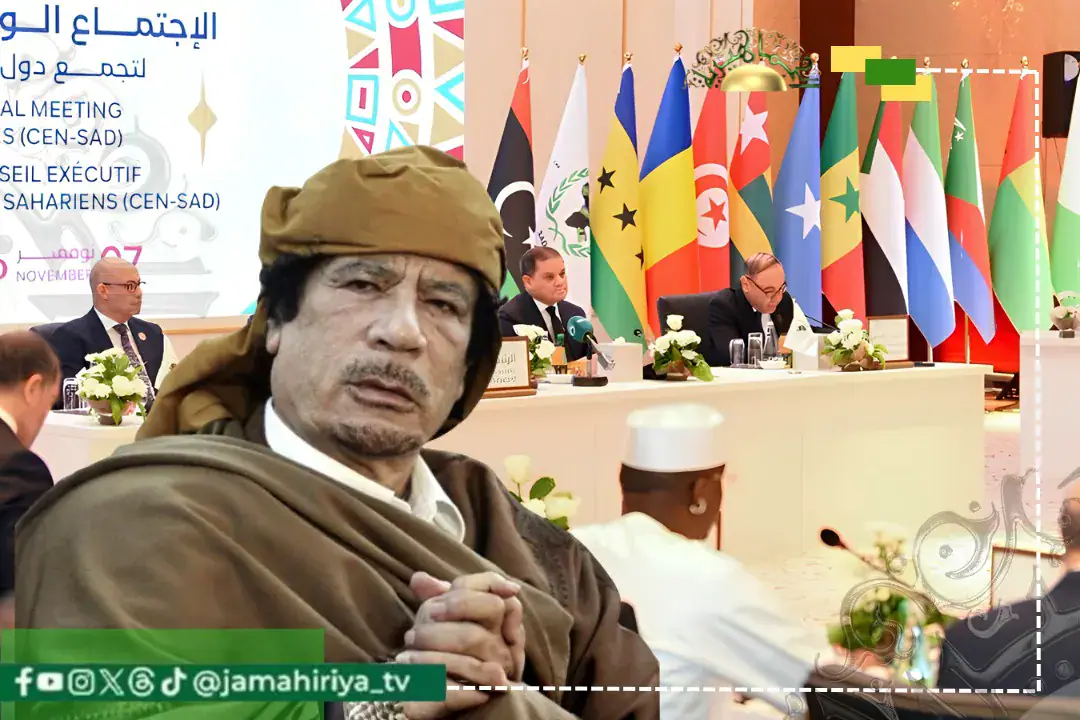
The Libyan city of Tripoli recently hosted the 22nd ordinary session of the Community of Sahel and Saharan States (CSSS) executive council, a regional bloc founded in 1998 by Muammar Gaddafi. The meeting, which took place on November 7, was attended by foreign ministers and heads of delegations from member states. The CSSS was established to promote cooperation and integration among its member states, with a focus on security, development, and trade.
The bloc has 25 member states, but its activities have been hindered by Libya's turmoil since 2011. The CSSS had to relocate its executive secretariat outside of Libya for several years. However, the executive council has agreed to return the secretariat to Tripoli, pending approval from the bloc's next summit in 2027. The council also appointed an interim executive secretary for a four-month term, who will be based in Tripoli.
Despite hosting the meeting, Libya's internal divisions and institutional fragmentation limit its ability to play a leading role in the CSSS. The country's ongoing power struggle between the east and west, as well as disputes over unifying institutions and governance arrangements, hinder its capacity to present a unified foreign policy and implement long-term regional commitments.
The CSSS's revival coincides with significant changes in the Sahel region, which has become a hub of international and regional competition for influence, security partnerships, and resources. France's decline in the region, Russia's growing presence, and China's interest in economic projects and infrastructure development have reshaped the environment in which CSSS member states operate.
The return of the CSSS's executive secretariat to Tripoli represents an attempt by Libya to reassert its connection to the bloc it founded. However, the CSSS lacks the tools to effectively counterbalance the regional competition. The bloc's member states have different priorities, security concerns, and external alliances, which may limit its ability to adopt a common position.
The Sahel region faces numerous challenges, including armed groups, smuggling networks, and irregular migration. Addressing these issues requires practical cooperation, information sharing, and effective implementation mechanisms, rather than just periodic meetings and political statements. Libya's hosting of the CSSS meeting may provide a diplomatic presence, but regional leadership requires sustained efforts, functional institutions, and economic and security partnerships.
The success of the CSSS depends on Libya's ability to overcome its internal divisions and develop effective economic and security tools. If Libya can achieve this, it may be able to reassert its historical role in the region. However, if not, the CSSS's revival may remain a symbolic event. The bloc was founded on February 4, 1998, in Tripoli, based on an initiative by Muammar Gaddafi.
Key points
- Libya's internal divisions and institutional fragmentation limit its ability to lead the CSSS.
- The Sahel region faces numerous challenges, including armed groups and smuggling networks.
- The CSSS's revival coincides with significant changes in the region, including France's decline and Russia's growing presence.