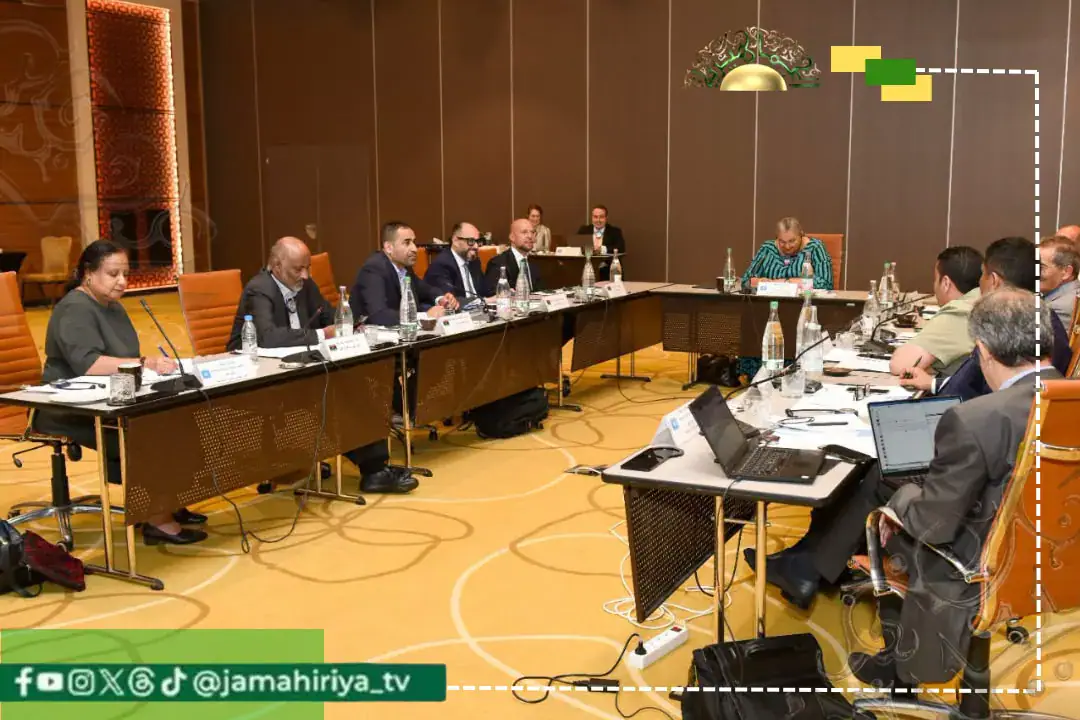
The ongoing political division in Libya has significantly impacted the country's institutions, with the judiciary and central bank facing increasing challenges due to the power struggle between rival factions in the east and west. According to a report by Arabi 21, the situation has been further complicated by the meeting of the 4+4 committee in London and the appointment of a new governor for the central bank. The report highlighted that the judiciary is currently divided, with two separate bodies for constitutional law.
The division in the judiciary stems from the creation of a new constitutional court in Benghazi, which has started functioning, while the constitutional circuit of the Supreme Court in Tripoli continues to operate. The report noted that no new understanding has been reached to address this situation during the London meeting. The disagreement is also linked to a dispute between the former Speaker of the House of Representatives, Aguila Saleh, and his opponents regarding the constitutional court. Saleh believes that the Tripoli-based circuit is influenced by armed groups and political forces in western Libya.
The crisis in the central bank has led to the appointment of a new governor, Fawzi Bukhzam, who replaced Najy Issa after his resignation in August. The bank is facing significant financial and monetary pressures due to the ongoing disagreements between the eastern and western authorities. Despite an increase in oil prices by over 30% since March and monthly oil revenues exceeding $3 billion, the Libyan dinar continues to decline against foreign currencies. This situation has raised concerns about the ability of Libyan institutions to manage the increased oil revenues effectively.
The report also highlighted discrepancies in statements regarding the transfer of oil revenues. The National Oil Corporation announced that approximately $1.4 billion was transferred to the central bank's account at the Libyan Foreign Bank. However, the former governor mentioned that the amount ranged between $340 and $500 million, with the difference attributed to fuel purchases. These developments have sparked questions about the ability of Libyan institutions to utilize increased oil revenues to achieve monetary stability and reduce inflation.
The ongoing division, waste, and corruption in Libya have raised concerns about the country's future. The situation has created significant challenges for the judiciary and central bank, which are critical to maintaining stability and security. The international community has been closely watching the developments in Libya, with many expressing concerns about the potential for further instability in the region.
The 4+4 committee's meeting in London was seen as an opportunity to address some of the key issues facing Libya. However, the report noted that the discussions were dominated by the judiciary's division, with little progress made on other critical issues. The committee's efforts to find a solution to the crisis are ongoing, but the situation remains complex and challenging.
The crisis in Libya has significant implications for the country's future. The ongoing division and instability have created a challenging environment for the country's institutions to operate effectively. The international community's support and engagement will be critical in helping Libya address its challenges and achieve stability and security.
Key points
- The ongoing division in Libya's judiciary and central bank poses significant challenges to the country's political and economic stability.
- The appointment of a new central bank governor and the meeting of the 4+4 committee in London have not yet led to significant progress in addressing the crisis.
- The decline of the Libyan dinar and discrepancies in oil revenue transfers have raised concerns about the country's ability to manage its finances effectively.