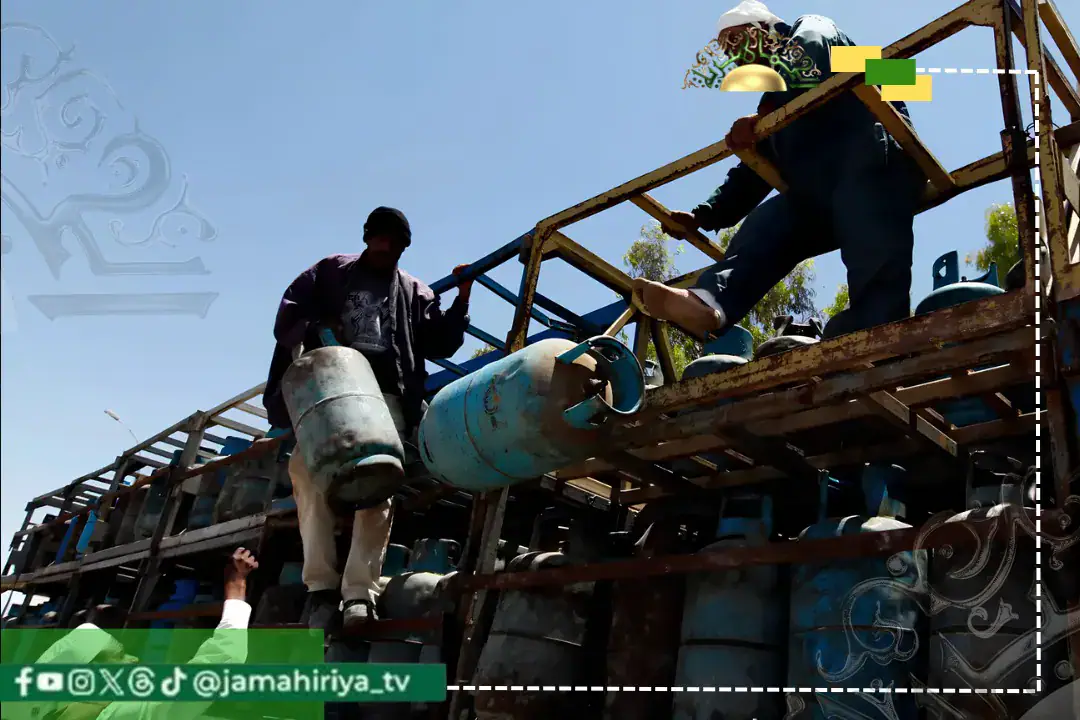
Libya is experiencing a severe shortage of cooking gas cylinders, with citizens, including the elderly, waiting for hours or even overnight to obtain a single cylinder. The crisis has led to a significant increase in prices on the black market, ranging from 70 to 200 Libyan dinars per cylinder. Despite the country's substantial oil and gas reserves, the issue lies in the transportation and storage infrastructure.
According to a report by Erem News, Libya's daily natural gas production stands at over 2.5 billion cubic feet, which should be sufficient to meet the country's needs. However, the report highlights that weak infrastructure and supply chain bottlenecks have hindered the delivery of cooking gas to consumers. The situation has been exacerbated by the country's reliance on maritime transportation, which has been disrupted by various factors.
In an effort to alleviate the crisis, the National Oil Corporation announced the arrival of cooking gas shipments at the ports of Tripoli and Benghazi on November 14. An additional tanker has been contracted to boost supplies and meet domestic market demands. The move aims to address the shortage and stabilize the market.
The crisis has also led to accountability measures, with the Public Prosecution ordering the detention of the head of the maritime transport department at the National Oil Corporation. The decision was made following investigations into issues with gas transport contracts and the detention of a tanker at a Greek port, which contributed to supply disruptions and depleted stockpiles at some warehouses.
Economists have pointed out that weak oversight of the subsidy system has created opportunities for smuggling and speculation, allowing subsidized cylinders to leak into the black market. They stress that addressing the crisis requires reforming the subsidy system and strengthening oversight of transportation and distribution operations.
Oil expert Mohamed Shaat has noted that Libya's domestic production of cooking gas is sufficient to meet needs, but limited storage capacity and reliance on maritime transport have caused supply bottlenecks. He emphasized the urgent need for additional tankers to address the shortage. Experts have proposed several solutions, including increasing storage capacity, rehabilitating infrastructure, and establishing natural gas distribution networks.
The recurrence of the crisis as winter approaches highlights the existence of deep-seated structural problems, including damage to some warehouses during conflict years, irregular shipment arrivals, and high transportation costs to remote cities and villages. Experts believe that reforming the supply and distribution system is essential to ending citizens' suffering.
Key points
- Libya's cooking gas crisis is caused by transportation and storage issues, not a lack of production.
- The crisis has led to significant price increases on the black market.
- Experts propose reforms to the subsidy system and infrastructure to address the shortage.