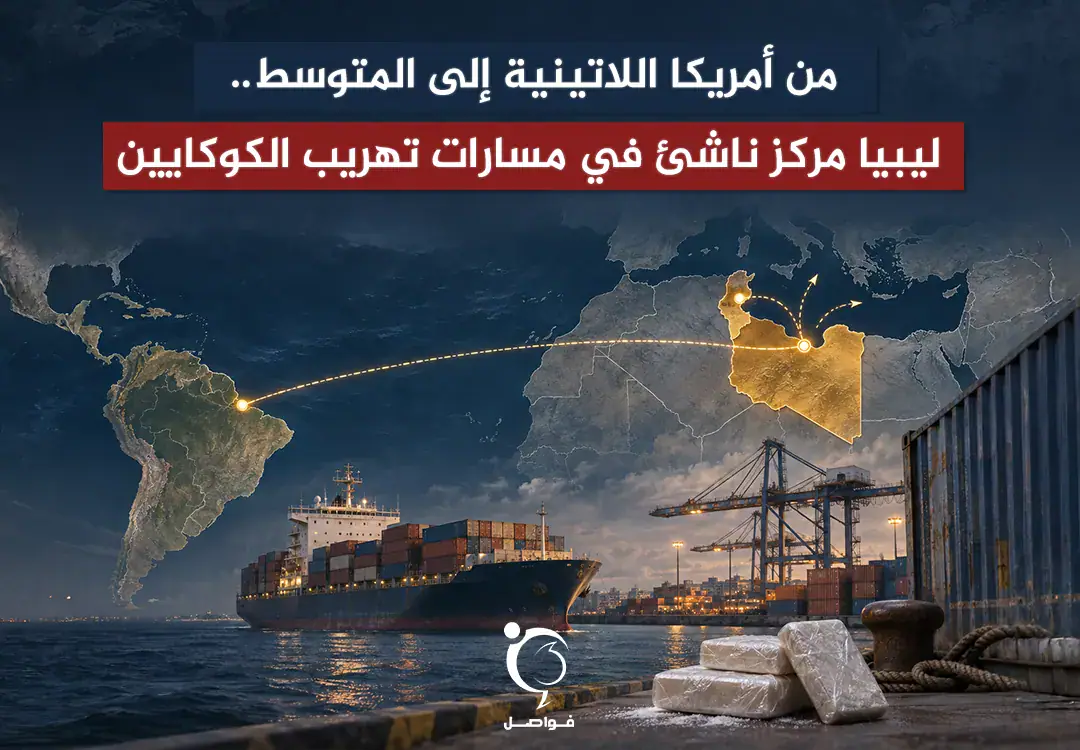
Libya is emerging as a significant hub in the trafficking of cocaine from Latin America to Europe and North Africa. According to data from the Italian news agency Ansa, over 101 kilograms of cocaine were seized in Tunisia during the first nine months of 2026, surpassing the total amount confiscated in 2025, which was 94 kilograms. This development has raised concerns about the country's role in the regional trafficking networks.
The United Nations Office on Drugs and Crime has reported that Libya is becoming a key logistical center for the transit of cocaine. Shipments of cocaine are arriving by sea from countries such as Brazil, Colombia, and Ecuador, and by land through Sahel countries. Some of these shipments are then transported to Tunisia via the border, particularly through the Ras Jedir crossing. This has significant implications for regional security and highlights the need for increased cooperation between countries to combat trafficking.
In February, Tunisian authorities seized approximately 30 kilograms of cocaine hidden in a car arriving from Libya. This incident underscores the expansion of trafficking routes to neighboring countries and the use of Mediterranean ports to transport shipments between North Africa and Europe. The growing involvement of Libya in cocaine trafficking has raised concerns about the country's fragile border controls and ports.
The situation is further complicated by the fact that Libya is transitioning from a potential transit point to a major logistical hub in the international drug trade. This shift has significant implications for regional security and highlights the need for increased cooperation between countries to combat trafficking. The country's instability and porous borders have created an environment conducive to the growth of trafficking networks.
The Italian news agency Ansa reported that cocaine shipments are arriving in Libya from Latin America, primarily from Brazil, Colombia, and Ecuador. These shipments are then transported to Tunisia and other parts of North Africa, and eventually to Europe. The involvement of Libya in cocaine trafficking has significant implications for regional security and highlights the need for increased cooperation between countries to combat trafficking.
The growth of cocaine trafficking in Libya has significant implications for regional security and highlights the need for increased cooperation between countries to combat trafficking. The country's instability and porous borders have created an environment conducive to the growth of trafficking networks. The international community is increasingly concerned about the role of Libya in the global drug trade.
The Libyan government's efforts to address the issue of cocaine trafficking are ongoing. However, the country's fragile security situation and limited resources pose significant challenges to combating trafficking networks. The international community is urged to provide support to Libya and other countries in the region to help them address the issue of cocaine trafficking.
Key points
- Libya is emerging as a significant hub in the trafficking of cocaine from Latin America to Europe and North Africa.
- Over 101 kilograms of cocaine were seized in Tunisia during the first nine months of 2026.
- The country's instability and porous borders have created an environment conducive to the growth of trafficking networks.