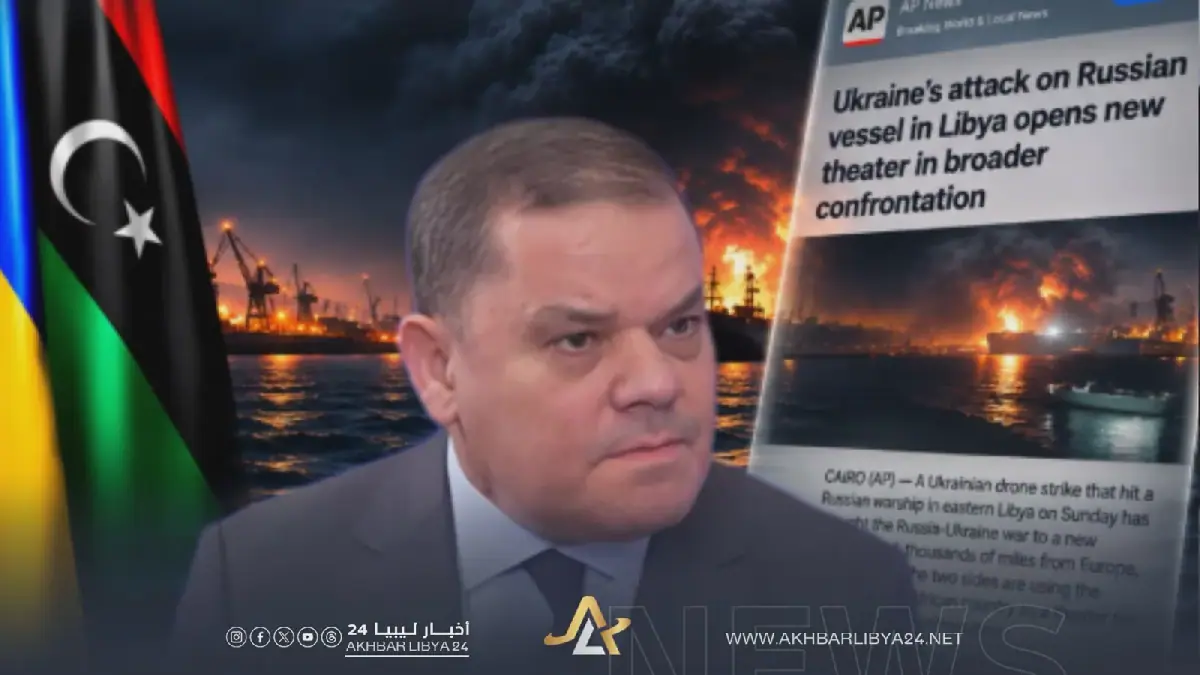
The Associated Press has revealed that a recent attack on Russian ships in the Libyan port city of Benghazi marks a new development in the ongoing Russia-Ukraine conflict. This incident has raised questions about the nature of Ukraine's military presence in Libya and its connection to the country's complex political and military landscape. According to AP, Ukrainian forces are operating secretly in western Libya under the auspices of PM Abdul Hamid Dbeibah's government.
Ukrainian officials have defended the naval attack, citing the targeted Russian vessels as legitimate military objectives. They argue that the operation aligns with their strategic interests in weakening Russia's economy and undermining Moscow's interests abroad. This stance reflects Ukraine's broader approach to expanding its targeting of Russian interests beyond traditional battlefields, effectively making Libya a part of the conflict's repercussions.
The growing ties between Dbeibah's government and Ukraine, along with Western allies, are reportedly driven by the Libyan leader's efforts to maintain his hold on power amid the country's ongoing political and institutional divisions. Libya's fragile security situation, characterized by the presence of various armed groups and militias, adds complexity to any external military or security cooperation.
This development has significant implications for Libya's stability, as the country becomes increasingly entangled in the international conflict. The involvement of external powers, coupled with internal divisions, risks transforming Libya into a proxy war battleground. This could jeopardize the country's prospects for peace and further complicate regional and global security dynamics.
The attack on Russian ships in Benghazi is not an isolated incident, as Ukrainian forces have previously targeted Russian vessels in Libyan waters. In March, a Russian-flagged gas tanker was damaged in an attack off the Libyan coast. The recurrence of such incidents suggests an escalation of Ukrainian operations and raises concerns about the potential for repeated military actions in Libyan waters.
According to authorities in eastern Libya, the Russian warship that was attacked had been docked in Benghazi for refueling and supplies under a cooperation agreement between Russia and the government led by Osama Hamad. This context highlights the intersection of international influences and Libya's internal divisions, as rival alliances and interests converge in the country.
The situation in Libya underscores the country's vulnerability to external conflicts and the risks of being drawn into a broader geopolitical struggle. As the Russia-Ukraine conflict continues to unfold, Libya's stability and sovereignty face significant challenges, raising questions about the country's ability to navigate these complex dynamics and maintain its territorial integrity.
Key points
- Libya's alliances with Ukraine and the West have put the country at the center of the Russia-Ukraine war.
- Ukrainian forces are operating secretly in western Libya under the auspices of PM Dbeibah's government.
- The involvement of external powers, coupled with internal divisions, risks transforming Libya into a proxy war battleground.