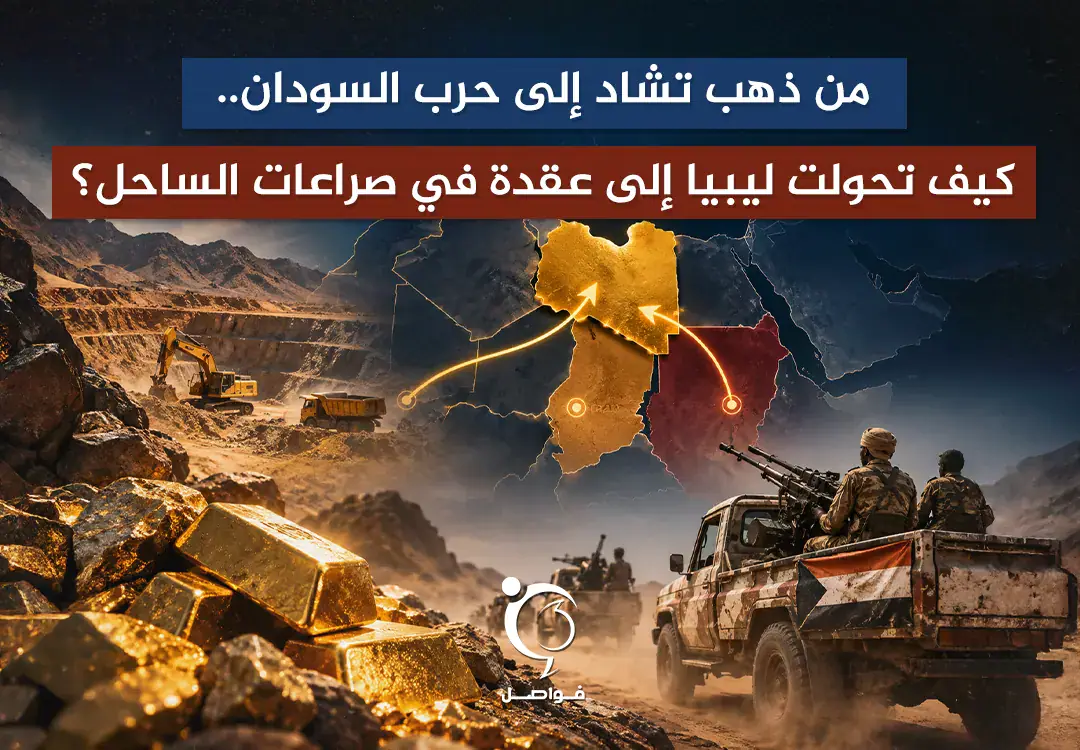
A recent report by Middle East Eye has revealed that Libya has become a critical point in the conflicts of the Sahel region. The report states that gold mines in the Tibesti region of Chad have become a focal point for the intersection of regional conflicts, with repercussions extending to Libya and Sudan. The competition for resources and the growing connection between military and economic interests in the Sahel region have contributed to this development.
The town of Miski, located in the Tibesti mountains, which extend to southern Libya, has witnessed clashes between the Chadian army and local Tuareg groups since October 14. The clashes are over control of mining activities, with the region rich in gold and antimony. Despite exporting large quantities of these resources, the local population lacks basic services. According to a Tuareg leader, Chad exported over $1 billion worth of gold and more than 15,000 tons of antimony last year, most of which was extracted from the Tibesti mountains.
The report highlights that Tibesti's significance extends beyond its mineral wealth, as it is part of a regional supply network linking the UAE to eastern Libya, Chad, and Sudan's Darfur region. This network is used to transport supplies related to the Rapid Support Forces, according to UN investigations and Middle East Eye reports. The report cites a UN expert team that tracked 458 heavy cargo plane flights between military airports in the UAE, Somalia, and eastern Libya from October 2024 to December 2025.
The flights, 239 of which landed in Kufra, have turned the city into a fortified logistics hub near the Sudanese border. In response, Chad and forces affiliated with Libyan General Khalifa Haftar's "General Command" established a joint force in November 2025 to secure approximately 1,050 kilometers of the border. This move aims to secure supply routes to Sudan and limit the influence of armed Tuareg groups.
According to Libyan researcher and political economist Jalal Harshawi, the security arrangements aim to secure a route extending from Libya's Marta al-Sara region through Chad to Amjers and then to Darfur. This will help limit attacks on supply convoys heading to the Rapid Support Forces. The developments in southern Libya are directly linked to the conflict in Chad and Sudan.
The report concludes that Libya is no longer just a arena for foreign powers to compete, but has become part of a regional network where gold trade, supply routes, and military influence intersect. The situation in Libya's south is now directly tied to the conflict in Chad and Sudan. The country's instability has significant implications for the region.
The intersection of economic and military interests in the Sahel region has created a complex web of alliances and rivalries. Libya's gold mines and strategic location make it a critical player in this dynamic. As the situation in the region continues to evolve, it remains to be seen how Libya's role will impact the conflicts in Chad and Sudan.
Key points
- Libya's gold mines and strategic location make it a hub for regional conflicts
- The country's instability has significant implications for the Sahel region
- The intersection of economic and military interests in the Sahel region has created a complex web of alliances and rivalries
Reporting sources
- من ذهب تشاد إلى حرب السودان.. كيف تحولت ليبيا إلى عقدة في صراعات الساحل؟ · fawaselmedia.com