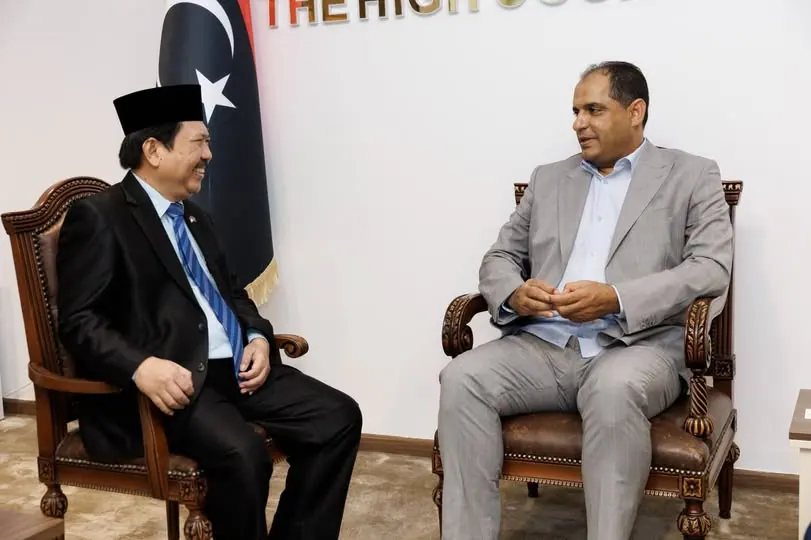
The Libyan Business Council (LBC) announced the signing of a trade cooperation agreement between Libyan and Indonesian businessmen on October 20 in Semarang, Indonesia. The agreement aims to ease trade and encourage direct cooperation between private sector companies in Libya and Indonesia. Business leaders from both countries attended the signing ceremony, which was accompanied by bilateral business-to-business (B2B) meetings to discuss export and import opportunities.
The talks focused on establishing direct commercial relations between Libyan and Indonesian companies. Central Java, including Semarang, is an important industrial and export hub in Indonesia, with a variety of products that can be exported to the Libyan market. These products include textiles, ready-to-wear clothing, shoes, furniture, wood products, food products, and marine products.
The new deal builds on the results of the Libyan Business Forum, held on October 16 on the sidelines of the Trade Expo Indonesia in Jakarta. The forum led to the exchange of over 12 letters of intent for potential commercial transactions worth more than $1.8 million. Direct contacts were also established between Libyan and Indonesian companies to discuss trade and investment opportunities.
The LBC is following up on the forum's results and understandings reached by participating businesses through the Libyan-Indonesian Business Council. The council is collaborating with economic organizations and institutions in Indonesia to improve communication between companies and find new opportunities for bilateral trade.
The initiative aims to assist in converting the letters of intent into concrete commercial agreements. This shift from exploratory business talks to actual business transactions and ongoing private sector partnerships is a significant development. The LBC's efforts will be crucial in determining whether increased involvement leads to sustained trade gains for businesses in both countries.
The trade cooperation agreement is expected to provide opportunities for businesses to enter into commercial partnerships and explore new markets. The agreement will also facilitate the exchange of goods and services between Libya and Indonesia, promoting economic growth and development in both countries.
The success of this agreement will be measured by the number of commercial deals that are actually concluded. If the proposed deals are converted into actual agreements, it will be a key indicator of the increased involvement leading to sustained trade gains for businesses in both Libya and Indonesia.
Key points
- The trade cooperation agreement aims to ease trade and encourage direct cooperation between private sector companies in Libya and Indonesia.
- The agreement builds on $1.8 million in proposed commercial deals between Libyan and Indonesian companies.
- The initiative marks a shift from exploratory business talks to actual business transactions and ongoing private sector partnerships.