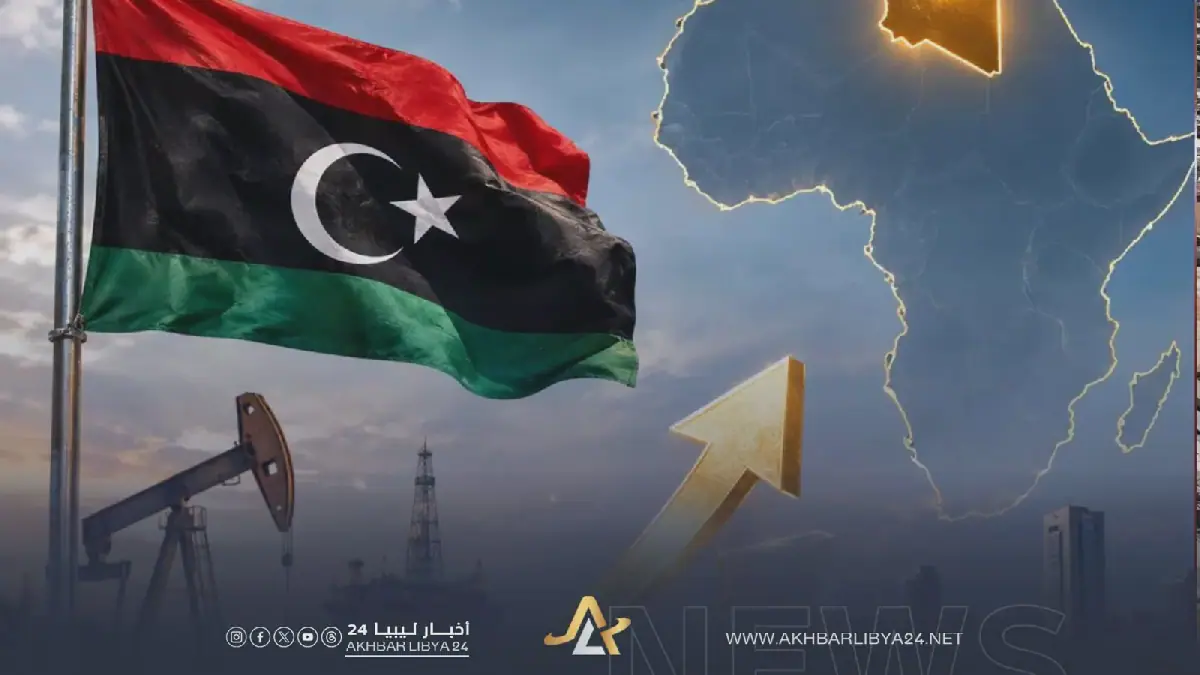
According to data from the economic intelligence platform Afriranks, based on World Bank figures, Libya recorded the highest gross domestic product growth rate in Africa in 2025, at 13.37%. This places Libya ahead of major economies in the region. The comparison, which included 52 African countries, showed that the continent's total GDP was approximately $3.15 trillion, with South Africa having the largest economy at $427.2 billion, followed by Egypt, Nigeria, Algeria, and Morocco.
Despite leading in growth rate, Libya does not have the largest economy in Africa. The growth rate measures the pace of GDP increase, while the size of the economy is measured by its overall GDP. Libya's high growth rate is significant, but it also raises questions about the nature of this growth and its sustainability. The country's economy is largely driven by the oil and gas sector, which makes its growth vulnerable to fluctuations in production, prices, and export conditions.
The African Development Bank predicted that the average African economy would grow at 4.4% in 2025, with North Africa's economy expected to grow at 4%. Libya's growth rate exceeds these projections and those of larger African economies. However, a high growth rate does not necessarily translate to a strong economy or improved living standards. The sectors contributing to this growth and their diversity are crucial in evaluating economic performance.
Analysts attribute Libya's high growth rate to its economy's heavy reliance on oil and gas production and export. While this has driven growth, it also means that the economy remains tied to a single sector. This makes Libya's growth vulnerable to changes in global oil prices and production levels. As a result, growth may not be sustainable or translate to broader economic development or employment opportunities.
Despite Libya's high growth rate, the country's citizens may not feel the benefits. The growth rate does not directly reflect improvements in purchasing power, unemployment rates, or income levels. There is a gap between macroeconomic indicators and the lived experience of citizens. If the benefits of growth are not felt across various sectors and social groups, the economy may not be fulfilling its potential to improve living standards.
Libya's economic performance raises questions about its ability to convert high growth rates into sustainable development. The country's challenge is to diversify its economy, reduce its dependence on oil, and promote other sectors such as industry, agriculture, and services. This will require investment in these sectors, improved business environments, and job creation. Until then, Libya's high growth rate may not translate to meaningful economic development or improved living standards for its citizens.
As Libya continues to lead Africa in growth rate, it faces the challenge of converting this growth into sustainable economic development. The country's reliance on oil production and export remains a significant obstacle to achieving this goal. To overcome this, Libya will need to implement policies and strategies that promote economic diversification, investment, and job creation. Only then can the country ensure that its high growth rate translates to improved living standards for its citizens.
Key points
- Libya achieved the highest growth rate in Africa in 2025 at 13.37%, driven largely by its oil and gas sector.
- The country's economy remains heavily dependent on oil production and export, making its growth vulnerable to fluctuations in global oil prices and production levels.
- Libya faces the challenge of converting its high growth rate into sustainable economic development, including diversifying its economy and promoting other sectors.