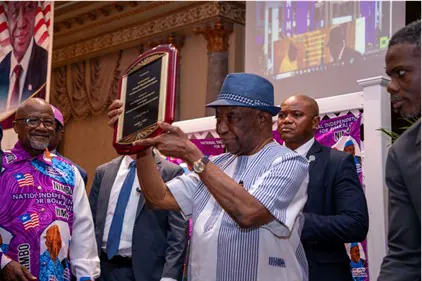
Liberian President Joseph Nyuma Boakai, Sr. has called on Liberians living abroad to move beyond sending remittances and instead invest in the country's development. Speaking at a program in Maryland on September 18, Boakai urged the diaspora to share their expertise, capital, and global networks to help build a more peaceful, prosperous, and inclusive Liberia. The event was organized by the National Independent Movement for Boakai-USA (NIMBO-USA) and brought together Liberian government officials, community leaders, and citizens from across the United States.
Boakai emphasized the need for Liberians to rise above tribalism, regionalism, and political bitterness, and work together to build a better future. He praised the diaspora for their contributions through remittances, education, and humanitarian aid, but stressed that Liberia's current development needs go beyond charitable aid. The President outlined five practical ways diaspora Liberians can help accelerate national development, including promoting unity and cooperation among Liberian organizations overseas and investing in productive sectors that create jobs and expand economic opportunity.
The President's appeal comes as the government prepares its second annual national diaspora conference, themed "From Dialogue to Delivery: Diaspora Capital, Innovation, and the Next Liberia." Boakai said the conference must produce tangible outcomes, including policy proposals, institutional partnerships, investment commitments, and projects that benefit the Liberian people. The government held its first national diaspora conference in Washington, D.C. in September 2025, and the 2026 edition forms part of efforts to implement Liberia's Diaspora Strategic Plan (2024-2027).
Boakai was accompanied by a senior government delegation, including Liberia's Ambassador to the United States, Dr. Al-Hassan Conteh, and Minister of State Without Portfolio Hadja Mamaka Bility. The delegation met with diaspora Liberians and discussed ways to strengthen government-diaspora partnership in national development. The NIMBO-USA program ended with a renewed call for unity, shared responsibility, and purposeful diaspora engagement.
The President's message was well-received by the gathering, which included NIMBO-USA leaders and members, senior Liberian government officials, and community leaders. Boakai congratulated Deputy Speaker Thomas P. Fallah and the NIMBO-USA leadership for bringing Liberians together in a spirit of fellowship, patriotism, and service. He also expressed appreciation for the warm reception given to him and his delegation.
Liberia's progress depends on the willingness of its citizens, wherever they reside, to work together toward a common national vision, Boakai said. He stressed that no single political party, county, ethnic group, or individual can develop Liberia alone, and that the government cannot achieve its development goals without continued collaboration with the diaspora. The President's call for unity and cooperation reflects the government's efforts to address sharp political tension at home and turn goodwill abroad into jobs, investment, and stronger institutions on the ground.
The government's ARREST Agenda for Inclusive Development (AAID) focuses on critical areas of national transformation, including agriculture, roads, rule of law, education, sanitation, and tourism. Boakai linked the diaspora's roles to the AAID, stressing that successful implementation of the national agenda requires continued collaboration among public institutions, the private sector, civil society, development partners, and Liberians worldwide. The President's delegation is expected to follow up on the discussions in Maryland with further engagements with the diaspora and other stakeholders.
Key points
- President Boakai calls on Liberians abroad to invest in Liberia's development and share their expertise, capital, and global networks.
- The government is preparing its second annual national diaspora conference to discuss ways to implement Liberia's Diaspora Strategic Plan (2024-2027).
- Boakai emphasizes the need for Liberians to rise above tribalism, regionalism, and political bitterness to build a more peaceful, prosperous, and inclusive Liberia.