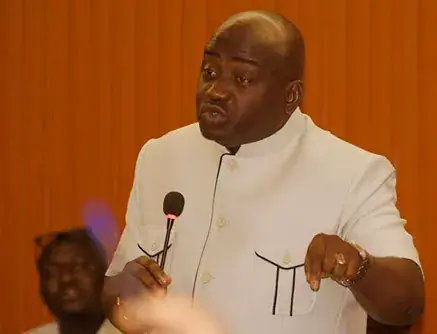
Liberian lawmaker and Citizens Movement for Change (CMC) Political Leader Musa Hassan Bility has publicly dissociated himself from the Nimba Solidarity Movement. In a letter, Bility stated that he had no knowledge of the movement's planning and did not give consent for his name or photograph to be used in connection with it. He expressed concerns that the movement prioritizes photographs over truth and principle over patronage. Bility's objection has reopened old wounds in Nimba County, including the deaths of Jackson F. Doe and Samuel Dokie.
Bility noted that Nimba County is home to five indigenous tribes, each with an equal claim to its identity, history, and future. However, he argued that the county's political affairs have long been dominated by two major tribal groups, leaving others feeling like strangers in their own county. Bility also expressed concerns about the treatment of people whose family connections extend beyond the dominant groups. He questioned how the county can speak of solidarity when these contradictions have not been addressed.
The CMC leader warned that the Nimba Solidarity Movement risks becoming another exercise in political convenience rather than genuine reconciliation. He observed that some personalities now appearing together in the name of unity were bitter political opponents just a few years ago. Bility argued that when such changes coincide with political appointments and access to government, it is reasonable to ask whether the newfound solidarity is built on principle or political benefit.
Bility rejected the notion that supporting the government is a qualification for belonging to a united Nimba. He emphasized that the county is home to educated, independent-minded people with different political convictions. A genuine solidarity movement, he argued, must make room for all these differences and unite the people around their shared identity and collective interests, rather than demanding political conformity.
The lawmaker identified a deeper problem that the county continues to avoid: its history. Nimba has experienced painful political divisions, violence, and the loss of important leaders, but has never adequately confronted the circumstances surrounding these events. Bility argued that reconciliation cannot be built upon silence and that gathering people on a platform to exchange greetings and declare unity does not honor wounds that deserve more than ceremonial recognition.
Bility called for an end to the destructive practice of treating every change of government as an opportunity to punish those who supported the previous administration. He argued that this cycle has damaged relationships, weakened institutions, and made political affiliation more important than competence, character, and service. A serious Nimba reconciliation initiative, he said, should establish principles that protect the county's people from this recurring political discrimination.
The CMC leader cautioned that Nimba County does not exist independently of Liberia and that national leadership requires the confidence and participation of Liberians across all 15 counties. He urged Nimbaians to resist the temptation to transform county solidarity into a political bargaining instrument or a demonstration of support for any individual politician.
Key points
- Musa Hassan Bility disowned the Nimba Solidarity Movement due to concerns over unity built on patronage and misused images.
- Bility emphasized the need for genuine reconciliation in Nimba County, rather than a superficial display of unity.
- The lawmaker called for an end to the practice of punishing those who supported the previous administration, which has damaged relationships and weakened institutions.