More than two decades after Liberian women played a crucial role in ending the country's civil wars, they have been noticeably absent from the renewed push to address the atrocities committed during the conflict. Despite their significant contributions to bringing peace to Liberia, women have been largely relegated to the sidelines in the preparations for the War and Economic Crimes Court. No woman was shortlisted to lead the Office of the Establishment of the War and Economic Crimes Court of Liberia, and many of the major groups shaping the process are headed by men.
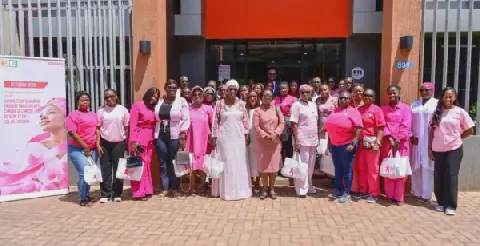
Women leaders have reported being discouraged from taking on a more central role in the post-war justice process due to harassment and attacks. As a result, they have been reluctant to speak up and participate in key leadership and decision-making spaces. However, a new initiative aims to change this by strengthening women's groups and bringing more women, including young women, into peacebuilding and justice discussions. The "Gender Promotion Initiative 2.0" is a US$3 million project launched by the Liberian government, the United Nations, Kvinna till Kvinna, and other partners.
The three-year project will be implemented in several counties, including Montserrado, Lofa, Nimba, Grand Gedeh, and Grand Cape Mount. The United Nations has committed to allocating more than 40 percent of its resources directly to women's rights organizations. According to Mabel M.K. Kear, programme manager at Kvinna till Kvinna, the initiative represents a critical promise that the sacrifices of women and communities will lead to transformation and genuine reconciliation.
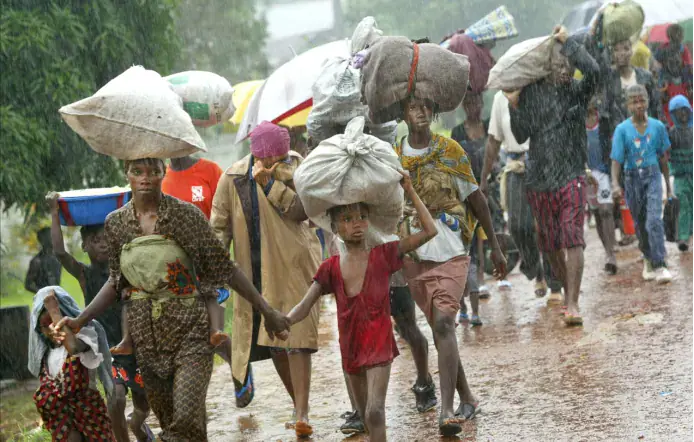
Liberia's civil conflict, which lasted for 14 years, resulted in the deaths of over 250,000 people, according to the United Nations. A 2016 United Nations human rights report estimated that 1.5 million people were displaced, and 75 percent of Liberian women and girls were subjected to wartime rape. The 2009 Truth and Reconciliation Commission found that women were singled out for abuse simply on account of their gender and that forced displacement had a disproportionate impact on women.
Despite their experiences during the war, women played a pivotal role in ending the conflict. Christian and Muslim women joined forces through the Women of Liberia Mass Action for Peace, staging protests, prayer meetings, and other nonviolent actions. Their efforts, led by women like Leymah Gbowee, who was later awarded the Nobel Peace Prize, helped pressure Liberia's warring parties toward peace in 2003.
The legacy of women's contributions to Liberia's peace process was celebrated at a high-level event on women, peace, and security at United Nations headquarters in New York. The event, organized by the Ministry of Gender, Children and Social Protection, highlighted women's historic role in the country's peace process and called for greater leadership by women and girls. President Joseph Boakai launched Liberia's third National Action Plan on Women, Peace and Security, identifying participation and access to justice among its priorities.
The renewed focus on women's participation in post-war justice efforts comes at a critical stage in the establishment of the War and Economic Crimes Court. With competing proposals being considered by the Legislature, supporters of the new gender initiative emphasize the need for women to have a greater role in decision-making. Christine N. Umutoni, the United Nations resident coordinator in Liberia, noted that the initiative should build on the voice Liberian women have already established rather than treating their participation as something new.
Key points
- Women have been largely excluded from leadership roles in Liberia's post-war justice efforts despite their significant contributions to ending the civil wars.
- A new US$3 million initiative aims to strengthen women's groups and bring more women into peacebuilding and justice discussions.
- The Liberian government and international partners are working to ensure that women have a greater role in the establishment of the War and Economic Crimes Court.