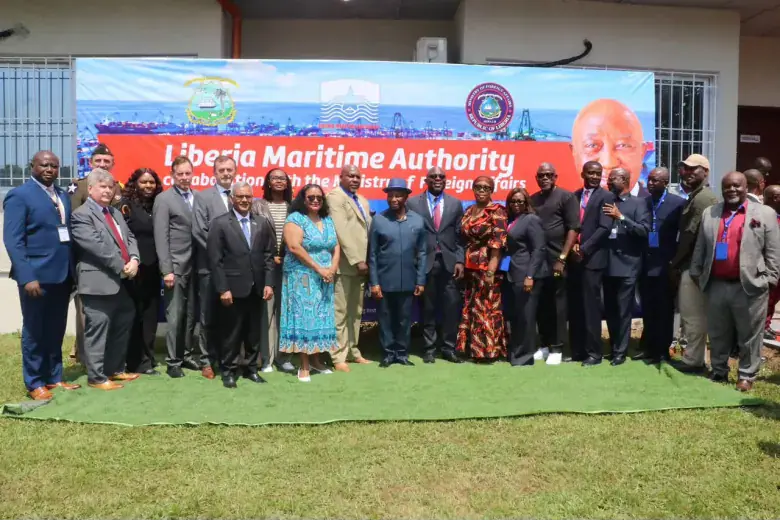
President Joseph Nyuma Boakai of Liberia has vowed to utilize the country's upcoming Presidency of the United Nations Security Council to advocate for enhanced international protection of seafarers caught in armed conflicts and other maritime security threats. Speaking at the Marshall High-Level Dialogue on Global Maritime Safety, Security and Welfare of Seafarers, President Boakai emphasized that seafarers are ordinary workers who transport goods across international waters and should not be treated as participants in armed conflicts. He stressed that Liberia's position on the Security Council presents an important opportunity to influence global discussions on maritime safety and international peace.
Liberia is set to assume the rotating presidency of the UN Security Council on December 3, 2026, marking its return to the Council's leadership after over six decades. President Boakai disclosed that his government intends to draw international attention to the dangers confronting civilian seafarers in conflict zones through a high-level open debate at the United Nations. He warned that armed conflicts, piracy, drug trafficking, and other criminal activities continue to threaten maritime transportation and the lives of people working at sea.
President Boakai highlighted Liberia's position as the world's largest maritime registry by tonnage, with over 300 million gross tons registered under its flag. He emphasized that Liberia's responsibility extends beyond commercial benefits to ensuring the safety and welfare of people working aboard vessels flying its flag. The President called for stronger international cooperation to facilitate medical evacuations, crew changes, and the safe return of seafarers stranded in conflict-affected areas.
Foreign Minister Sara Beysolow Nyanti described maritime security as critical to Liberia's national interests and global economic stability. She noted that approximately 80 percent of global trade by volume is transported by sea, making the safety of shipping routes essential to the movement of food, fuel, and medicine. Nyanti identified piracy, armed robbery at sea, and illegal fishing as major threats to national revenue, local markets, and food security.
The United Nations Resident Coordinator in Liberia, Christiane N. Umutoni, warned that maritime security should not be regarded as an issue affecting only countries with coastlines. She explained that landlocked countries also depend on the sea because international trade, communication systems, and food security are closely connected to maritime activities. Umutoni reaffirmed the United Nations' commitment to supporting Liberia in maritime governance, regional cooperation, and security.
Commissioner of the Liberia Maritime Authority, Cllr. Neto Zarzar Lighe, welcomed participants to the Marshall High-Level Dialogue, highlighting the importance of addressing seafarers' safety concerns. The dialogue aimed to promote international discussions on maritime security and shipping safety, with Liberia launching a "Group of Friends" initiative with India to amplify the concerns of coastal and flag states.
Liberia intends to convene a high-level debate on maritime security at the UN Security Council on December 3, 2026, under President Boakai's chairmanship. The country will use its position to work with the International Maritime Organization and regional partners to strengthen maritime security. Key points include:
Key points
- President Boakai to advocate for seafarer safety at UN Security Council
- Liberia to convene high-level debate on maritime security on December 3, 2026
- International cooperation crucial to addressing maritime security threats