In Liberia, nearly eight years after adopting its Inclusive Education Policy, children with severe autism and other developmental disabilities continue to face rejection from schools. The policy, introduced in 2018, aimed to provide equal access to education for children with disabilities, but its implementation has been slow. Many schools lack trained teachers, classroom support, and resources to meet the needs of children with autism. As a result, parents are forced to search for schools that can provide the necessary support, often with limited success.
Autism, a developmental condition that affects communication, social interaction, and behavior, exists on a spectrum. While some children with mild autism can thrive in regular classrooms, those with severe autism require specialized support, including one-on-one teaching, quiet spaces, and tailored lessons. In Liberia, there is no national count of children with autism, but a 2026 review of seven studies in four African countries estimated that about 1% of participants had autism confirmed by a clinician. If this rate applies to Liberia, approximately 11,600 children aged five to 14 could be on the autism spectrum.
Parents of children with severe autism have reported being turned away by multiple schools, with some principals citing a lack of training or resources to support these students. Anita, a mother from Bassa Town, Gardnersville, has faced years of rejection, with some schools telling her they did not know how to teach her daughter. Her daughter, Mourine, has difficulty following instructions, speaks only a few words, and reacts to bright lights. Despite these challenges, Anita believes her daughter can learn with the right support. She has been searching for a school that can provide this support, but so far, none have been able to meet her daughter's needs.
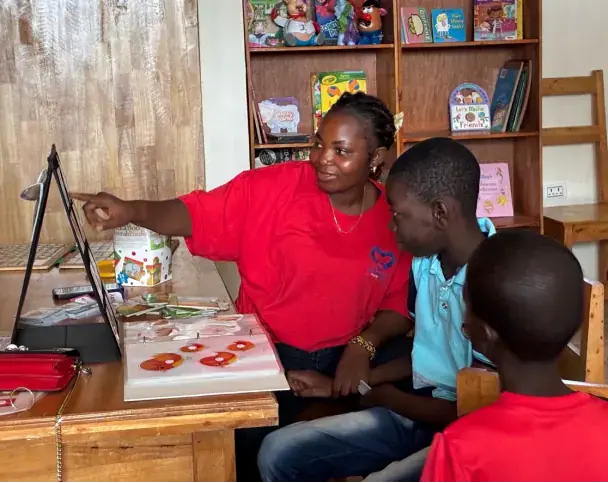
One of the few resources available to families with children on the autism spectrum is the Arthur and Zwannah First Autism Classroom in Bernard Farm, Paynesville. Founded by Agnes Fallah Kamara, this privately funded classroom provides free education and support to children with severe autism. However, the classroom has limited space, funding, and trained staff, and Kamara relies on private donations to keep the program running. Despite these challenges, the classroom has shown success, with children making progress in individualized instruction and learning at their own pace.
Kamara, a former UN radio broadcaster, started the classroom after becoming friends with a woman from Kenya whose son with autism could not find a school. Kamara studied autism and gained practical experience working with children on the spectrum, and her classroom has become a lifeline for families who cannot find supportive schools. However, Kamara emphasizes that supporting these families should not be left to private citizens, but rather should be a commitment from the government.
The Liberian government's limited funding and support for inclusive education have hindered the implementation of the 2018 policy. While lawmakers have called for action, more needs to be done to ensure that children with autism and other developmental disabilities have equal access to education. The lack of trained teachers, classroom support, and resources has created a significant barrier to inclusive education, leaving families to navigate the system on their own.
As the search for supportive schools continues, families like Anita's are left to rely on makeshift solutions, such as having a neighbor help teach their child at home. However, this is not a sustainable solution, and Kamara's classroom is not a long-term fix. The government must take concrete steps to implement the Inclusive Education Policy and provide the necessary resources and support for children with autism and other developmental disabilities to access education.
Key points
- Liberian schools still reject children with severe autism and other developmental disabilities, despite a 2018 policy promising equal access to education.
- The government has limited funding and support for inclusive education, hindering the implementation of the policy.
- A privately funded autism classroom in Paynesville offers free education, but cannot meet demand.