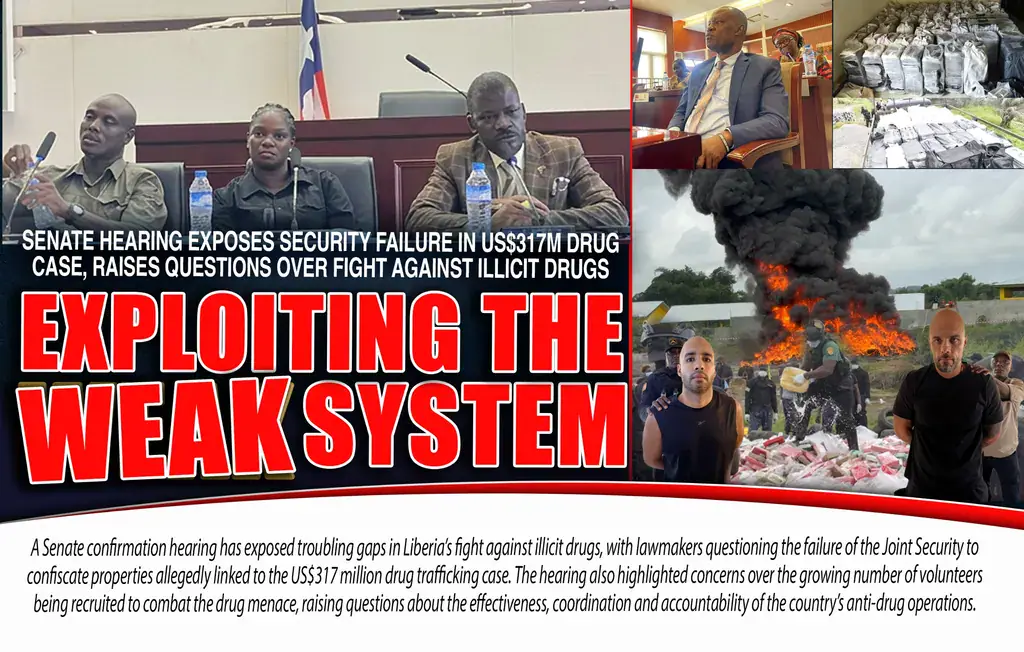
The Liberian Senate's recent hearing on the Liberia Drug Enforcement Agency (LDEA) exposed significant security failures in the country's fight against illicit drugs. The hearing, which was the second confirmation hearing for the LDEA, revealed that the agency is stretched thin and its workforce is largely unpaid. The hearing also raised questions about the implementation of Liberia's New Controlled Drugs and Substances Act, which was passed in 2023. The law provides for the confiscation and forfeiture of properties tied to drug-related offenses, but its implementation has been hindered by various challenges.
The Senate hearing was informed that the LDEA has over 1,400 volunteers who have not been incorporated into the agency and are serving without compensation. This arrangement has been described as a serious security risk to Liberia. The acting management of the LDEA has begun trying to change this by asking volunteers to "stand down and reapply." The agency's goal is to build an intelligence-driven, professionalized workforce, including K9 dogs, and to share intelligence with partners and countries across the region to fight drug trafficking.
The hearing also discussed the case of a viral video that showed Precious Rue, the nominee for Deputy Director for Operations, alleging that an individual had promised to make sure she received $10,000 every week from a drug cartel for illegal trafficking. Rue apologized to senators for the video and explained that she had reported the matter to heads at the agency before she was nominated. The video has raised concerns about the agency's internal processes and the potential for corruption.
The LDEA's Director General-designate, Daniel Ziankhan, told senators that the agency currently holds vehicles that were arrested together with suspects and illicit substances. However, moving these vehicles from custody to forfeiture requires working through "technicalities," including establishing ownership. Ziankhan pointed to the Ministry of Justice, which he said is responsible for implementing the law and confiscating and forfeiting properties tied to drug-related offenses.
The hearing highlighted the challenges facing the LDEA in implementing the New Controlled Drugs and Substances Act. The law provides for the confiscation and forfeiture of properties tied to drug-related offenses, but its implementation has been hindered by various challenges, including a lack of capacity and resources. The LDEA's workforce is largely unpaid, and the agency has over 1,400 volunteers who are serving without compensation.
The Senate hearing also raised questions about the ownership of properties used in drug-related offenses. Ziankhan explained that establishing ownership is a critical step in confiscating and forfeiting properties, but it can be a complex process. The LDEA's goal is to build a professionalized workforce that can effectively implement the law and confiscate and forfeit properties tied to drug-related offenses.
The LDEA's confirmation hearing has raised important questions about the agency's capacity to implement Liberia's New Controlled Drugs and Substances Act. The hearing highlighted the challenges facing the agency, including a lack of capacity and resources, and the need for a professionalized workforce. The agency's goal is to build an intelligence-driven workforce that can effectively fight drug trafficking and confiscate and forfeit properties tied to drug-related offenses.
Key points
- The Liberian Senate's hearing on the LDEA exposed significant security failures in the country's fight against illicit drugs.
- The LDEA has over 1,400 volunteers who have not been incorporated into the agency and are serving without compensation.
- The agency's implementation of the New Controlled Drugs and Substances Act has been hindered by various challenges, including a lack of capacity and resources.