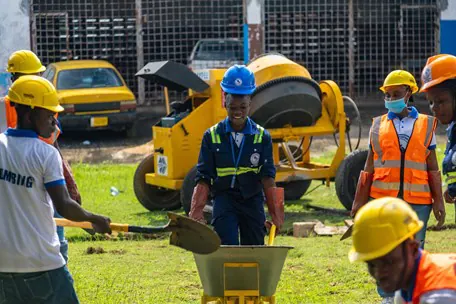
Liberia's vocational education sector is undergoing a significant transformation with the implementation of the Strengthening Integration through Vocational Education (STRIVE) project. Funded by the Agence Française de Développement (AFD) and implemented by the European Institute for Cooperation and Development (IECD), the €10 million project aims to strengthen vocational training, improve employability, and connect instruction to labor-market needs. The project, which runs through December 2026, has already made a notable impact on institutions such as the Booker Washington Institute (BWI).
The STRIVE project has introduced a single national curriculum, replacing the previous fragmented system where trainers taught what they knew best. This change has ensured that students across different institutions receive standardized training, making it easier for them to adapt to the job market. George K. Fredericks, Associate Coordinator of the Medical Science Department at BWI, noted that the project has brought about a significant difference in teaching methods, with a focus on student-centered learning and hands-on training.
One of the most visible changes brought about by the STRIVE project is the modernization of vocational workshops. At BWI, hospitality students have moved from using charcoal pots and wood-fired ovens to modern kitchens equipped with industry-standard appliances. This upgrade has enabled graduates to enter the job market already familiar with the tools of the trade. Fredericks emphasized that this change has made a significant difference in the employability of graduates.
The STRIVE project has also supported the renovation and equipping of various vocational training centers, including BWI, Monrovia Vocational Training Center (MVTC), and LOIC Monrovia. Additionally, the project has facilitated curriculum development, internships, and industrial visits. Alpha M. Jallo, Electrical Services Manager at Firestone Liberia, noted that the company's partnership with IECD has been beneficial in providing students with practical experience and job opportunities.
Despite the progress made, challenges persist. Fredericks highlighted that many industries assume that trained students must be paid during internships, which can be a barrier to providing students with the necessary practical experience. Furthermore, entrepreneurship remains constrained by finance, making it difficult for graduates to establish their own businesses. Fredericks called for awareness among employers and requested that STRIVE extend to instructors, enabling them to visit major industrial areas and gain exposure.
The project's impact is already being felt, with Firestone Liberia hiring several STRIVE trainees into its workforce. Jallo emphasized the importance of employer involvement in curriculum design, enabling institutions to provide students with relevant training. He also noted that the company's partnership with IECD has facilitated the recruitment of talented students.
As the STRIVE project nears its conclusion, concerns have been raised about the sustainability of its gains. Fredericks warned against treating the project's end as the conclusion of support, emphasizing the need for continued maintenance and development. The project's success will depend on the continued commitment of stakeholders to support Liberia's vocational education sector.
Key points
- The STRIVE project's introduction of a single national curriculum has ensured standardized training across institutions.
- Modernization of vocational workshops has enabled graduates to enter the job market with industry-standard skills.
- Challenges persist, including employers' attitudes toward internships and limited access to finance for entrepreneurship.