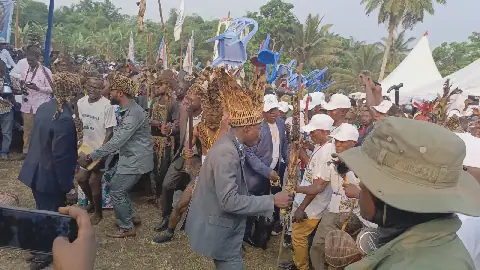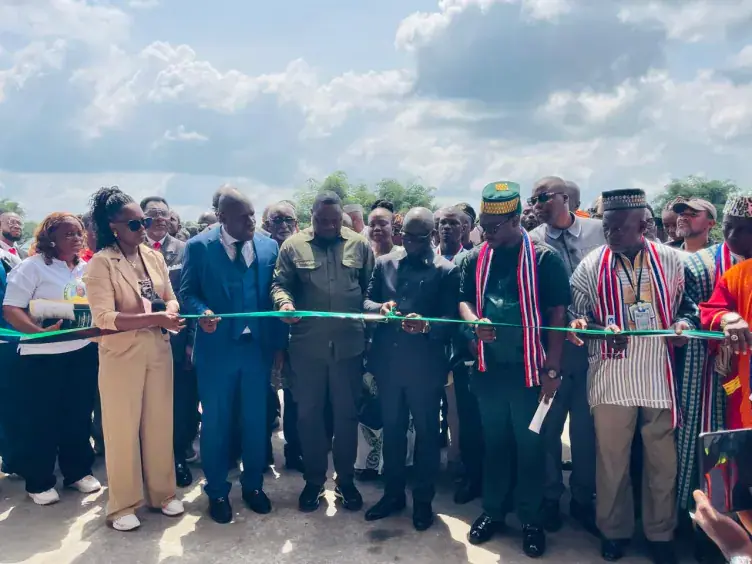
Liberia has taken a significant step towards developing its domestic industrial economy with the commissioning of BNB Rubber Factory Incorporated, a 100 percent Liberian-owned processing facility. Located in the Morris Farm Community, Todee District, Montserrado County, the multi-million-dollar investment will process locally produced natural rubber into Technically Specified Rubber, TSR, particularly TSR 10 and TSR 20. These products are used by international rubber and manufacturing industries.
The factory has an installed processing capacity of four metric tons per hour, equivalent to approximately 100 metric tons daily. This represents an important step toward retaining more economic value within Liberia, reducing dependence on the exportation of relatively unprocessed commodities, and creating opportunities for domestic industrial development. The factory's commissioning on November 24 marks a significant milestone in Liberia's ambition to move beyond exporting raw agricultural commodities.
Agriculture Minister Alexander Nuetah, representing President Joseph Nyuma Boakai at the ceremony, described the investment as strategic. He emphasized that it reflects the kind of domestic entrepreneurship needed to transform Liberia's agricultural economy. The Minister recalled that the President considers rubber the lifeblood of Liberia's economy, highlighting its historical and economic importance. However, he noted that despite Liberia's early entry into commercial rubber production, the country has failed to achieve the level of production, industrial development, and domestic ownership necessary to maximize the sector's potential.
For decades, Liberia's rubber economy has largely depended on producing and exporting natural rubber, with much of the additional industrial value generated outside the country. BNB's establishment seeks to change that pattern by introducing domestic processing capacity that will transform raw rubber sourced from Liberian farmers and suppliers into standardized industrial products for international markets. The company's Chief Executive Officer, Sylvanus B. Broh, Sr, said the investment emerged from the experience of Broko Enterprising Corporation, established in Tappita, Nimba County, in 2018.
The CEO disclosed that the factory's production process begins with receiving, weighing, inspecting, and sorting raw rubber before it undergoes washing, shredding, cleaning, dewatering, and controlled drying. The material is subsequently compressed into standardized bales, tested through laboratory quality-control procedures, and prepared for packaging and shipment. He also revealed that the company sources its raw materials from smallholder farmers, brokers, cooperatives, and aggregators across Liberia and has established business relationships with buyers in Austria, Malaysia, Singapore, China, and Europe.
Minister Nuetah challenged Liberians to move beyond depending on foreign investors and begin taking advantage of opportunities in sectors where the country possesses natural resources and comparative advantages. He cited Côte d'Ivoire as an example of how domestic participation can contribute to the development of a competitive rubber industry. The Minister presented figures showing that Liberia exported approximately 41,000 metric tons of rubber in 1961, compared with about 88 metric tons from Côte d'Ivoire during the same period. By 2024, Côte d'Ivoire's rubber exports had increased to approximately 1.6 million metric tons, while Liberia exported about 118,000 metric tons.
The emergence of BNB Rubber Factory could encourage competition not only among rubber processors but also across the broader value chain. With another processing outlet available, farmers, cooperatives, brokers, and aggregators could have additional opportunities to market their products. Increased competition among buyers could also encourage improved purchasing arrangements, more responsive services, and potentially better farm-gate prices.
Key points
- The new factory has an installed processing capacity of four metric tons per hour, equivalent to approximately 100 metric tons daily.
- The factory will process locally produced natural rubber into Technically Specified Rubber, TSR, particularly TSR 10 and TSR 20.
- The investment is expected to strengthen the country's rubber value chain and expand local participation in the agricultural sector.