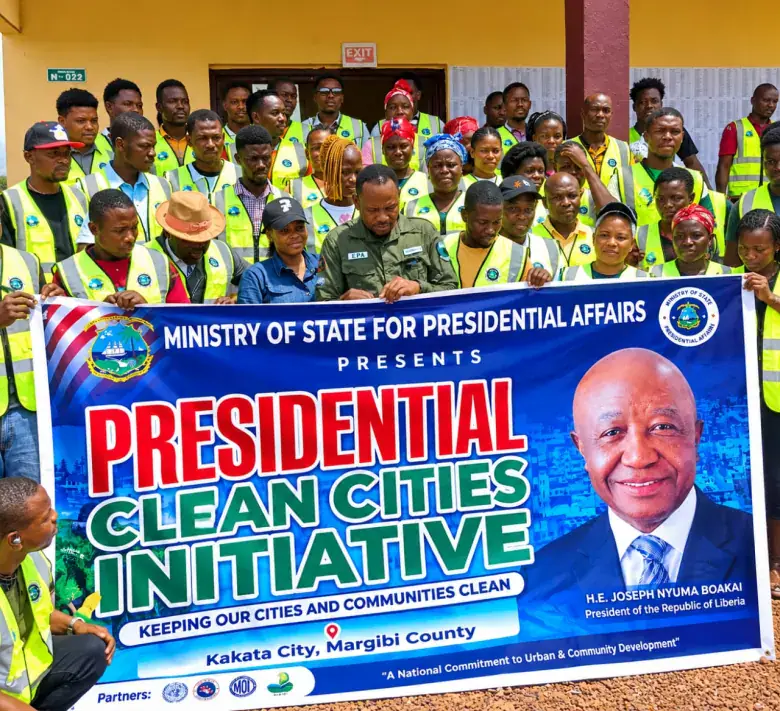
The Government of Liberia has initiated its Presidential Clean Cities Initiative in 12 cities and the Township of Schieffelin, marking a significant step in addressing the country's persistent sanitation challenges. This nationwide rollout, coordinated across eight counties, aims to establish a more organized, community-driven approach to environmental cleanliness, waste management, and public space maintenance. The initiative is expected to create short-term employment opportunities for over 1,250 young people.
The regional launch was coordinated across participating locations in eight counties, including Montserrado, Nimba, Bong, Lofa, Grand Bassa, Margibi, Bomi, and Grand Gedeh counties. Deputy Minister of State for Presidential Affairs, Bill McGill Jones, launched the initiative on behalf of President Joseph Nyuma Boakai Sr in Gbarnga. He described the intervention as part of the administration's commitment to improving living conditions in Liberian communities while providing young people with opportunities to contribute to national development.
The initiative covers 14 cities and one township, with 1,250 young people and 30 community-based organizations expected to participate in sanitation activities and environmental awareness campaigns. Participating locations include Monrovia and Paynesville in Montserrado County; Ganta, Sanniquellie, and Tappita in Nimba County; Gbarnga and Totota in Bong County; Foyah and Voinjama in Lofa County; Buchanan in Grand Bassa County; Kakata City, Unification City, and Schieffelin Township in Margibi County; Tubmanburg in Bomi County; and Zwedru in Grand Gedeh County.
The regional rollout aims to establish a coordinated national response to sanitation challenges affecting urban communities, particularly in areas with increasing commercial activities, population growth, and pressure on existing waste management facilities. Deputy Minister Jones emphasized that the initiative was championed by President Boakai to make sanitation a shared responsibility between government institutions and the communities they serve.
The government wants to encourage a culture where residents take greater responsibility for their surroundings rather than depending entirely on local authorities and government institutions to address sanitation problems. The initiative brings together young people, community-based organizations, local authorities, and residents to identify environmental concerns and work collectively toward addressing them. Jones noted that engaging young people in productive community activities would help address unemployment and strengthen their sense of civic responsibility and participation in national development.
Under the first phase, the government has established several measurable targets, including providing structured short-term employment opportunities for 1,250 unemployed young Liberians, with at least 40 percent of the beneficiaries expected to be women. The initiative targets the cleaning and maintenance of at least 120 public spaces and 100 drainage systems across the participating cities and township. The program also seeks to support the disposal of at least 2,000 metric tons of solid waste during the first phase.
The government is targeting at least 500,000 people through public awareness campaigns designed to encourage responsible waste disposal and greater community participation in environmental protection. The engagement of 30 community-based organizations as implementing partners is another important component of the initiative, working with local authorities and participating communities to coordinate sanitation activities, mobilize residents, and support the implementation.
Key points
- The initiative aims to create short-term employment opportunities for 1,250 young people.
- The program targets the cleaning and maintenance of at least 120 public spaces and 100 drainage systems.
- The government is targeting at least 500,000 people through public awareness campaigns.