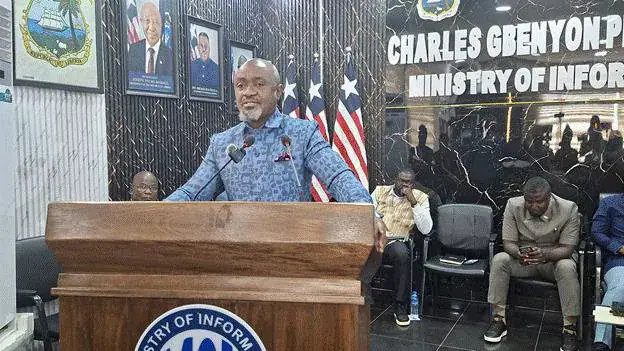
The Public Procurement and Concessions Commission of Liberia has issued a warning to government ministries, agencies, and commissions with outstanding procurement reports. These institutions risk losing provisional approval of their 2027 procurement plans if they fail to submit their reports. The Commission's Executive Director, Bodger Scott Johnson, announced this at a press briefing held at the Ministry of Information, Cultural Affairs and Tourism.
According to Johnson, institutions seeking provisional approval for their 2027 procurement plans must first demonstrate compliance by submitting their first-, second-, and third-quarter procurement reports for the current fiscal year. This move aims to ensure that government procurement activities are properly documented, monitored, and subjected to regulatory oversight. The Commission is keen on enforcing its own deadline to enhance transparency and accountability in public procurement.
The warning comes as the Commission introduces an advanced procurement arrangement to eliminate delays in implementing government projects following the passage of the national budget. Ministries, agencies, and commissions are encouraged to prepare their procurement plans for 2027 ahead of the budget's passage into law. They are requested to submit their draft procurement plans by November 23, 2026, using proposed allocations contained in the draft national budget.
Johnson emphasized that preparing procurement plans is different from committing public funds. Institutions must not award contracts or enter into binding financial obligations before the national budget is passed into law. However, they may undertake preliminary activities such as identifying procurement needs, conducting market research, and engaging potential suppliers.
The Commission's efforts are crucial, given that 35 to 40 percent of Liberia's national budget is spent on procurement. Johnson stressed that quarterly procurement reporting is a statutory obligation, enabling the Commission to track public fund utilization and ensure institutions operate within the law. Non-compliance may attract regulatory action, including referral to the Ministry of Justice, the Liberia Anti-Corruption Commission, and the General Auditing Commission.
The e-GP platform, which has expanded to 106 institutions, provides the Commission with new leverage to enforce compliance. Johnson warned that provisional approval would be subject to adjustments if the Legislature makes changes to proposed budget allocations. Institutions must then revise their procurement plans to reflect actual amounts approved by the Legislature.
The Public Procurement and Concessions Commission's credibility rests on enforcing its deadline. The Commission's efforts aim to accelerate the implementation of government programs and ensure proper documentation of procurement activities. By tightening compliance, the Commission seeks to enhance transparency, accountability, and regulatory oversight in public procurement.
Key points
- Institutions with outstanding procurement reports risk losing 2027 procurement plan approval.
- The Commission encourages institutions to prepare 2027 procurement plans ahead of the budget's passage into law.
- Quarterly procurement reporting is a statutory obligation in Liberia.