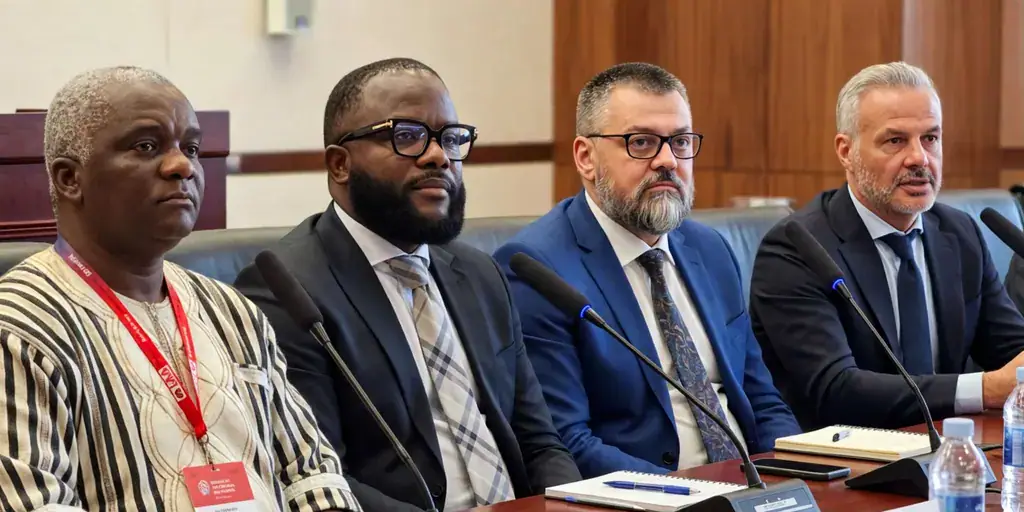
The head of Liberia's tax agency, Dorbor Jallah, testified before the Liberian Senate that the country's main seaport, the Freeport of Monrovia, currently has no cargo scanner in operation. Despite this, importers have been paying fees for scanning services. The Freeport handles most of Liberia's imports, including food, fuel, and consumer goods. The lack of a scanner has contributed to delays and high charges, affecting small and medium-sized importers.
Importers have complained of being charged high fees by the terminal operator APM Terminals, MEDTECH, and under the CTN/GTMS cargo-tracking system, both before their goods arrive and before they are released. Many import on bank credit, and each day a container stays stuck at the port adds interest to their loans. The situation has driven them into debt and pushed up prices for ordinary Liberians. The Senate hearing was called to address these complaints and find solutions to the port crisis.
Jallah revealed that a new facility for handling and inspecting cargo, including a scanner, is under construction at the port. The scanner, being purchased from a manufacturer in China, will be able to check about 40 containers an hour. It will enable customs and security officers to see what is inside containers without opening them, speeding up clearance and tightening control over what enters the country. The facility is expected to alleviate congestion and reduce delays.
The Liberian government is working to address the port's challenges, including upgrading its customs software and implementing a 24-hour port operation. Jallah said the Central Bank of Liberia is expected to launch a payment switch to link the systems later this year, allowing payments around the clock. The government has committed to turning the Freeport into a 24-hour port, with customs operating 24/7. Importers and brokers are urged to prepare to work around the clock as well.
Sekou Dukuly, Managing Director of the National Port Authority, warned that the port is under severe strain and that the problem has been building for years. He cited a 2017 World Bank warning that West Africa's economies were growing rapidly and that infrastructure needed to be improved. Unlike Liberia, many of its neighbors heeded this advice and expanded their ports. Dukuly described the past six years as "a complete catastrophe" for Liberia's port infrastructure.
The port crisis has significant economic and security implications. A port without a scanner is a security risk, making it harder to detect drugs, weapons, and other contraband. For businesses, every day of delay adds costs that end up on the price tag. Until the new facility opens and the 24-hour promises are kept, those costs are likely to keep landing on Liberian households. The situation highlights the need for investment in the port to address the growing traffic and economic demands.
The Liberian government faces pressure to address the port crisis and invest in infrastructure to support the growing economy. The port expansion investment plan and the need to dredge the harbour are critical to handling growing traffic. The government must balance the needs of importers, shipping lines, and consumers while ensuring the port operates efficiently and securely. The outcome will have a significant impact on Liberia's economy and the livelihoods of its citizens.
Key points
- The Liberian port has no cargo scanner, despite importers paying fees for scanning services.
Reporting sources
- Senate Hearing On Port Crisis: Paying For A Scanner That Isn’t There · FrontPage Africa